What is MOQ (Minimum Order Quantity)? Definition & Practical Guide

One-Sentence Definition
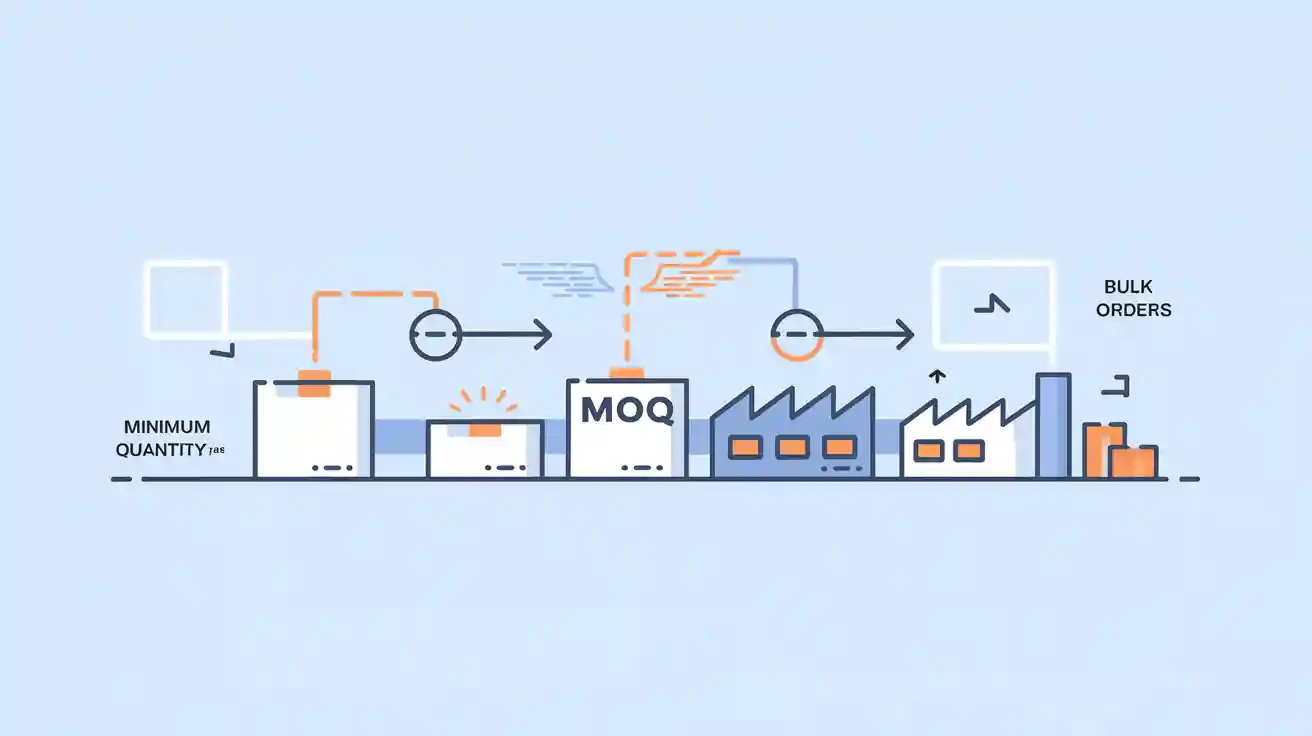
Minimum Order Quantity (MOQ) is the smallest number of units or the minimum value a supplier is willing to sell to a customer in a single order, ensuring each transaction is profitable and operationally efficient (NetSuite).
Detailed Explanation
MOQ is a fundamental concept in manufacturing, wholesale, and supply chain management. It sets the threshold for the least amount a supplier will accept per order, often based on production costs, profit margins, and operational efficiency. MOQs can be defined by unit count (e.g., 100 pieces) or by order value (e.g., $1,000 minimum). For standard products, MOQs are typically lower, while custom or highly specialized products require higher MOQs due to unique materials, tooling, or setup costs (ScienceDirect).
Suppliers use MOQs to:
- Cover fixed and variable production costs
- Optimize inventory turnover and reduce storage expenses
- Achieve economies of scale
- Filter for serious buyers and streamline order processing
For buyers, MOQs influence purchasing decisions, cash flow, and inventory management. High MOQs may require larger upfront investments and more storage, while low MOQs offer flexibility but may come with higher per-unit costs.
Key Components of MOQ
- Unit-Based or Value-Based: MOQs can be set by the number of items or the total order value.
- Standard vs. Custom Products: Standard items usually have lower MOQs; custom products (like bespoke acrylic displays) often require higher MOQs due to unique design and production needs.
- Negotiability: MOQs are sometimes negotiable, especially for long-term partners or larger buyers. Strategies include paying a higher unit price, bundling products, or collaborating with other buyers (Guided Imports).
- Batch Ordering: In some industries, orders must also meet batch size requirements, further impacting the MOQ.
Real-World Application: Custom Acrylic Products
In the acrylic manufacturing industry, such as with custom display stands or storage boxes, MOQs vary based on product type and customization level. For example, a supplier may set an MOQ of 100 units for a standard acrylic tray, but a custom-designed display with unique branding or dimensions may require a higher MOQ to cover setup and material costs.
Negotiation Example: A client wants a custom acrylic display stand from a manufacturer. The standard MOQ is 100 units, but for a unique design, the supplier sets the MOQ at 200 units. The client can negotiate by:
- Accepting a higher unit price for a smaller batch
- Bundling orders with other products
- Collaborating with other buyers to share the MOQ
This flexibility helps both parties balance cost, efficiency, and business needs.
Visualizing MOQ Impact
 High MOQs increase inventory and storage needs but lower per-unit costs; low MOQs offer flexibility but may raise unit prices and administrative overhead.
Related Concepts
- EOQ (Economic Order Quantity): The optimal order size to minimize total inventory costs, distinct from MOQ, which is supplier-driven.
- Bulk Discount: Price reductions for larger orders, often linked to MOQs.
- Customization: Custom products typically have higher MOQs due to unique production requirements.
- Supply Chain: MOQs affect supply chain efficiency, inventory turnover, and cash flow.
- Batch Ordering: Some suppliers require orders in fixed multiples, adding another layer to MOQ considerations.
For more on these concepts, see NetSuite's guide and Luigi's Box.
Looking for custom acrylic products with flexible MOQ and global service? Contact TOYIN Acrylic Products Co., Ltd. for a quote and expert support.