What is UV Resistance? Definition, Mechanism, and Application in Acrylic Products

One-Sentence Definition
UV resistance is the ability of a material to withstand degradation—such as discoloration, embrittlement, or loss of strength—caused by exposure to ultraviolet (UV) light.
Detailed Explanation
When materials are exposed to sunlight or artificial UV sources, the high-energy UV rays can break down the chemical bonds in polymers, leading to visible and structural damage. For plastics like acrylic (PMMA), this means yellowing, surface cracking, and a decline in mechanical properties over time. UV resistance measures how well a material can maintain its appearance and performance under such exposure. According to Corrosionpedia, UV resistance is especially important for polymers used outdoors, as insufficient resistance can result in premature product failure.
Key Components of UV Resistance in Acrylic
Base Material Properties: Standard acrylic has moderate UV resistance, but prolonged exposure can still cause yellowing and brittleness.
Additives: UV absorbers (like benzotriazole) and hindered amine light stabilizers (HALS) are commonly added during manufacturing to absorb or neutralize UV energy, significantly improving resistance (SpecialChem).
Surface Coatings: Some high-end acrylic sheets receive a UV-resistant coating, providing an extra barrier against UV-induced aging.
Testing Standards: The industry standard for evaluating UV resistance is ASTM G154, which simulates long-term UV exposure in a controlled environment (Atlas MTS).
Real-World Applications
UV resistance is critical for acrylic products used in outdoor or high-light environments, such as:
Display cases and signage: Prevents yellowing and maintains clarity for years.
Protective covers and furniture: Ensures durability and aesthetic appeal in patios, gardens, and retail spaces.
Greenhouse panels and skylights: Maintains light transmission and structural integrity.
For example, high-quality UV-resistant acrylic can remain clear and structurally sound for over a decade, even in direct sunlight. In industry practice, some brands have supplied outdoor acrylic display stands that show no visible yellowing or cracking after three years of use, demonstrating the real value of robust UV resistance.
Related Concepts
UV Protection: Refers to the ability to block or absorb UV rays, often through coatings or additives. UV resistance is about the material’s durability, while UV protection is about shielding.
Weather Resistance: Encompasses resistance to UV, moisture, temperature changes, and other environmental factors.
Aging Resistance: The broader ability of a material to resist all forms of environmental degradation, including but not limited to UV.
UV Filtering vs. UV Transmitting Acrylic: UV filtering acrylic blocks up to 98% of UV rays, ideal for protecting sensitive items. UV transmitting acrylic allows UV to pass through, used in applications like tanning beds (AC Plastics).
Common Misconceptions
Not all acrylic is naturally UV resistant; only specially formulated or coated products offer long-term protection (AcrylicLeasinder).
No clear acrylic provides 100% UV protection—museum-grade options offer the highest, but at a premium (Better Display Cases).
Visual Aids
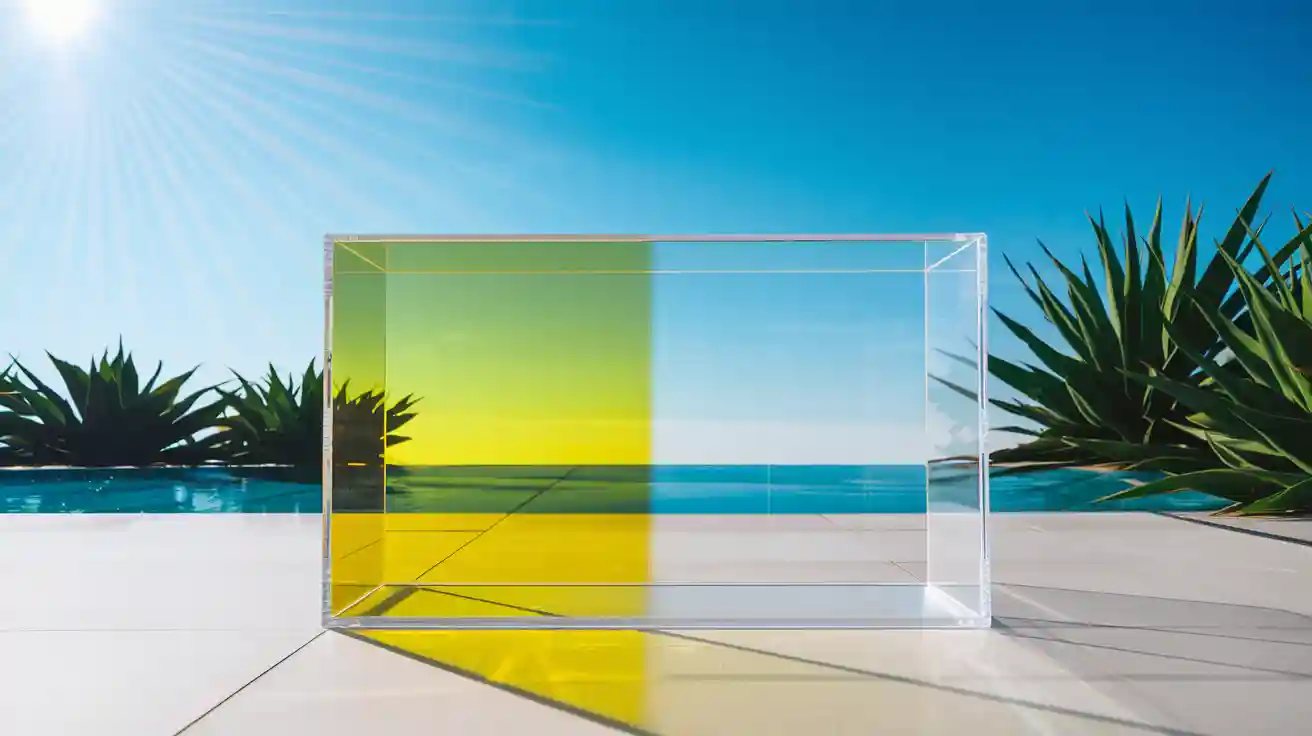
The cover image above illustrates the difference between UV-protected and non-protected acrylic after prolonged sun exposure.
For a deeper understanding, see this UV spectrum diagram and UV testing process.