Total Landed Cost Calculator For 3C Retailers


Your Total Landed Cost (TLC) is the complete price to get inventory ready for sale. You can understand this cost with a simple formula.
Product Cost + Shipping + Customs + Risk + Overhead = Total Landed Cost
This guide acts as a practical total landed cost calculator. It helps you compare air and sea freight for your acrylic displays. Shifting costs in 2025 make this tool essential. Your goal is to make a data-driven decision, not just default to the cheapest freight quote.
Shipping & Freight Costs
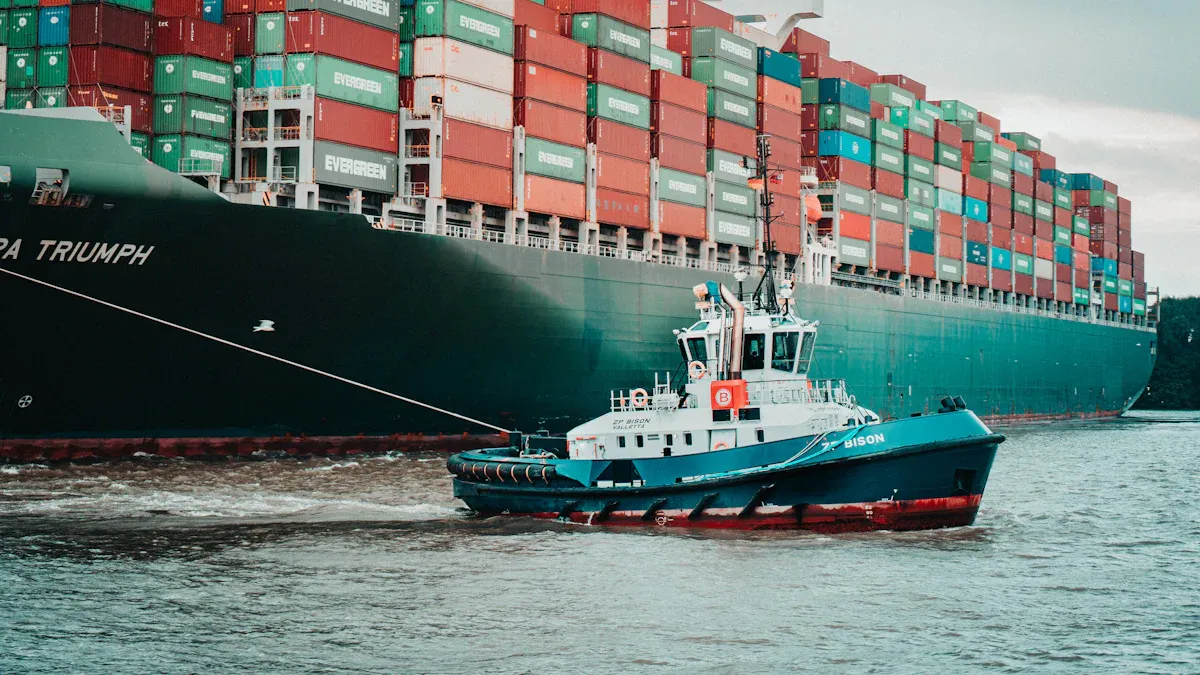
The freight quote is often the biggest variable in your Total Landed Cost. You must look beyond the base rate to understand the full price. Air and sea freight have very different cost structures.
Air Freight: Chargeable Weight
Air freight pricing depends on chargeable weight. Carriers will charge you for whichever is greater: the actual weight of your acrylic displays or their volumetric weight. Your lightweight but bulky displays often have a high volumetric weight.
You can calculate this yourself:
- Measure the package's length, width, and height in inches.
- Multiply these three numbers to find the cubic size.
- Divide the cubic size by 139 for international shipments to find the dimensional weight in pounds.
Your final air freight bill also includes other fees. Expect to see fuel surcharges, which carriers like Nippon Express adjust monthly, and security handling fees.
Sea Freight: LCL vs. FCL
Sea freight gives you two main options: Less than Container Load (LCL) or Full Container Load (FCL).
- LCL: You share container space with other shippers. You pay for the volume your cargo occupies, measured in cubic meters (CBM). This seems cost-effective, but LCL includes extra fees for consolidation, handling, and documentation at both ports.
- FCL: You pay a flat rate for an entire container. This provides cost certainty and is safer for fragile acrylics due to less handling. If your shipment is large enough, FCL can be cheaper per unit than LCL.
| Container Type | Capacity (Cubic Meters) |
|---|---|
| 20-Foot Container | 33 CBM |
| 40-Foot Container | 67 CBM |
| 40-Foot High Cube | 76 CBM |
Freight Cost Comparison
You should compare quotes side-by-side to see the true cost. Create a simple worksheet to track each option. While 2025 trends show many businesses exploring ocean freight to avoid high air rates, sea freight costs have also risen significantly. A direct comparison is essential.
Tip: Use a free online freight calculator to get started. Websites like Freightos allow you to instantly compare real-time air and sea quotes from dozens of providers. This gives you a strong baseline for your own calculations.
Customs, Duties, & Taxes

Customs costs are a non-negotiable part of your Total Landed Cost. You must accurately calculate these government-mandated fees to avoid surprise expenses that can erase your profit margins.
Customs Valuation
Customs officials need to determine the value of your shipment to calculate duties. This is called the customs value. They typically use the price on your Commercial Invoice. This value includes the cost of your acrylic displays plus the cost of shipping and insurance. A higher total value means you will pay more in duties. You must ensure your supplier provides an accurate and detailed invoice to prevent delays or fines.
HS Codes & Tariffs
Every imported product needs a Harmonized System (HS) code. This code tells customs exactly what you are shipping. The HS code determines the tariff, or tax rate, you will pay.
Your acrylic displays are classified based on their material: plastic. Customs authorities classify general plastic stands as 'other articles of plastics'. This means your product will likely fall under a similar category.
For example, a plastic display stand was classified under TARIC code
3926 9097 77. Your specific code might vary, but it will be in the chapter for plastics.
You can find the correct HS code and its corresponding tariff rate on your government's trade website.
Brokerage & Clearance Fees
You will likely hire a customs broker to handle the clearance process. A broker prepares and submits the required documentation to customs authorities on your behalf. This service ensures your shipment complies with all import regulations.
For this service, you pay a customs brokerage fee. The standard rate for customs clearance in the US is approximately $100 to $120 per shipment. This fee is an important fixed cost to add to your calculation. You should expect to pay this amount whether your displays arrive by air or by sea.
Risk & Insurance Costs
Risk is not just a possibility; it is a real cost you must factor into your Total Landed Cost. Protecting your fragile acrylic displays from damage or loss is crucial for maintaining your profitability.
Insurance Premium Comparison
You should always insure your international shipments. Insurance premiums are calculated as a percentage of your shipment's total value. You might assume sea freight has lower insurance costs, but this is often not the case.
- Sea Freight: The long transit time and multiple handling stages (port to ship, ship to port) increase the risk window. This can lead to higher insurance premiums.
- Air Freight: The journey is faster and involves less handling. This shorter risk window often results in a lower insurance premium, even if the freight cost is higher.
Always get a specific insurance quote for both shipping methods to include in your comparison.
Damage & Loss Risk
Your acrylic displays are fragile. You need to calculate the financial impact if a portion of your shipment arrives damaged. A low freight cost means nothing if you lose inventory.
Calculate Your Risk Cost: (Cost of Damaged Unit + Lost Profit Margin + Cost of Replacement) x Likelihood of Damage (%) = Your Financial Risk
Sea freight generally has a higher risk of damage due to rougher transit conditions and more frequent handling during the LCL consolidation process. Air freight offers a smoother, safer journey for delicate items.
Packaging Cost Differences
The way you package your displays directly impacts their safety and your costs. The shipping method dictates the level of protection needed.
Sea freight requires robust, heavy-duty packaging. You may need to invest in wooden crates and extra internal padding to withstand moisture and movement over several weeks. This adds significant weight and cost. Air freight, being gentler, allows for simpler and lighter packaging.
You can also add premium protection like foam inserts or sleeves to reduce damage. This extra safety measure can cost between $0.50 and $2.00 per unit. You must add this packaging expense to your landed cost calculation.
Overhead & Indirect Costs
Overhead costs are the hidden expenses that impact your profitability. These indirect costs often reveal the true financial difference between shipping methods.
Inventory Holding Costs
Inventory holding costs are what you pay to store unsold products. Sea freight's longer transit times mean you must hold more inventory to prevent stockouts. This directly increases your storage costs and ties up your capital. You can calculate this cost as a percentage.
The formula is:
(Total Inventory Costs / Total Inventory Value) x 100
A longer shipping journey increases your total inventory costs, which raises your holding cost percentage.
Opportunity Costs
Opportunity cost is the potential profit you lose when your money is tied up. When your acrylic displays are on a ship for 30-45 days, you cannot use that capital for other business needs.
Think of it this way: The money spent on inventory floating on the ocean is money you cannot use to launch a new marketing campaign or stock up on a different best-selling product. Air freight gets your products to you faster, freeing up your cash for other opportunities.
Carbon Footprint Impact 🌍
Your shipping choice has an environmental impact, which is becoming a real financial factor. Air freight produces significantly more carbon emissions than sea freight.
| Mode of Transport | CO₂ Emission (g/ton-km) |
|---|---|
| Air Freight | 500–600 |
| Sea Freight | 10–40 |
This matters for your brand's reputation and your budget. In 2025, the International Maritime Organization (IMO) plans to implement a global charge on shipping emissions. This new "carbon tax" will likely increase sea freight costs, and you must prepare for this future expense in your calculations.
Your Total Landed Cost Calculator Guide
Now you can build your own total landed cost calculator. This guide breaks down the process into four simple steps. You will gather all the necessary figures to make a smart, data-driven decision for your business.
Step 1: Gather Quotes
Your first step is to collect all the primary costs. You need to request detailed quotes from your suppliers, freight forwarders, and customs broker. Get separate quotes for both an air freight shipment and a sea freight shipment to compare them accurately.
You will need quotes for:
- Product Cost: The price per unit from your supplier.
- Freight Cost: The full shipping price from the forwarder, including all surcharges.
- Insurance Cost: The premium to cover your shipment's value.
- Brokerage Fee: The flat fee your customs broker charges for their service.
Note: To get an accurate customs brokerage quote, you must provide specific documents. Your broker needs these to prepare for clearance.
- Commercial Invoice: This shows the purchase price and product details.
- Packing List: This details the contents, weight, and dimensions of each box.
- Bill of Lading: The carrier issues this document with all shipment details.
- Arrival Notice: This tells you when your shipment will arrive.
Step 2: Calculate Duties
Customs duties and taxes are a major part of your landed cost. You calculate these fees based on your shipment's value and its product classification.
First, find the correct Harmonized System (HS) code for your acrylic displays. You can find duty rates using official government resources.
- The U.S. International Trade Commission-Tariff Database is a great tool for estimating duties on your products.
- The WTO Tariff Database lists duty rates for World Trade Organization member countries.
Next, you must calculate any Value Added Tax (VAT) or Goods and Services Tax (GST). This tax is applied in many countries. The calculation is based on the total value of your goods plus shipping, insurance, and the duty amount.
(Product Cost + Insurance + Freight Cost + Duty) x VAT/GST % = Total Tax
Think of it like a sales tax applied at each step of the supply chain. If a coffee roaster pays a tax on beans, they pass that cost to the coffee shop. The shop then includes it in the final price to the customer. You must account for this tax in your total landed cost calculator to understand your true expenses.
Step 3: Estimate Indirect Costs
Indirect costs are easy to overlook but have a big impact on your profit. The main indirect costs are tied to how long your inventory is in transit.
Your opportunity cost is the profit you lose when your money is tied up in inventory on a ship. Air freight's speed gets products to you faster. This frees up your cash to invest in marketing or other products.
You can also calculate the cost of holding inventory while it is in transit. Sea freight's long journey means your capital is locked in for weeks.
A Simple Way to Think About It: Imagine you have $10,000 of inventory on a ship for 30 days. That is $10,000 you cannot use for a month. If you could have earned a 5% return on that money elsewhere, your opportunity cost is $500. A total landed cost calculator helps you see these hidden expenses.
Step 4: Compare Final TLC
You now have all the numbers. It is time to put them together and find your Total Landed Cost per unit. The best way to do this is with a simple spreadsheet. You can find landed cost calculation templates online to get started.
Create two columns: one for Air Freight and one for Sea Freight. Add up all the costs for each shipping method.
| Cost Component | Air Freight | Sea Freight |
|---|---|---|
| Product Cost | $10,000 | $10,000 |
| Freight & Fees | $4,000 | $2,000 |
| Duties & Taxes | $1,500 | $1,300 |
| Insurance | $100 | $150 |
| Packaging | $200 | $500 |
| Indirect Costs | $100 | $500 |
| Total Cost | $15,900 | $14,450 |
Finally, divide the total cost by the number of units in your shipment. This gives you the Total Landed Cost per unit.
Total Cost / Number of Units = TLC Per Unit
This final number is your break-even point. You must set your retail price higher than your TLC per unit to make a profit. Using a total landed cost calculator empowers you to see which shipping method truly delivers more profit, not just which one has the cheaper freight quote.
Choosing between air and sea freight is no longer simple. Industry trends for 2025 show that while sea freight rates may be low, new emission fees will add costs. Air freight offers speed and safety for your fragile displays, reducing overhead and preventing stockouts. Sea freight provides lower base rates but increases your inventory holding costs and risk.
Your best strategy for 2025 is clear. You must use a total landed cost calculator to find your most profitable shipping method instead of relying on generalizations.
FAQ
Why is chargeable weight important for air freight?
Carriers charge for the greater of actual or volumetric weight. Your light, bulky displays have a high volumetric weight. This means you pay for the space your items use, not just their physical weight. This directly impacts your final freight cost.
Is sea freight always cheaper than air freight?
Sea freight has a lower base rate. You must add costs for insurance, packaging, and holding inventory. Your Total Landed Cost calculation might show air freight is more profitable for fragile items like acrylic displays. A full comparison is essential.
How do I find the right HS code for my displays?
You can find the correct Harmonized System (HS) code on your government's official trade website. Your customs broker can also classify your products for you. Using the right code ensures you pay the correct tariff and avoid costly customs delays.