Your 2026 Total Landed Cost Calculator

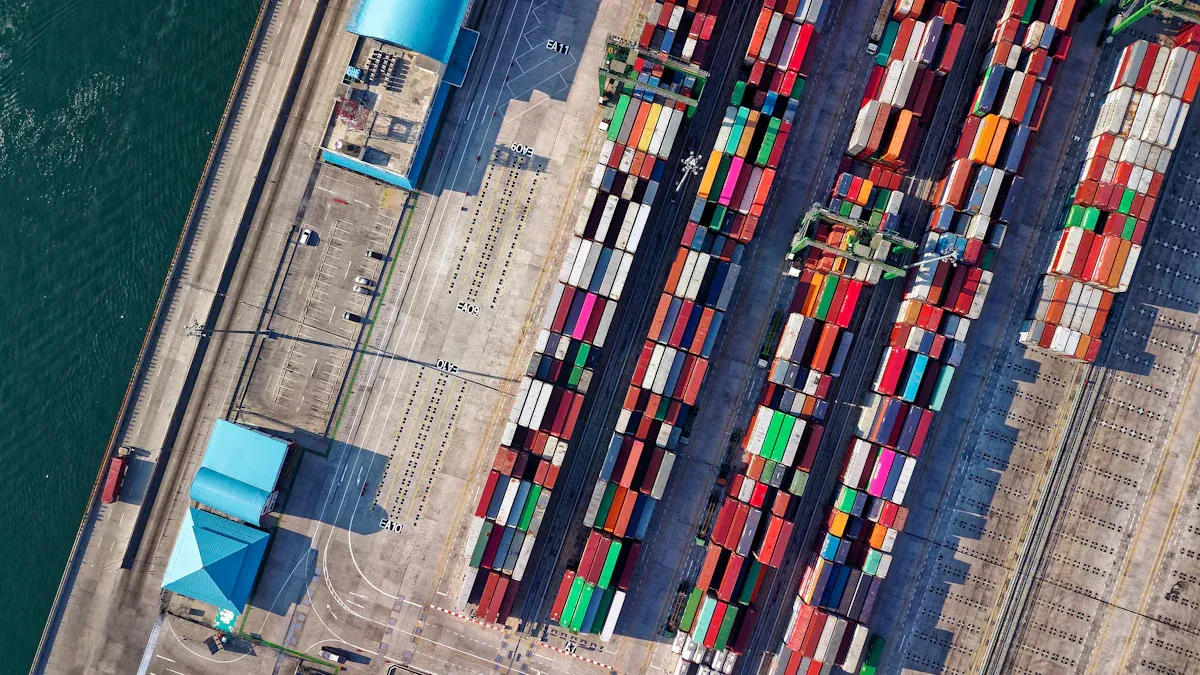
You can lower your costs for bulk acrylic display shipments with sea freight. Air freight is better for urgent or small orders. A simple freight quote is misleading. It hides the real cost differences you will pay.
| Shipment Type | Base Cost per kg (China to US) |
|---|---|
| Air Freight | $5.20/kg |
| LCL Sea Freight | $0.85/kg |
| Cost Difference | $4.35/kg |
You need the Total Landed Cost (TLC) formula to find your true cost: Product Cost + Shipping + Customs + Risk + Overhead = Total Landed Cost.
📝 Protect Your Profits: Download your free 2026 Total Landed Cost Calculator spreadsheet.
Use our total landed cost calculator to see the complete financial picture for every shipment.
Using a Total Landed Cost Calculator: Core Components

Your total landed cost calculator is only as good as the numbers you put into it. The formula Product Cost + Shipping + Customs + Risk + Overhead requires accurate data for each part. The following sections will show you how to find the right numbers for your shipment.
Calculating Freight and Shipping
Your freight quote contains more than just the base shipping rate. You must account for several primary expenses and extra fees.
Primary Freight Expenses:
- Mode of Transport: Air freight is faster and more expensive. Sea freight is slower and more economical.
- Cargo Weight: Carriers charge based on the actual weight or the dimensional weight, whichever is greater.
- Shipping Route: Longer or more complex routes increase costs.
Note: Expect additional charges on your invoice. These include Terminal Handling Charges (THC) for loading and unloading, plus fuel surcharges. Carriers update fuel surcharges weekly, and these fees can add over 20% to your shipping bill in 2026.
Calculating Customs, Duties, and Taxes
Every country has its own taxes for imported goods. You will pay these fees when your acrylic displays arrive at the border. These costs are based on your product's value and classification.
| Country | Applicable Tax Type |
|---|---|
| USA | Import taxes and duties |
| Sweden | Value-Added Tax (VAT) and customs duties |
| Australia | Goods and Services Tax (GST) and customs duties |
You must identify the correct taxes for your destination country to calculate your true cost.
Calculating Risk, Insurance, and Overhead
Protecting your shipment and accounting for hidden fees is essential. Cargo insurance covers potential damage or loss during transit. For ocean freight, a common method is to insure your cargo for 110% of its value. This ensures you recover the full product cost plus a margin for other expenses.
Overhead includes costs you might overlook, such as:
- Currency Conversion Fees: Your bank charges this fee to swap currencies for international payments.
- Foreign Transaction Fees: These administrative fees can add 2% to 4% to your transaction amount.
Adding these small percentages is critical for an accurate final cost.
Air vs. Sea: A 2026 Cost Scenario
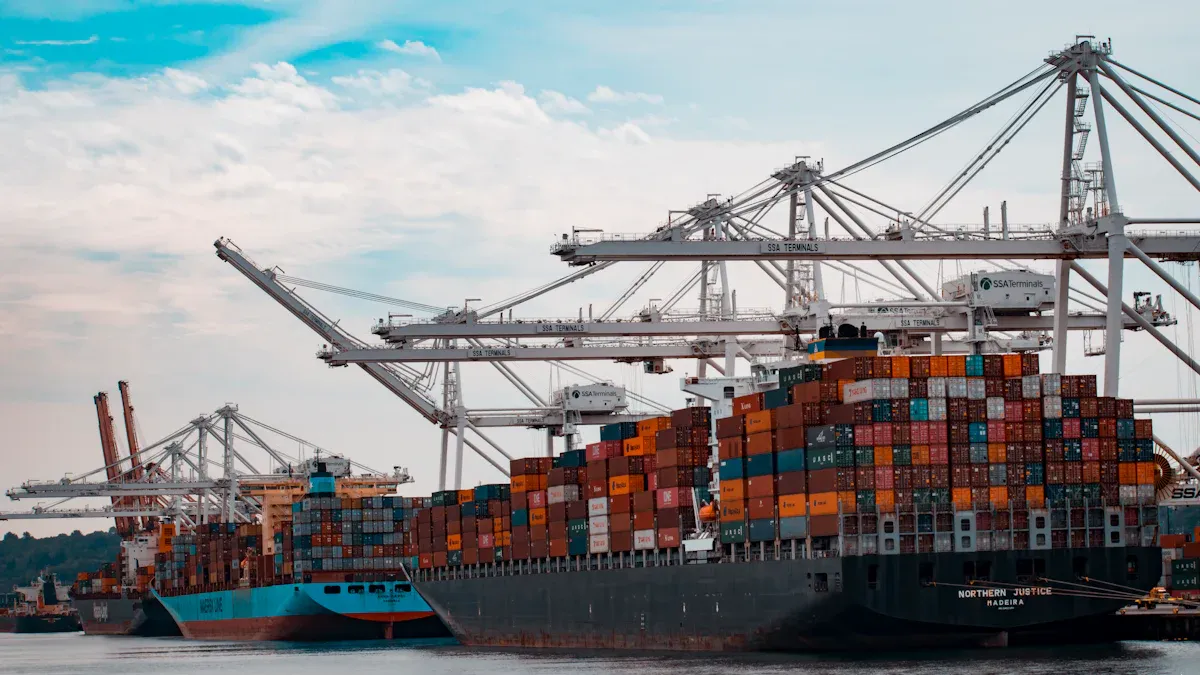
Theory is helpful, but numbers tell the real story. Let's compare air and sea freight for a typical bulk order. This scenario will show you how different fees impact your final cost per unit.
Scenario: You are importing 500 acrylic displays from a supplier in China to the USA.
- Product Cost: $15.00 per unit ($7,500 total)
- Total Weight: 2,000 kg
- Total Volume: 12 cubic meters (CBM)
We will use these figures to calculate the total landed cost for each shipping method.
Air Freight Cost Breakdown
Air freight offers speed, but this speed comes with a unique set of costs. Beyond the base freight rate, you must budget for several extra charges. Your shipment will face fees for handling and security at the airport.
Common ancillary fees for air freight include:
- Airport Handling Fee
- Airport Screening Fee
- Terminal Handling Fee
- Security Surcharge
The Transportation Security Administration (TSA) requires security fees to help fund the nation's aviation security. Your carrier collects these fees from you. You also need an Air Waybill, a critical document that acts as the contract between you and the carrier. Preparing this document correctly involves administrative work and potential fees.
Sea Freight Cost Breakdown
Sea freight has its own set of associated charges, primarily centered around port activities. Terminal Handling Charges (THC) are a major component. Terminal operators charge THC for services like loading, unloading, and moving containers at both the origin and destination ports. These fees are unavoidable and can vary by port.
You will also pay a Customs Declaration Fee. A customs broker charges this fee to file your import paperwork. Correct filing prevents costly delays. For Less-than-Container-Load (LCL) shipments like our scenario, freight costs are based on volume. Carriers calculate the cost using cubic meters (CBM) because volume is usually the limiting factor on large container ships.
Final Verdict: Cost Per Unit
Now, let's place these costs side-by-side. The table below uses our scenario to compare the total landed cost and, most importantly, the final cost per unit for your acrylic displays. This comparison makes it easy to see how the "cheaper" freight rate does not always lead to the lowest final cost. Using a total landed cost calculator helps you see this complete picture.
| Cost Component | Air Freight Calculation ($) | Sea Freight Calculation ($) |
|---|---|---|
| Product Cost | $7,500.00 | $7,500.00 |
| Freight | $10,400.00 (2,000 kg @ $5.20/kg) | $1,020.00 (12 CBM @ $85/CBM) |
| Ancillary/Port Fees | $400.00 (Handling, Security, Docs) | $600.00 (THC, Customs Filing) |
| Customs Duties (10%) | $750.00 (10% of Product Cost) | $750.00 (10% of Product Cost) |
| Insurance | $42.00 (0.5% of 110% of Value) | $42.00 (0.5% of 110% of Value) |
| Overhead (3%) | $572.76 (3% of Subtotal) | $267.36 (3% of Subtotal) |
| Total Landed Cost | $19,664.76 | $10,179.36 |
| Cost Per Unit | $39.33 | $20.36 |
The results are clear. For this bulk shipment, sea freight delivers a cost per unit that is $18.97 cheaper than air freight. This massive difference highlights why understanding your full landed cost is essential for protecting your profit margins.
Key Variables in Your Calculation
Accurate numbers make your landed cost calculation reliable. You need to understand three key variables that heavily influence your final costs. These are chargeable weight, shipment volume, and customs codes.
Air Freight: Chargeable Weight
Air freight pricing depends on chargeable weight. Your carrier will compare the actual weight of your shipment with its volumetric weight. They charge you for whichever is higher. This practice ensures they get paid fairly for light but bulky items that take up a lot of space.
You can find the volumetric weight with a simple formula:
- Measure your package's length, width, and height in centimeters.
- Multiply these three numbers together to get the volume.
- Divide the volume by 6,000.
Example: A box weighs 25 kg but measures 90cm x 50cm x 80cm.
- Its volumetric weight is
(90 x 50 x 80) / 6000 = 60 kg.- Since 60 kg is greater than 25 kg, the carrier will use 60 kg as the chargeable weight.
Sea Freight: CBM and Container Type
Sea freight costs for LCL shipments are based on volume, measured in cubic meters (CBM). You calculate CBM by multiplying your shipment's length, width, and height in meters. If you have five boxes, you calculate the CBM for one box and multiply it by five.
For larger orders, you might use a Full Container Load (FCL). Knowing container capacity helps you plan.
| Container Type | Internal Length | Usable Volume (CBM) |
|---|---|---|
| 20ft Standard | 5.9 m (19.3 ft) | ~33 CBM |
| 40ft Standard | 12.0 m (39.4 ft) | ~67 CBM |
Customs: HS Codes and Tariffs
Every product has a Harmonized System (HS) code. This code tells customs officers what you are importing and determines the duty rate. For acrylic displays, you will likely use a code under Chapter 39, such as 3926.90.99 or 3926.40.49.
You can find current tariff rates on government websites like the U.S. Trade.gov portal or the EU's TARIC database. Remember that other factors also change your costs. Fluctuations in fuel prices and currency exchange rates directly impact your final landed cost. You must monitor these rates to avoid unexpected expenses and protect your profitability.
You now see that sea freight offers the best cost savings for bulk acrylic displays. Air freight serves strategic needs like urgent deadlines. The cheapest freight quote is not the true cost.
You can use this simple checklist to decide:
- Choose Sea Freight if: You can plan for a transit time of 3-5 weeks and your order is large.
- Choose Air Freight if: You have an urgent client deadline or need to restock a popular item quickly.
🚀 Take Control of Your Costs: Download your free total landed cost calculator now to run your own numbers and protect your profit margins.
FAQ
What is the most important part of the TLC formula?
No single part is most important. You must see the complete picture. A low freight quote can hide high port fees or duties. Your calculator helps you add every cost for a true final price.
Why is volumetric weight important for air freight?
Airlines charge for space. Your light but bulky items take up a lot of room on a plane. The carrier charges you for the higher of actual weight or volumetric weight to cover this space.
How do I find the right HS Code?
You can search for your product on your government's trade website. Your customs broker or freight forwarder can also help you find the correct code. Using the right HS code prevents customs delays and fines.
Tip: 💡 Always confirm your HS code with a customs professional before your first shipment to avoid costly errors.
Can I use this calculator for other products?
Yes! The calculator works for any imported product. You just need to update the specific details. Change the product cost, weight, dimensions, and HS code to fit your shipment. The formula remains the same.