What is Thermoforming / Vacuum Forming? Definition, Process & Applications

One-Sentence Definition
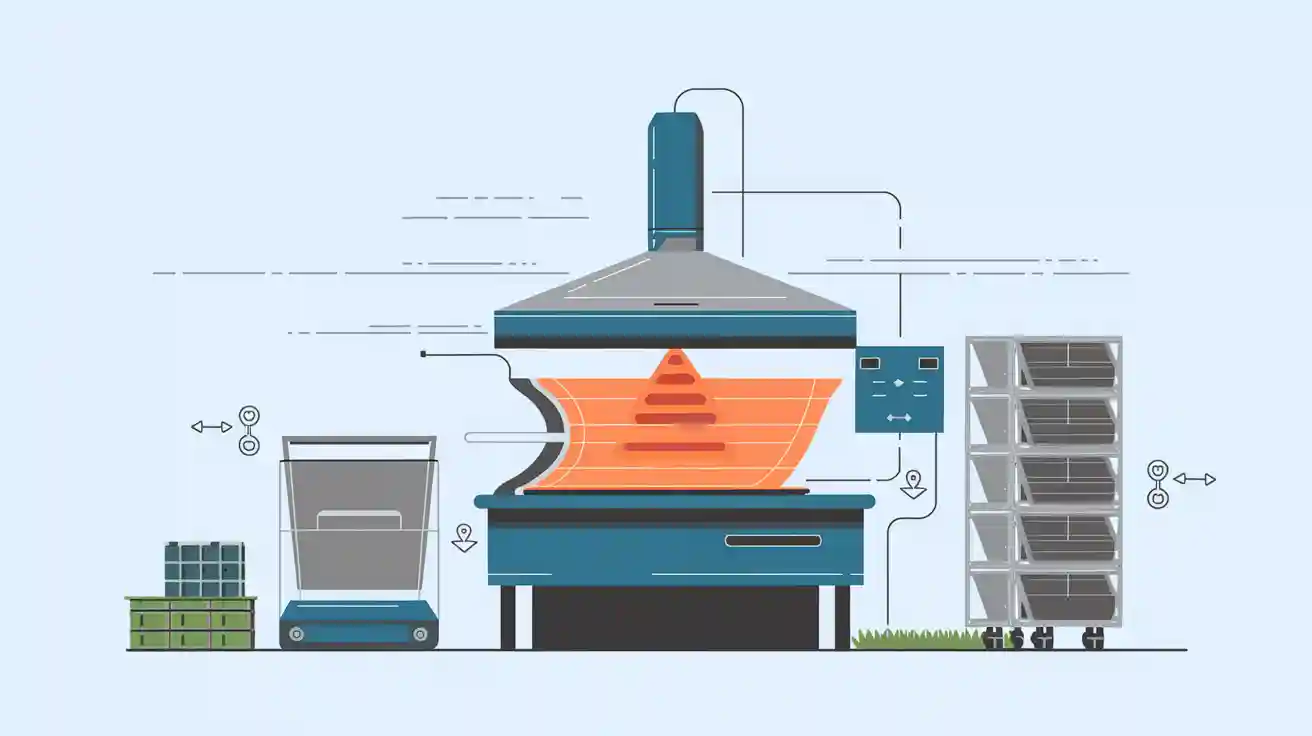
Thermoforming is a manufacturing process where a plastic sheet is heated until pliable, then shaped over a mold using vacuum or pressure, and trimmed to create a finished product; vacuum forming is a simplified subtype that uses only vacuum to pull the sheet onto the mold.[Wikipedia]
Detailed Explanation
Thermoforming transforms flat thermoplastic sheets—such as acrylic—into three-dimensional objects by heating them to a flexible state and forming them over a mold. The process can use vacuum, pressure, or mechanical force to ensure the sheet conforms to the mold’s shape. Once cooled, the formed part is trimmed to its final dimensions. Vacuum forming is the most basic form of thermoforming, relying solely on vacuum pressure to draw the heated sheet onto a single-sided mold. This method is especially valued for its simplicity, cost-effectiveness, and suitability for both prototyping and moderate production runs.
Compared to other plastic forming methods like injection molding, thermoforming offers lower tooling costs, faster prototyping, and is ideal for producing large or custom parts. However, it is less suitable for small, highly detailed components or very high-volume production.
Key Components of the Process
Heating: The plastic sheet (e.g., acrylic) is heated to a pliable temperature.
Forming: The sheet is shaped over or into a mold using:
Vacuum forming: Vacuum pulls the sheet onto the mold surface.
Pressure forming: Additional air pressure is applied for finer details.
Mechanical forming: A plug or tool physically pushes the sheet into shape.
Cooling: The formed part is cooled to retain its new shape.
Trimming: Excess material is removed, often using CNC cutting for precision.
Animation of the thermoforming process. Source: Wikipedia
Real-World Applications
Thermoforming and vacuum forming are widely used in industries such as packaging, automotive, medical devices, and retail displays. In the acrylic products sector, these processes enable the creation of:
Display racks and storage boxes for retail and office use
Protective covers for medical and industrial equipment
Custom furniture components and trays
Signage and decorative panels
Case Example: Toyin Acrylic Products Co., Ltd. (TOYIN) leverages advanced thermoforming and vacuum forming techniques to deliver high-quality, custom acrylic products. Their expertise allows for the production of complex shapes—such as display stands, storage organizers, and protective shields—tailored to the needs of global brands, retailers, and individual clients. TOYIN’s process integrates precision heating, forming, and CNC trimming, ensuring both design flexibility and consistent quality.
Related Concepts
Injection Molding: A process for producing small, detailed, high-volume plastic parts using molten plastic injected into a mold.
CNC Cutting: Computer-controlled cutting for precise trimming of formed parts.
Heat Bending: Shaping plastic sheets by localized heating and manual bending.
Pressure Forming: A thermoforming variant using both vacuum and positive air pressure for sharper details.
Thermoforming vs. Vacuum Forming: Quick Comparison
Feature | Thermoforming | Vacuum Forming |
|---|---|---|
Forming Method | Vacuum, pressure, or plug | Vacuum only |
Detail Level | High (with pressure forming) | Moderate |
Tooling Cost | Low to moderate | Low |
Typical Applications | Large parts, custom shapes | Simple, shallow parts |
Sustainability & Innovation
Modern thermoforming emphasizes material efficiency and recyclability. Scrap plastic is often reground and reused, and advances in mold technology and automation have improved both energy efficiency and product consistency.
Looking for custom acrylic solutions? Explore TOYIN’s full range of thermoformed products and request a quote.