Luxury Watches & Jewelry Retail Display Ideas

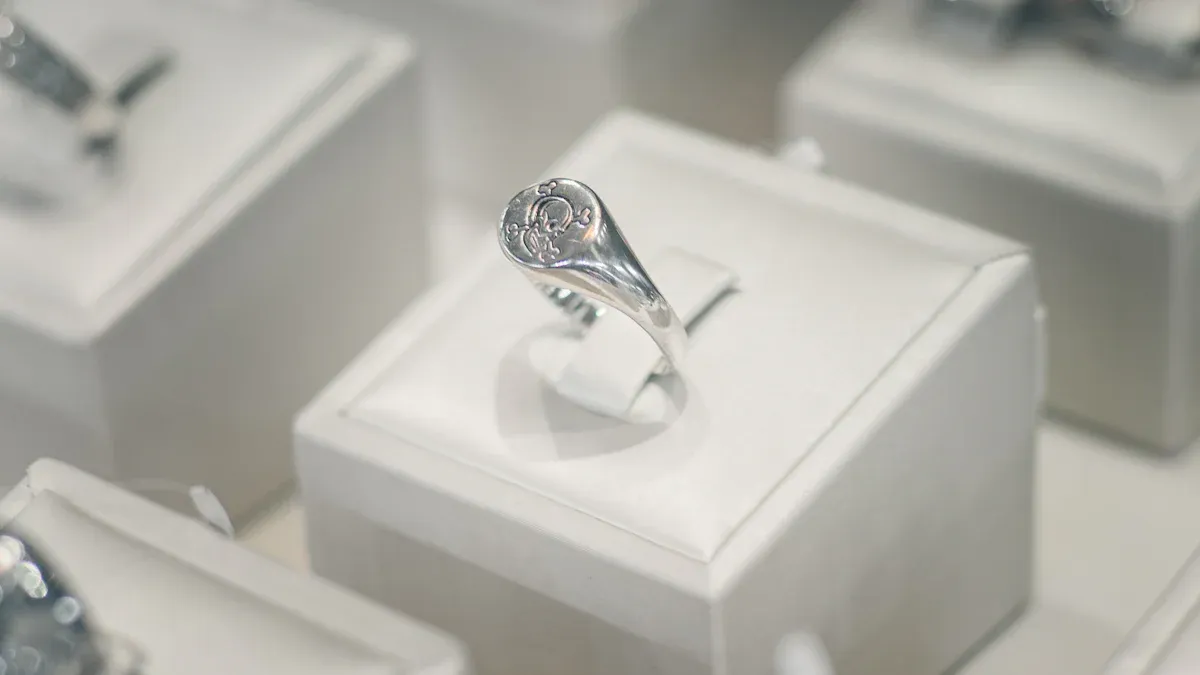
You face a key challenge in luxury watches & jewelry retail: creating a luxury feel in a small space. Your solution is vertical merchandising. This retail merchandising uses risers and stands for an effective jewelry display. Good visual merchandising guides the customer. Your presentation elevates the jewelry, creating powerful displays. This retail merchandising strategy enhances the customer experience. A strong visual merchandising display makes your jewelry stand out. This merchandising approach transforms your retail display, making each customer interaction valuable within your retail space.
FUNDAMENTALS FOR LUXURY WATCHES & JEWELRY RETAIL
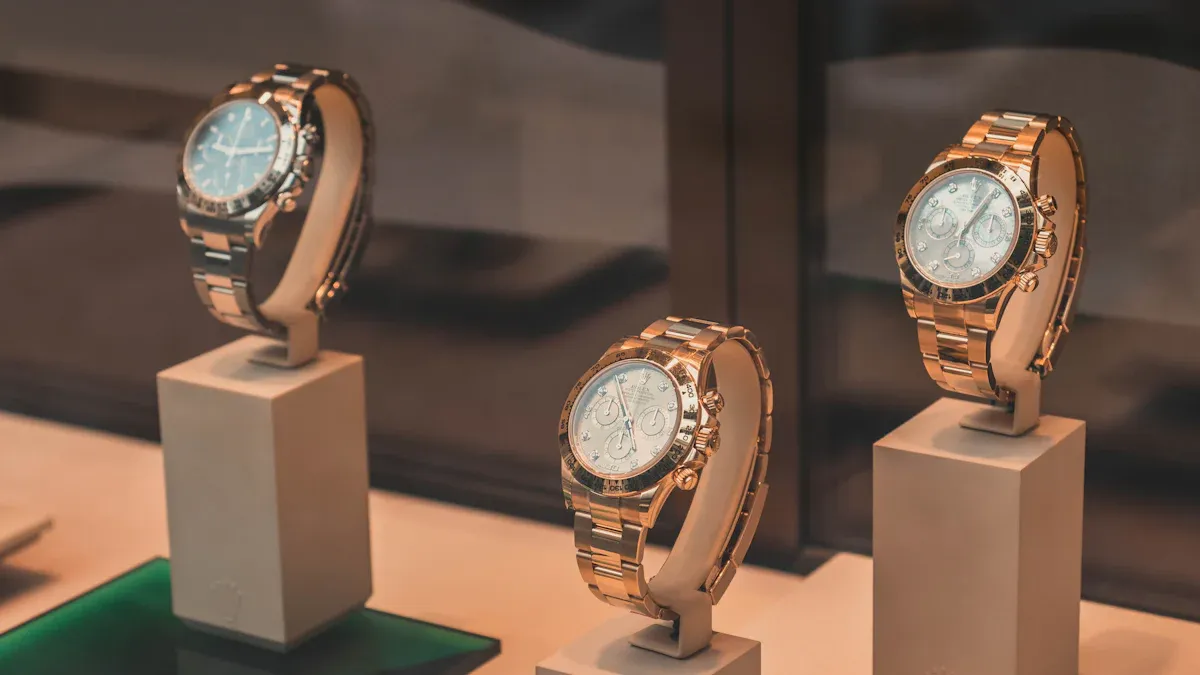
You must master the fundamentals of visual merchandising to succeed in luxury watches & jewelry retail. These core principles transform your showcases from simple storage into compelling narratives. Your goal is to create an environment that feels both exclusive and intuitive. A strong presentation starts with a solid foundation. This section gives you the essential tools for building effective jewelry displays.
CREATING BALANCED ASYMMETRY
You can create visual harmony using the 'Rule of Three'. This merchandising principle guides you to group items in odd numbers, typically threes. It creates a balanced, asymmetrical arrangement that is pleasing to the eye. Your brain processes information in threes very quickly. This makes the presentation memorable. Limiting your display to three items, three colors, or three textures also prevents a cluttered look.
This rule directly impacts how customers interact with your jewelry.
- Creates Visual Hierarchy: You use the rule to highlight a key piece. This creates a focal point and guides the customer's eye.
- Reduces Decision Fatigue: Too many choices overwhelm customers. A curated display with three options makes the decision process easier and can improve sales.
- Boosts Visual Interest: Asymmetry breaks monotony. It makes your visual merchandising more dynamic and engaging, drawing attention exactly where you want it.
MATCHING RISER TO PRODUCT SCALE
You must select risers that match the scale of your jewelry. A delicate ring on a massive block looks lost. A heavy statement necklace on a flimsy stand appears unstable. The right riser gives each piece its own stage. Your merchandising should feel intentional.
Varying the height of your risers is a powerful technique. This vertical layering creates depth and rhythm within your retail display case.
- Focus on Key Products: You place high-margin or featured jewelry on the tallest risers. This elevation naturally draws the customer's eye, making these items the stars of the show.
- Optimize Your Space: Using multiple risers of different heights creates a tiered layout. This strategy maximizes your use of vertical space, which is crucial in smaller retail footprints.
- Improve Visibility: A layered display ensures every piece of jewelry is visible. Nothing gets lost in the background. This improved visibility makes the entire collection more engaging.
CHOOSING COMPLEMENTARY MATERIALS
The materials you choose for your jewelry displays directly influence a customer's perception of quality and value. Luxurious materials signal a luxury product. Presenting jewelry on a simple velvet tray, for example, can instantly increase its perceived worth. Your material choices must complement your brand identity and the jewelry itself.
Many top brands use specific materials to reinforce their image. You can see how Alexander Wang uses raw concrete for an edgy, urban feel, while Cartier uses traditional Japanese cypress to connect with craft and heritage.
| Brand | Material Used | Brand Identity Communicated |
|---|---|---|
| Apple | Stone and Wood | Modern, Natural, Premium |
| Bang & Olufsen | Natural Wood, Brushed Aluminum | Sophisticated, High-Fidelity, Warm |
When selecting materials, you must also consider durability and maintenance. Metal and high-grade acrylic are popular choices, but they offer different long-term value. While metal displays may have a 72% higher upfront cost, they can be 35% cheaper over a decade. Metal's superior quality and durability mean you replace parts far less often.
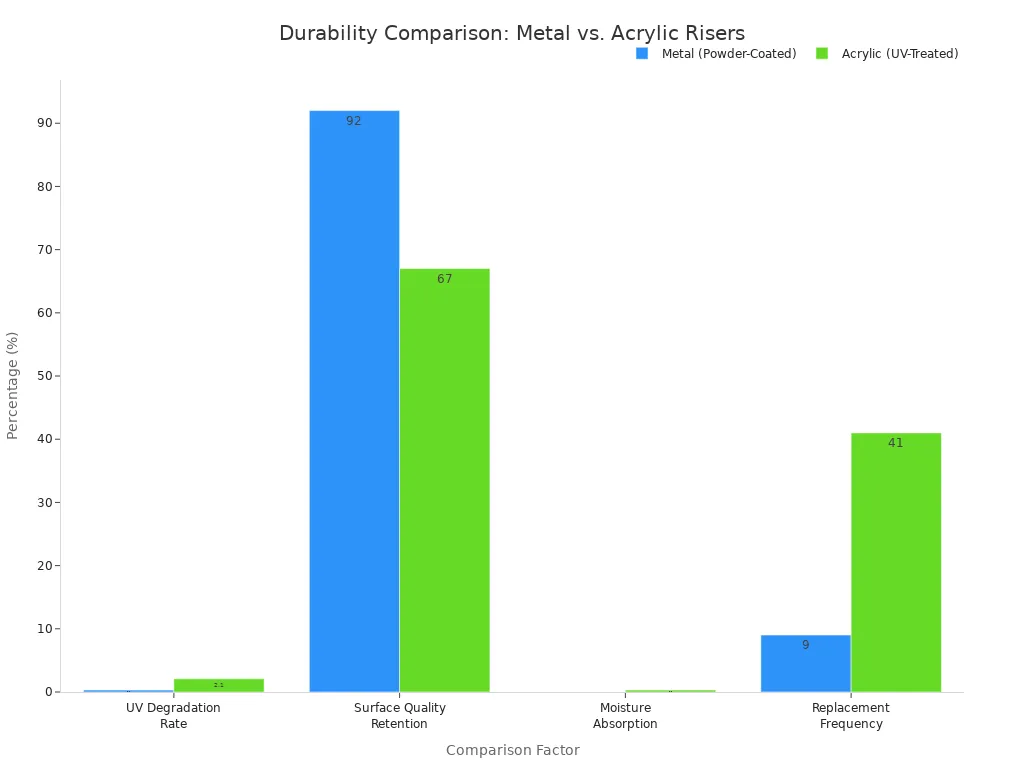
Pro Tip: Embrace Sustainability Your material choices can also communicate your brand's values. Sustainable materials are a major trend in luxury retail. Consider using materials like Recrylic®, which is made from 100% recycled content and can be recycled again. Modular displays and components made from upcycled wood or bamboo also reduce waste and show a commitment to eco-friendly practices. This choice of color and texture can enhance your brand story.
ADVANCED HIGH-IMPACT JEWELRY DISPLAYS
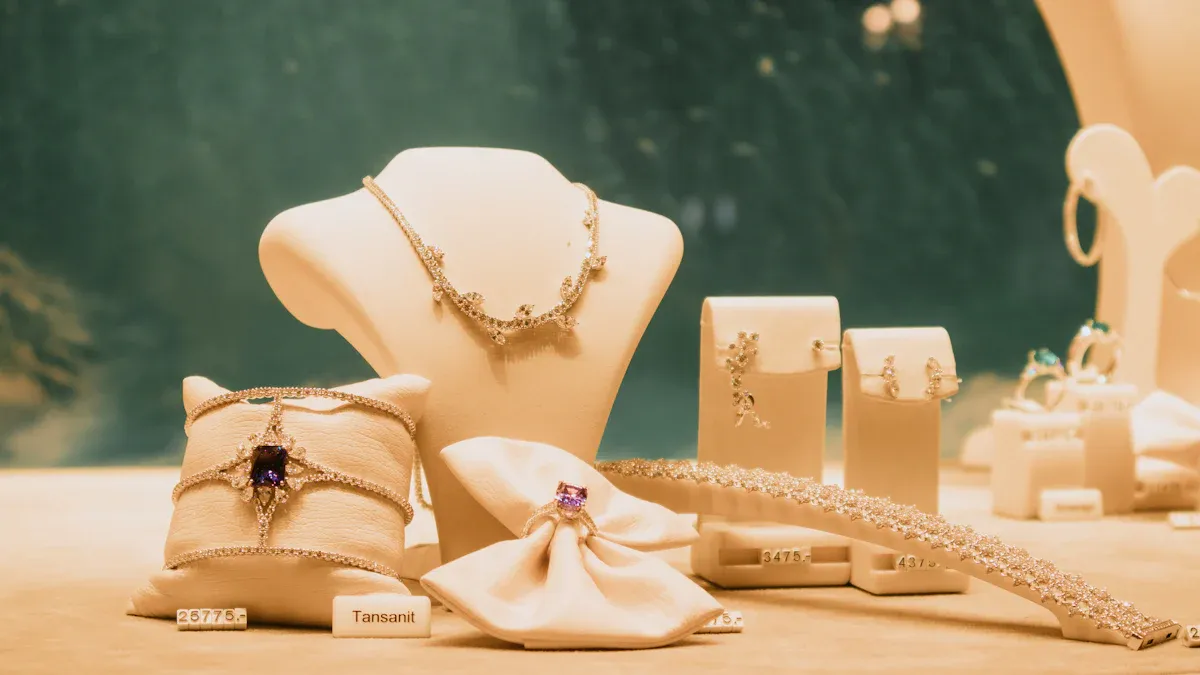
You have the fundamentals. Now you can explore advanced merchandising strategies to create truly memorable retail experiences. These techniques move beyond simple arrangement. They use depth, story, and light to build an emotional connection with your customers. Your goal is to transform your jewelry displays from passive showcases into active, high-impact selling tools. This approach to merchandising will set your retail store apart.
LAYERING FOR DEPTH AND FOCUS
You can create a dynamic visual journey within a small space through layering. This technique uses varied heights to guide the customer's eye, create focal points, and make your entire collection feel more substantial. Effective layering prevents a flat, uninspired presentation and ensures every piece of jewelry gets the attention it deserves.
You can build compelling, multi-dimensional jewelry displays with a few simple steps:
- Place shorter items in the front and taller ones in the back for clear sightlines.
- Use display stands or risers of varying height to showcase items at different levels.
- Stack boxes or platforms to give each piece of jewelry its own distinct space.
- Incorporate shelves or shadow boxes to add even more depth to your display.
Stackable acrylic trays are excellent tools for this. You can use them to turn a simple bracelet display into a three-dimensional showcase. Each transparent layer glows under the lighting, allowing you to organize and feature a large part of your collection. Using raised platforms and angled displays also helps you create a dynamic visual catalog. This merchandising method makes your jewelry displays more engaging.
THEMATIC JEWELRY DISPLAYS
Your displays should tell a story. Thematic merchandising transforms your showcases from simple product holders into chapters of your brand's narrative. You create an immersive world around a unique theme. This ensures every element supports your vision and builds an emotional connection with shoppers. Your display cases become stages that deepen customer connection and enhance your brand's allure.
You can start with simple seasonal themes for your collection.
- Beachy Bliss: Use seashells, sandy textures, and coral props to showcase a summer jewelry collection.
- Winter Wonderland: Employ frosted backdrops, cool lighting, and snowflake motifs to create a magical winter theme for your displays.
Luxury brands use this strategy to communicate a collection's inspiration, heritage, and values without a single word. The organization of your jewelry displays helps tell these stories. Whether for a seasonal collection or a designer tribute, this approach makes your retail experience authentic and memorable. This is why grouping by collection is such a powerful merchandising tool.
Pro Tip: Measure Your Impact You must measure the return on investment (ROI) for your thematic displays. First, define your key performance indicators (KPIs), like increasing sales by 15% for a specific collection. Then, you calculate the ROI. If a display cost $1,500 and generated $500 in profit, your ROI is 33% ($500 / $1,500). You should also track the sell-through rate, which compares the inventory you sold to the stock you have on hand. This helps you compare the effectiveness of different types of jewelry displays.
USING LIGHT TO ADD SPARKLE
Effective lighting is the single most important element for making jewelry sparkle. The right lighting makes gems brilliant and metals rich. The wrong lighting can make even the most expensive jewelry look dull. You must avoid common lighting mistakes that diminish the beauty of your collection.
Many retailers make these errors in their presentation:
- Lack of Accent Lighting: Relying only on ambient light makes every piece look the same. You need focused accent lighting that is three times brighter to highlight specific jewelry.
- Incorrect Light Placement: Placing lights in the back of a case is a major mistake. You should shine lights almost directly on top of the product from the front of the display case to maximize sparkle.
- Low-Quality Light: Using LEDs with a low Color Rendering Index (CRI) can make colors appear muted. You need a high CRI to show the true, radiant colors of your merchandise.
You must choose the right lighting for each type of jewelry. The Color Rendering Index (CRI) and color temperature (measured in Kelvin) are critical. You should always use lighting with a CRI of 90 or higher for your main jewelry displays.
| Jewelry Type | Recommended Color Temperature (Kelvin) | Why It Works |
|---|---|---|
| Diamonds & Platinum | 4000K – 6000K | Cool white lighting enhances brilliance, clarity, and dazzling effects. |
| Yellow Gold & Gems | 3000K – 3500K | Warm white lighting creates a rich, royal glow and enhances the metal's hue. |
The type of bulb you use also matters. LED lighting is the modern standard for luxury retail. It offers significant advantages over older halogen technology.
| Feature | LED Spotlights | Halogen Spotlights |
|---|---|---|
| Heat Emission | Produce very little heat, protecting your jewelry. | Generate significant heat that can damage items. |
| Lifespan | Last for tens of thousands of hours. | Last for only a few thousand hours. |
| UV Emission | Emit no UV radiation, preventing fading. | Emit UV radiation that can degrade delicate pieces. |
| Operating Cost | Higher initial cost but much lower long-term costs. | Lower initial cost but higher energy and replacement costs. |
You can also use dynamic lighting systems to command attention. These advanced systems offer adjustable color temperatures and brightness. They can create captivating chasing light patterns that mimic a rotating effect, making your most valuable jewelry stand out in any display. This is the future of high-impact lighting.
SECURITY, SPACE & DAILY OPERATIONS
You must balance beautiful merchandising with the practical needs of security and efficiency. Your display strategy should protect your valuable jewelry while making daily tasks simple for your staff. This ensures your retail space is not only attractive but also secure and functional. A smart approach to operations protects your assets and enhances the customer experience.
DESIGNING FOR SECURITY
You must prioritize security in your merchandising plan. Smash-and-grab robberies are a growing threat in retail, with reported incidents nearly doubling from 2021 to 2022. Your jewelry displays must be a strong first line of defense.
| Statistic | 2021 | 2022 |
|---|---|---|
| Smash-and-grab robberies reported | 85 | 169 |
| Smash-and-grab robberies with a gun | 11 | 33 |
You can protect your high-quality jewelry by using stable, non-slip risers that are difficult to knock over. For your most valuable jewelry, you should use individual locking pedestal displays or secure jewelry cases. Train your staff to show only one piece of jewelry to a customer at a time. This simple step minimizes risk. Your countertop and showcases should feature shatter-resistant glass and smart lock technology for an added layer of quality protection.
INTEGRATING DIGITAL & INTERACTIVE TECH
You can elevate your retail merchandising by integrating digital technology. Interactive displays create an engaging experience that captures customer attention. Brands like Cartier use augmented reality (AR) to let customers virtually try on a watch and explore its history. This type of interactive display transforms a passive look into an active experience. This merchandising technique builds a stronger connection between the customer and the jewelry. The right lighting and digital elements make your jewelry displays unforgettable. Integrating digital tools has a proven impact, with brands like Burberry seeing a 15% in-store sales lift after adding RFID technology to their displays.
ENSURING OPERATIONAL EFFICIENCY
Your display systems must be efficient for daily setup and breakdown. Modular displays are an excellent solution for managing your retail space. These systems use interlocking and interchangeable components. This allows your staff to quickly change layouts for new promotions or collections. Tiered trays and slat-wall systems also help you maximize vertical space. This merchandising approach keeps your cases organized and visually appealing. Good lighting highlights the quality of the jewelry. Efficient displays save time and allow your team to focus more on the customer. This focus on operational ease is key to successful jewelry merchandising.
Your merchandising transforms a small retail space into a luxury showcase. This merchandising approach maximizes your spatial impact and enhances your jewelry displays. The right display directly improves the customer experience for every customer. This is the future of luxury watches & jewelry retail. Your merchandising must guide the customer to your best jewelry. Effective merchandising creates powerful displays that drive sales. You can redefine your luxury watches & jewelry retail business.
Take Action Now 📝 You should audit your current jewelry cases and display setups. Implement these merchandising strategies to elevate your jewelry. This will create a better journey for each customer and improve your retail success. Your jewelry displays and cases are your best tools to engage a customer.
FAQ
How often should you update your jewelry displays?
You should refresh your displays every 4-6 weeks. This practice keeps your presentation exciting. You can also update them for new collections or seasonal promotions. A fresh look on your jewelry keeps customers returning.
What is the best way to display small jewelry?
You can use individual ring holders or small, tiered risers. These tools elevate small jewelry pieces. This method prevents clutter and gives each item a distinct focus. It makes your delicate jewelry look more valuable.
Can you mix different materials in one display?
Yes, you can mix materials effectively. You should follow the 'Rule of Three'. Limit your display to three complementary textures. For example, you can combine stone, metal, and velvet. This creates a cohesive and luxurious look for your jewelry.
How do you make jewelry stand out in a crowded case?
You use focused lighting and vertical height. Place your hero piece on the tallest riser. Aim a spotlight directly on it. This technique immediately draws the customer's eye. Your most important jewelry will capture attention first.