Top Methods for Cutting Acrylic Sheets in 2026

Many people want to know how to cut acrylic sheet in 2026. Experts say there are a few safe and easy ways. Safety is the most important thing. Workers need to protect themselves from fumes and sharp edges. New tools from Toyin Acrylic Products Co., Ltd. make clean cuts easier. The table below lists important things to think about:
Advantage/Factor | Description |
|---|---|
High Precision and Accuracy | Gives exact designs with smooth edges for detailed work |
Ventilation and Safety | Good airflow keeps you from breathing in dangerous fumes |
Pick the best way based on your skill and what your project needs.
Key Takeaways
Safety is very important when you cut acrylic. You should always wear safety glasses, gloves, and a mask. These protect you from fumes and sharp edges.
Pick the best cutting method for your project. Scoring works well for thin sheets. Jigsaws and bandsaws are good for curves and thick pieces.
Use good tools from Toyin Acrylic Products for better cuts. Their tools help you make smooth and accurate cuts. They are made for both new and skilled users.
Get your workspace ready by making sure it has fresh air. Keep your area clean to stop accidents and get better results.
Sanding and polishing the edges after cutting makes them look nice. It also helps stop cracks. Use fine sandpaper and polishing compounds for the best finish.
How to Cut Acrylic Sheet: Top Methods
Scoring and Breaking
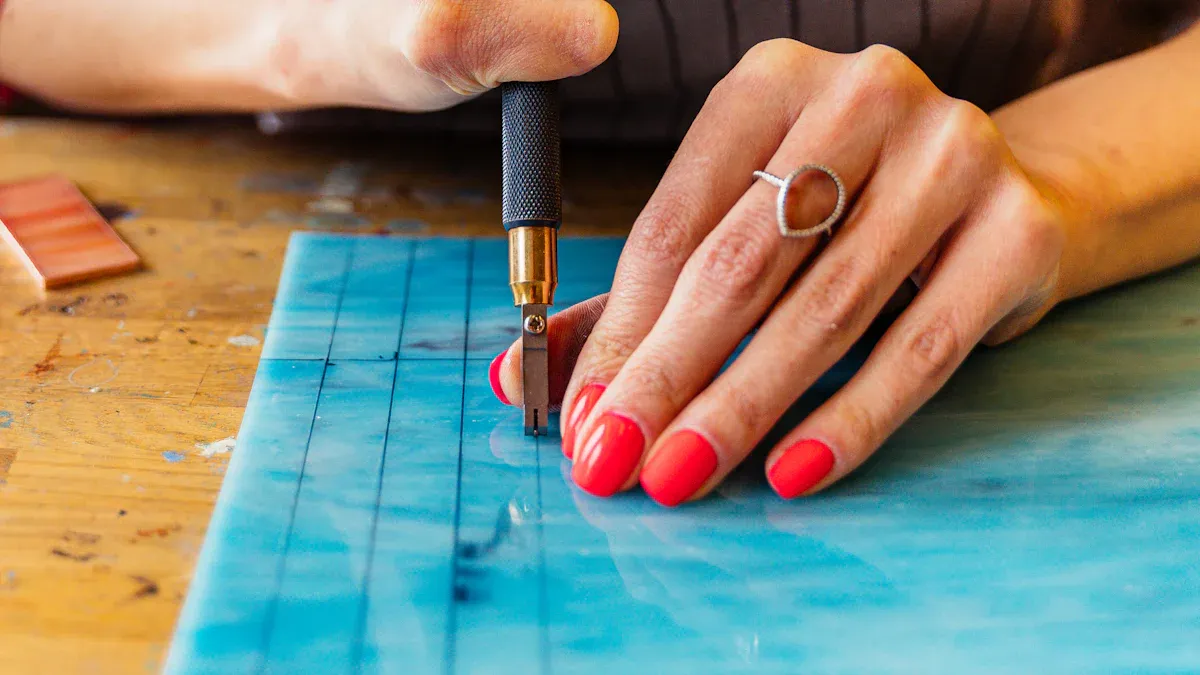
Scoring and breaking is an old way to cut acrylic sheet. Workers use a scoring knife to make a deep line. They snap the sheet along this line. This works best for straight cuts and thin panels. It is good for sheets up to 3 mm thick. If the panel is thicker, use saw-cut or laser-cut methods.
Tip: Scoring and breaking saves money and is simple for beginners. You do not need power tools for this method.
The table below shows how scoring and breaking compares to other ways to cut acrylic sheet:
Method | Advantages | Disadvantages |
|---|---|---|
Scoring | High precision | Limited complexity |
Power Cutting | Speed and versatility | Risk of chipping |
Scoring and breaking is best for straight lines and easy shapes. It does not work well for curves or fancy designs.
Cutting with Jigsaw or Coping Saw
Jigsaws and coping saws are good for cutting curves in acrylic sheets. These tools let you cut by hand and follow tricky patterns. Picking the right blade is important for a clean cut.
Use a triple chip grind (TCG) blade with a rake angle of 5 to 10° and about 60 teeth.
All teeth should be the same height for smooth cuts.
No-melt blades with more space on the sides help stop heat from building up.
Some problems can happen when using a jigsaw or coping saw:
The wrong blade can cause chipping.
Too much heat can melt the acrylic.
You need to support the sheet to stop it from cracking.
Jigsaws and coping saws are great for curves and detailed shapes. They are not as good for long, straight cuts.
Bandsaw and Table Saw Techniques
Bandsaws and table saws are strong tools for cutting acrylic sheets. They can cut thick panels and big projects. Workers use these tools for both straight and curved cuts.
Here are the best blade types and speeds for cutting acrylic sheet:
10" diameter with 60 or 80 teeth
12" diameter with 60, 80, or 100 teeth
14" diameter with 60, 80, or 100 teeth
Best cutting speed for acrylic: 6,000 to 14,000 feet per minute
A 10-inch, 80-tooth blade is good for all-purpose table saw cutting
Band saw blade speed: 2,300 to 7,500 feet per minute
Metal cutting blades, like bimetallic blades, are best for Plexiglas® acrylic sheet
Band saws are good for curves and rough cuts
Large saws with a 30- to 36-inch throat are best for big jobs
Blade width for curves: 0.250 to 0.375 inches; for straight cuts: 0.50 to 0.75 inches
The table below shows cut quality and safety tips for bandsaw and table saw techniques:
Technique | Cut Quality | Safety Precautions |
|---|---|---|
Table Saw | Good for big sheets; use a fine-pitch blade | Cover the surface to stop scratches; support the sheet to avoid chipping |
Bandsaw | Good for straight cuts; use fine-tooth blades | Hold the sheet flat and steady for safety |
Bandsaws are best for curves and rough shapes. Table saws are better for straight cuts and big panels.
Laser and CNC Cutting
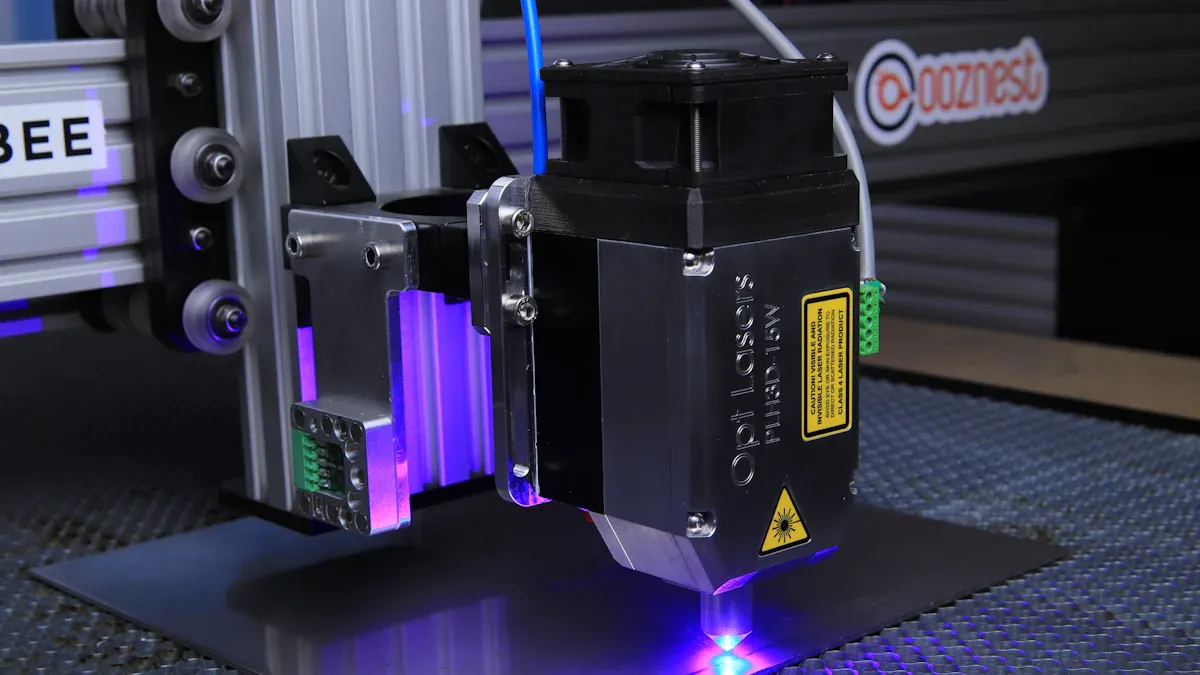
Laser and CNC cutting are high-tech ways to cut acrylic sheet with great accuracy. These machines use computers to make detailed shapes and designs.
The table below shows how precise and smooth the edges are:
Cutting Method | Precision | Edge Quality Characteristics |
|---|---|---|
Laser Cutting | +/- 0.005” | Makes clean edges with little dross, HAZ, or burrs. |
CNC Cutting | +/- 0.005” | Keeps tools sharp to stop burnt parts and chipping. |
Laser cutting saves money compared to old ways of making things. It is very accurate and does not need many checks for mistakes. You can cut many different parts at once, which makes work faster. CNC cutting is also very accurate and works for both straight and curved cuts.
Laser and CNC cutting are best for fancy shapes, detailed designs, and making lots of parts. These ways cost more and are not easy for small jobs.
Using Toyin Acrylic Tools
Toyin Acrylic Products Co., Ltd. makes special tools for cutting acrylic sheets. Their tools help people make clean, exact cuts with less work. Toyin Acrylic tools include scoring knives, saw blades, and laser cutting machines. These tools are made for both new users and experts.
Note: Toyin Acrylic Products have blades and machines made for how to cut acrylic sheet. You can find scoring knives, jigsaw blades, and laser cutters on their website.
Toyin Acrylic tools have many good points:
High precision and smooth edges
Less chance of chipping and cracking
Easy guides for cutting acrylic sheets
Workers can pick Toyin Acrylic tools for their project needs. These tools work for all main ways to cut acrylic sheets, like scoring, sawing, and laser cutting.
Tip: Toyin Acrylic Products help people learn how to cut acrylic sheet safely and easily.
Cutting Acrylic Sheet: Step-by-Step Guide
Tools and Materials Checklist
Picking the right tools helps you cut acrylic well. People use scoring tools, table saws, routers, and clamps for this job. Toyin Acrylic Products Co., Ltd. sells special scoring knives, jigsaw blades, and laser cutters for different projects. The table below lists what tools you need and how to stay safe:
Method | Tools Needed for Cutting Acrylic | Safety Precautions |
|---|---|---|
Table Saw | Table saw, acrylic-specific blades, clamps | Safety glasses, ventilated area |
Router | Router, router bits, clamps | Safety glasses, proper ventilation |
Scoring Tool | Scoring tool, straight edge, clamps, flat surface | Safety glasses, ventilated area |
CNC Router | CNC router, router bits, clamps, safety gear, flat surface | Safety glasses, secure workspace |
You can get scoring knives and jigsaw blades at Toyin Acrylic Products.
Preparation and Marking
Marking your lines the right way helps you avoid mistakes. Use a ruler to draw straight lines and a grease pen to make clear marks. Put masking tape on the cutting line to stop chips. Some mistakes are using the wrong blade, cutting too fast, not measuring, not holding the sheet, and not wearing safety gear. Always check your measurements and keep the film on until you finish.
Cutting Process for Each Method
Here are the steps for scoring and breaking acrylic sheets:
Score the sheet a few times on the marked line. Cut halfway through the sheet.
Move the scored line to the edge of a strong table.
Hold the sheet tight and push the part that hangs off down.
Press down until the sheet snaps in two.
For saws and routers, put the acrylic between scrap pieces. Use fine-tooth blades and keep the cut cool with water or alcohol. Hold the sheet so it does not bend. This helps you get smooth edges. Toyin Acrylic Products Co., Ltd. has guides for using their tools.
Sanding and Polishing Edges
After you cut, sand the edges with 180-grit sandpaper on a block. Wet the acrylic with warm water so it does not get hurt. Use 320-360 grit next to polish, then 600 grit for a shiny look. For deep scratches, use 240-320 grit paper. Flame polishing with a MAPP Gas torch or buffing wheels makes the edge very shiny. Toyin Acrylic Products sells polishing compounds that last a long time.
Tip: Sanding and polishing make the edges smooth and help stop cracks.
Safety Precautions When Cutting Acrylic Sheet
Personal Protective Equipment
Workers must wear the right gear to stay safe. Safety glasses keep eyes safe from chips and laser light. Gloves protect hands from sharp edges. Flame-resistant clothes help stop burns. If the air is not good, wear a mask to avoid fumes. The table below shows what each item does:
PPE Item | Purpose |
|---|---|
Safety Glasses | Protects eyes from laser beam light and flying chips |
Protective Clothing | Minimizes risk of fire or burns; flame-resistant recommended |
Gloves | Prevents cuts from sharp acrylic edges |
Respiratory Protection | Shields from harmful fumes if ventilation is inadequate |
Tip: Toyin Acrylic Products Co., Ltd. sells safety glasses and gloves for acrylic work. You can find them at Toyin Acrylic Safety Gear.
Safe Work Area Setup
A clean workspace helps stop accidents. Always work in a place with good air flow. This keeps you from breathing dust and fumes. Make sure all guards are on and working. Do not wear loose clothes or jewelry. Tie back long hair so it does not get caught. Check the saw blade to make sure it fits right. Never put your hands near the spinning blade. Hold the sheet tight and stop often to clean up dust.
Wear safety glasses with shields.
Keep the area clear of things you can slip on.
Use the right blade for acrylic.
Hold the sheet tight while cutting.
Do not push the sheet too hard into the blade.
Handling and Clamping Acrylic
Handling acrylic the right way stops chips and cracks. Support the sheet so it does not bounce. Use water or alcohol to keep the cut cool. Keep the surface covered until you finish to stop scratches. Clamp the sheet tight to the table so it stays still. Use a straight edge or template to guide your tool. Toyin Acrylic Products Co., Ltd. has clamps and templates for acrylic cutting at Toyin Acrylic Clamps.
Clamp the sheet tight.
Keep your hand steady and cut slowly.
Pick the right blade so you do not cut too hard.
Avoiding Common Mistakes
Many mistakes happen when cutting acrylic sheets. Using the wrong bit can melt the acrylic and make rough edges. If you cut too slow, heat builds up. Not cleaning chips makes the area messy and unsafe. Cutting too deep at once can crack the sheet. Not holding the sheet tight causes chips. Dull bits make bad cuts. Make shallow cuts and check bits often. Secure the sheet and use masking tape to stop edge chips.
Note: Toyin Acrylic Products Co., Ltd. sells single-flute bits and masking tape for acrylic cutting at Toyin Acrylic Bits.
The best way to cut acrylic sheet changes with each project. The table below helps you pick the right method for your job:
Cutting Method | Ideal Use Cases | Recommendations |
|---|---|---|
Flatbed Cutters | Large projects needing smooth edges | Versatile and efficient for acrylic |
Jigsaw/Table Saw | Small projects or simple cuts | Use acrylic blades; stack thin sheets |
By Hand | Beginners or straight cuts | Use scoring knife; best for thin sheets |
He should look at how thick the acrylic is and what shape he wants. Safety is very important. He needs to wear goggles, gloves, and a dust mask. Sanding, polishing, and flame polishing make the edges look better. Toyin Acrylic Products Co., Ltd. sells scoring knives, jigsaw blades, and polish to help get good results. He should always check safety rules before he starts.
FAQ
What is the safest way to cut acrylic sheets?
He should use a scoring knife from Toyin Acrylic Products Co., Ltd.. Safety glasses and gloves protect him from chips and sharp edges. A clean workspace helps prevent accidents.
Can someone cut thick acrylic sheets at home?
She can cut thick acrylic sheets with a table saw or a bandsaw. Toyin Acrylic Products Co., Ltd. offers blades made for acrylic. She must clamp the sheet and wear safety gear.
How does laser cutting improve edge quality?
Laser cutting gives smooth edges and high precision. Toyin Acrylic Products Co., Ltd. sells laser cutters that reduce chipping and cracking. He can use laser cutting for detailed shapes.
What tools help prevent acrylic from cracking?
They can use clamps and scoring knives from Toyin Acrylic Products Co., Ltd.. Clamping the sheet tightly and using the right blade stops cracks and chips.
How can someone polish acrylic edges after cutting?
She can sand the edges with fine sandpaper and use polishing compounds from Toyin Acrylic Products Co., Ltd.. Flame polishing makes the edges shiny and smooth.