How to Select Paint Brushes for Acrylic Paint Without Confusion

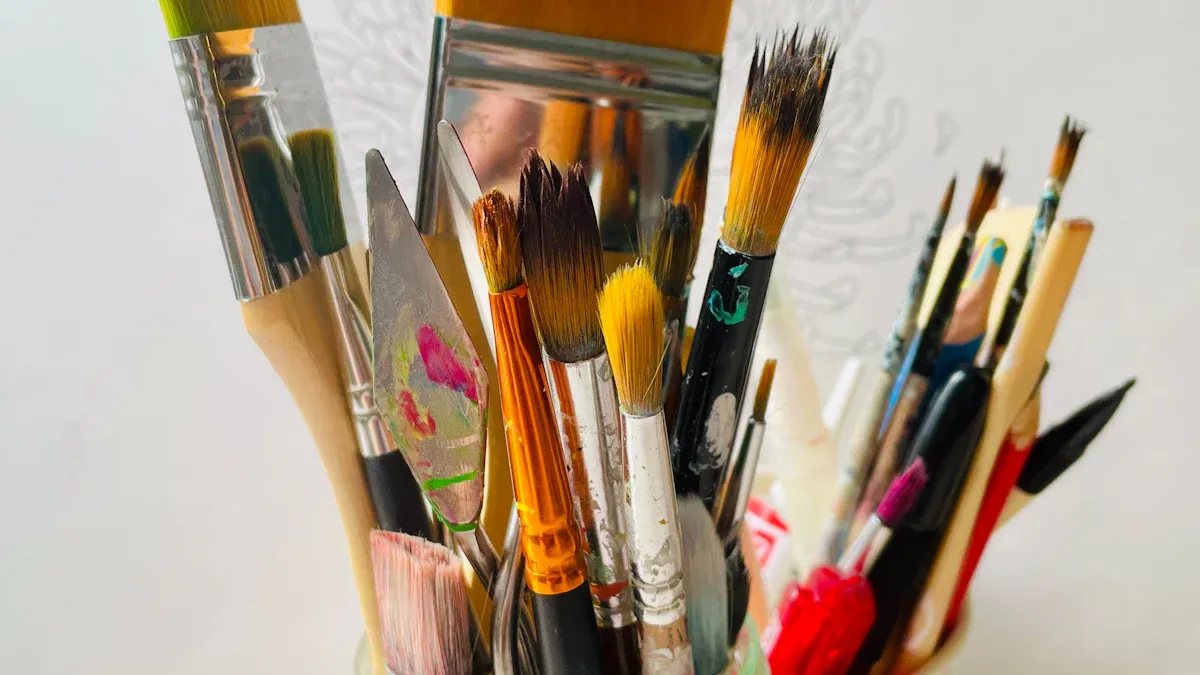
To pick paint brushes for acrylic paint without getting confused, artists should look at brush shape, bristle type, handle length, and quality. These four things help artists not make mistakes, like picking the wrong brush or using a brush with dried paint. Easy rules make it simple for everyone. Many beginners have trouble with putting too much paint on the brush, not cleaning brushes well, or not using good brush control. Good brands like Toyin Acrylic have choices for every skill level.
Picking the wrong brush type can hurt your technique and results.
Putting too much paint on the brush makes drips and uneven paint.
Not cleaning brushes right can ruin them and lower art quality.
Not using the right brush pressure and control changes how your art looks.
Using a brush with dried paint gives bad color and rough texture.
Key Takeaways
Pick the right brush shape for your painting. Flat brushes work well for big areas. Round brushes help with small details.
Use synthetic bristles with acrylic paint. They last longer and do not get damaged by water. They are also easier to clean.
Choose a handle length that fits your style. Short handles give you more control for small work. Long handles are better for wide strokes.
Clean your brushes after each use to keep them in good shape. If paint dries on them, it can ruin the brush.
Buy good brushes that match your budget. Quality brushes help you paint better and last longer.
How to Choose Paint Brushes for Acrylic Paint
Key Factors to Consider
Artists should check a few important things when picking paint brushes for acrylic paint. These things help them get good results and stop mistakes. The main things to look at are brush shape, bristle type, handle length, and quality.
Brush shape changes the strokes and effects you can make. Flat brushes cover big spaces. Round brushes are good for details. Filbert brushes can do many jobs. Fan brushes mix colors or add texture.
Bristle type changes how paint goes on the canvas. Synthetic bristles are best for acrylic paint. They do not soak up water and give a smooth finish. Natural bristles spread paint well and help with detail. They might leave marks. Hybrid brushes mix both types for better paint spreading.
Handle length changes how much control you have. Short handles are good for close-up work. Long handles help with big strokes and painting at an easel.
Quality is important for how long brushes last and how well they work. Good paint brushes for acrylic paint last longer. They keep their shape and are easier to clean.
Tip: Pick brush sizes based on the space you want to paint. Big brushes are best for large areas. Small brushes are good for tiny details.
Why the Right Brush Matters
The right paint brushes for acrylic paint help your art look better. Each brush shape and bristle type has its own job. Using the right brush gives smoother finishes, better texture, and more detail.
Brush Type | Shape and Design | Best Uses |
|---|---|---|
Flat Brush | Straight edge, wide surface | Covering big spaces, making bold strokes |
Round Brush | Pointed tip, round shape | Making fine lines, adding detail |
Filbert Brush | Rounded edges, flat body | Blending, making soft edges, many strokes |
Fan Brush | Fanned-out bristles | Mixing colors, adding highlights, making texture |
Stippling Brush | Packed bristles | Dotting, softening edges, detailed patterns |
Bristle type changes how paint goes on. Synthetic brushes give a smooth finish and less brush marks. They are great for acrylic paint. Natural bristles spread paint evenly and help with detail. They might leave marks. Hybrid brushes help paint spread better and work faster.
Handle length changes how comfortable and controlled you feel. Short handles bring your hand close to the canvas. This helps with accuracy and balance. Long handles let you make big moves and are good for painting at an easel.
Good paint brushes for acrylic paint have many benefits:
Benefit | Description |
|---|---|
Durability and Longevity | Good brushes last a long time if you take care of them. They resist damage from acrylic paint. |
Paint Pickup and Release | Bristles hold paint and let it go evenly for good results. |
Cleaning Ease and Maintenance | Acrylic paint washes out with soap and water. Cleaning is easy. |
Spring and Shape Retention | Brushes keep their shape, which helps with detail. |
Smooth Paint Application | Brushes give a smooth texture and steady paint flow. |
Fine Detail Capabilities | Thin fibers help with tiny detail work. |
Smooth Finish Quality | Brushes make paint go on smoothly and leave fewer marks. |
Professional-Grade Performance | Brushes work well every time and are worth the cost for good results. |
Artists who use good acrylic paint brushes see better paint pickup, easier cleaning, and more detail. Brands like Toyin Acrylic have strong synthetic bristles, comfy handles, and steady performance. They are good for beginners and experts.
Note: Picking the right paint brushes for acrylic paint helps artists stop problems like uneven paint, rough texture, and bad brush control.
Brush Shapes Explained
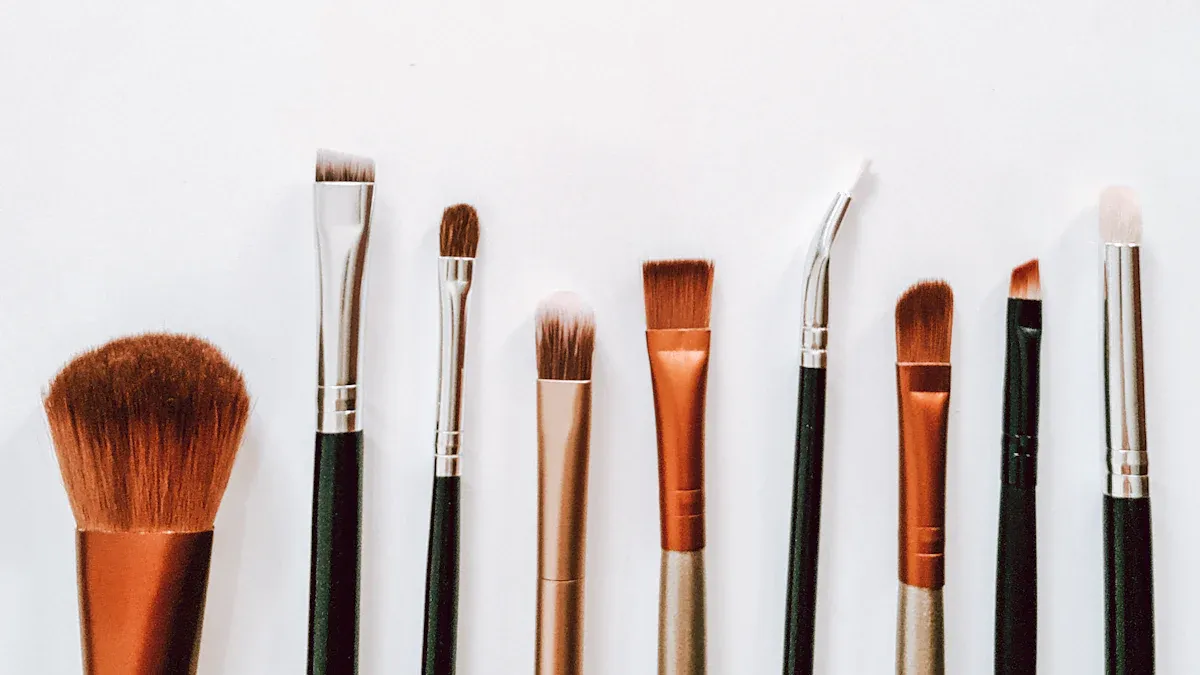
Choosing the right brush shapes helps artists get the best results when painting with acrylics. Each shape has a special job. A good toolkit should include several types of brushes. This gives artists more options for different effects and techniques. Avoiding short-bristled brushes can help prevent streaky or rough paint application.
Flat Brushes
Flat brushes have a straight edge and a wide surface. Artists use them to cover large areas quickly. These brushes can create smooth color transitions and blend colors easily. The edge of a flat brush can paint thin lines or small details. Flat brushes also work well for bold strokes and filling wide spaces.
Smooth color transitions
Drawing thin lines
Blending colors
Filling large spaces
Round Brushes
Round brushes have a pointed tip and a round body. They are essential for detail work in painting with acrylics. Artists use them for outlining, making thin or thick lines, and adding small details. Round brushes hold a lot of paint and allow for smooth, controlled strokes.
Filbert Brushes
Filbert brushes have a flat head with rounded edges. This shape is great for blending and creating soft lines. Artists use filbert brushes to soften transitions between colors and values. The rounded tip helps blend skies, hills, and other soft shapes. Filbert brushes can make both broad strokes and fine details.
Fan Brushes
Fan brushes have bristles spread out like a fan. They are perfect for creating texture in painting with acrylics. Artists use fan brushes to mimic grass, leaves, and clouds. These brushes also help with dry brushing and adding soft highlights. Fan brushes can create special effects like fur or flowing hair.
Specialty Shapes
Specialty brushes include rake, bright, mop, liner, and angular brushes. Each one creates unique effects:
Rake brush: Makes natural textures and fine lines.
Bright brush: Good for bold strokes and defined edges.
Mop brush: Best for soft transitions and washes.
Liner brush: Perfect for fine lines and outlining.
Angular brush: Useful for precise edges and blending.
Tip: A mix of brush shapes gives artists more control and creativity when painting with acrylics.
Brush Shape | Main Uses |
|---|---|
Flat | Coverage, blending, bold strokes |
Round | Detail, outlining, thin and thick lines |
Filbert | Blending, soft edges, broad and fine strokes |
Fan | Texture, foliage, clouds, special effects |
Specialty | Unique textures, fine lines, washes, edges |
Bristle Types for Acrylics
Synthetic Bristles
Synthetic brushes are the best choice for acrylic painting. These brushes last a long time and do not get ruined by water or paint. Artists think they are simple to clean. Synthetic bristles stay in shape and do not fall apart with fast-drying acrylics. They help beginners make smooth lines and keep control of the paint. Many artists pick synthetic brushes because they work well and do not need much care.
Feature | Synthetic Bristle | Natural Bristle |
|---|---|---|
Durability | Excellent (last longer with acrylics) | Moderate (wears down, can break) |
Performance | Better for fast-drying acrylics | Struggles with acrylics, can mat |
Cleaning | Easier to clean | Dried paint can damage |
Tip: Synthetic brushes can use thick or thin acrylic paint and still keep their shape.
Natural Bristles
Natural bristles are made from animal hair. These brushes are good for oil paint but do not last as long with acrylics. Natural bristle brushes can lose hairs and get sticky with water-based paint. They help artists mix colors and make texture, but they need extra care. Some artists use natural bristles for dry brushing or rough effects.
Feature | Natural Bristles | Synthetic Bristles |
|---|---|---|
Pros | Excellent for blending, texture creation, absorbency | Versatile, durable, easy to clean |
Cons | Shedding, needs special care, not for water-based paint | Limited texture, less absorbent, harder to blend |
Stiff vs. Soft Bristles
Stiff bristles give artists more control with thick paint. These brushes make bold lines and strong textures. Artists use stiff bristle brushes for layering and impasto. Dabbing thick paint with a stiff brush makes cool, random textures on the canvas. Soft bristles are better for smooth blending and gentle color changes. The artist picks stiff or soft bristles based on the look they want.
Note: How the brush is made changes how well it holds paint and keeps its shape. Good bristle brushes help artists get the results they want.
Handle Length Choices
Picking the right handle length helps artists control their painting. Handle length changes how artists use brushes for different styles. Short handles and long handles both have special uses for acrylic painting.
Short Handles
Short handles are good for artists who paint at a table. They help artists focus on small details. Artists can sit close to the canvas with short handles. These handles help artists make steady moves. Short handles are used for miniatures, crafts, or fine art. Artists can switch brush sizes fast with short handles.
Advantage | Description |
|---|---|
Better control and maneuverability | Short handles give more control for fine art, crafts, and decoration. |
Close-up control and comfort | They help artists feel comfortable and work with detail on small models. |
Artists using short handles can paint longer without tired hands. They can change brush sizes for better results. Short handles help artists feel confident on tiny, delicate spots.
Tip: Short handles are great for artists who sit and paint or need to work on small details.
Long Handles
Long handles are best for artists who paint at an easel. These handles let artists stand and reach farther from the canvas. Long handles help artists make big, sweeping strokes. They are good for using bigger brushes for bold effects.
Benefit | Description |
|---|---|
Greater reach and control | Long handles let artists paint from far away and make bigger strokes. |
Ideal for easel painting | They are best for artists who like to stand while painting. |
Comfortable grip | Long handles are easy to hold and help with detail work. |
Long handles help artists make wide, sweeping strokes.
They let artists change hand positions easily.
Artists can move their hands more for expressive art.
Using long handles with big brushes lets artists cover large spaces fast. This style is good for backgrounds, landscapes, or abstract art. Long handles help artists relax and try new ways to paint.
Note: Artists should test both handle lengths to find which works best for their style and brush sizes.
Brush Quality and Price
What to Look For
Artists can spot high quality paint brushes by checking a few key features. Good brushes feel balanced in the hand. The bristles stay firm and do not fall out. The handle feels smooth and strong. The metal part, called the ferrule, holds the bristles tightly. Many experts look for these signs when choosing brushes:
Synthetic bristles last longer and keep their shape with acrylic paint.
Different brush shapes, like round, flat, and filbert, help artists paint many styles.
Brush size matters. Artists pick sizes based on the area they want to paint.
Well-known brands often make brushes that work better and last longer.
Taking care of brushes helps them last even longer.
Artists can visit an art store to touch and test brushes. They can check if the bristles bounce back after bending. They can see if the brush feels good in their hand. This helps them choose the best brush for their style.
Toyin Acrylic offers brushes that meet these standards. Many artists trust this brand for its strong handles and reliable bristles.
Balancing Cost and Value
Paint brush prices can range from very cheap to expensive. The price often matches the quality. Artists can use the table below to compare price and quality:
Price Range | Brush Type | Quality Level |
|---|---|---|
$0.02 - $0.20 | Budget Brushes | Low |
$3.00 - $8.00 | Professional-Grade Brushes | High |
$0.15/brush | Yangzhou Yaxuan's Set | Best Value for Starters |
$0.05/brush | BonVada's Bulk Sets | Cost-Efficient |
≥4.8 Reviews | Premium Suppliers | Better Bristle Retention |
Artists do not need to buy the most expensive brushes to get good results. They can start with a set that fits their budget. Over time, they may add more brushes as their skills grow. Many artists find that spending a little more on high quality paint brushes saves money in the long run. These brushes last longer and give better results.
Toyin Acrylic gives artists a good balance of price and quality. Many users say these brushes work well for both beginners and experienced painters.
Tip: Artists should try different brushes and brands to find what works best for their needs.
Recommendations for Paint Brushes
Beginner Sets
If you are new to acrylic painting, you need brushes that are simple to use and last a long time. Many beginner sets have synthetic fibers with split tips. These brushes pick up paint easily and help you control your strokes. They also keep their shape after you use them many times. Most beginner sets come with flat, filbert, round, and fan brushes. These shapes let you try different painting techniques. The best sets do not cost much but still work well for practice.
Synthetic fibers with split tips help paint go on smooth
Low price is good for students and people who paint for fun
Strong bristles keep their shape after lots of use
Flat, filbert, round, and fan brushes give you more choices
Tip: A good beginner set lets you try new styles without spending a lot.
Experienced Artist Picks
Artists with more experience want the best brushes for acrylic painting. They look for brushes that give them more control and last longer. These artists pick brushes with strong handles and high-quality bristles. Many like sets with lots of shapes and sizes. This helps them make tiny details or paint big spaces. Some artists also choose brushes with special things, like extra-long handles or different bristle mixes, to match how they like to paint.
Brush Feature | Benefit for Experienced Artists |
|---|---|
High-quality bristles | Better paint control and detail |
Variety of shapes | More creative options |
Strong ferrules | Bristles stay secure |
Comfortable handles | Less hand fatigue during long sessions |
Artists often try out brushes in person to see what feels best. They might buy a few expensive brushes for their favorite ways to paint.
Why Choose Toyin Acrylic
Toyin Acrylic Products Co., Ltd. is a trusted brand for both new and skilled artists. The company makes many kinds of brushes for acrylic painting. Their synthetic bristle brushes do not get ruined by water and keep their shape, even after lots of use. Toyin Acrylic sells sets with all the main brush shapes, so it is easy to find what you need. Many people like the comfy handles and strong build. Toyin Acrylic Products Co., Ltd. keeps making better brushes to help artists at every level.
Note: You can visit Toyin Acrylic’s website to learn more about their brush sets and single brushes.
Brush Care Tips
Cleaning Brushes
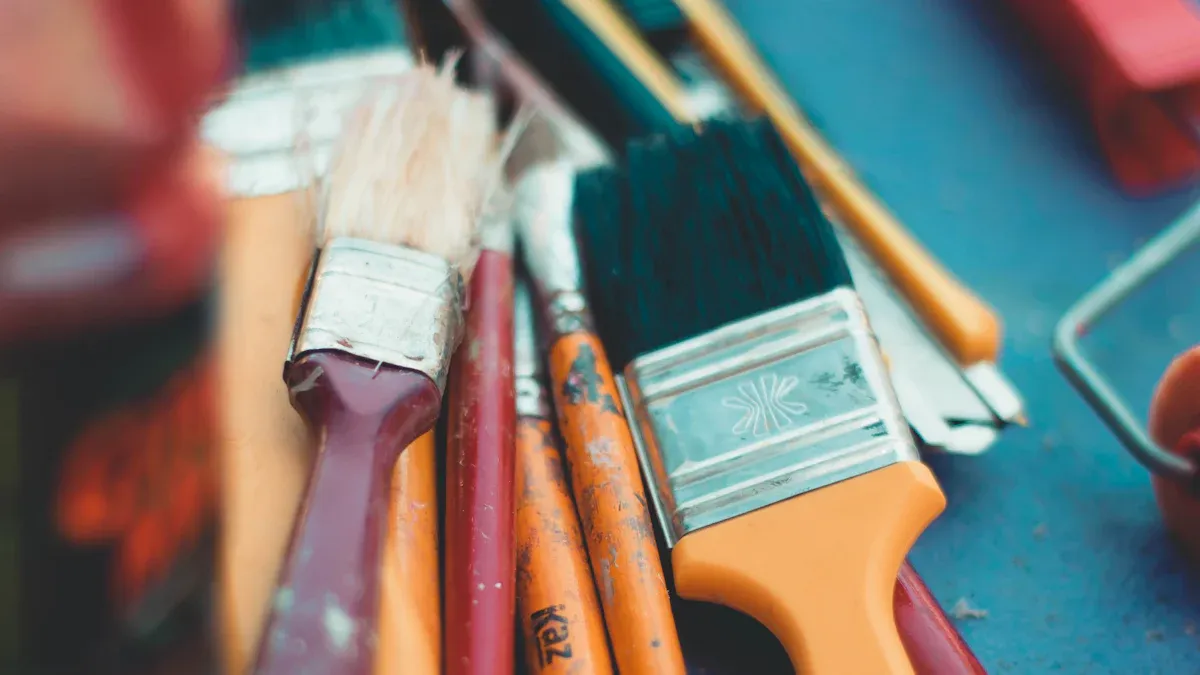
Artists who clean their brushes after each painting session help their tools last longer. Acrylic paint dries quickly, so rinsing brushes right away prevents paint from hardening in the bristles. Use lukewarm water and mild soap to wash out all paint. Gently work the soap through the bristles with fingers. Rinse until the water runs clear. Never leave brushes soaking in water for long periods. This practice can loosen the glue that holds the bristles. After cleaning, reshape the bristles with a brush comb or fingers.
Tip: Always clean brushes before the paint dries. Dried acrylic paint can ruin even the best brushes.
Storing Brushes
Proper storage keeps brushes in good shape and extends their lifespan. Artists should always store brushes in a clean, dry place. Moisture can damage both the bristles and the handle. Before storing, allow brushes to dry completely. Avoid placing wet brushes upright, as water can seep into the ferrule and weaken the glue. Instead, hang brushes upside down or lay them flat. This method prevents moisture from reaching the ferrule and helps maintain the bristle shape.
Store brushes in a room with a steady temperature, away from direct sunlight.
Use a brush comb to remove stray hairs and reshape bristles.
Avoid cramped storage spaces to keep bristles from bending.
Handle natural hair brushes with extra care to prevent damage.
When to Replace Brushes
Even with the best care, brushes will eventually wear out. Signs that a brush needs replacing include frayed or splayed bristles, loose ferrules, and loss of shape. If a brush leaves streaks or cannot hold paint well, it may be time for a new one. Artists who replace old brushes keep their work looking clean and professional. Regularly checking brushes helps maintain high-quality results.
Note: Well-maintained brushes last longer and make painting more enjoyable.
Choosing the right paint brush for acrylic paint is simple if you follow clear steps. Artists can do these things:
Pick a handle that feels comfortable, either long or short.
Try different brush sizes to make different effects.
Choose synthetic bristles because they are strong and resist water.
A good brush has strong bristles, a tight ferrule, and a handle that feels balanced. Toyin Acrylic has brushes that work well for beginners and experts. If you take care of your brushes, you can paint confidently and get better results.
FAQ
What is the best brush shape for beginners?
Most beginners start with flat and round brushes. These shapes help artists learn basic strokes and control. Flat brushes cover large areas. Round brushes work well for details. A starter set usually includes both.
How often should artists clean their acrylic brushes?
Artists should clean brushes right after each painting session. Acrylic paint dries fast. Dried paint can ruin bristles. Quick cleaning keeps brushes in good shape.
Can natural bristle brushes work with acrylic paint?
Natural bristle brushes can work, but they wear out faster with acrylics. Synthetic bristles last longer and resist water. Most artists choose synthetic brushes for acrylic painting.
How does brush size affect painting?
Brush size changes the type of stroke. Large brushes cover big spaces. Small brushes add detail. Artists pick brush sizes based on the area they want to paint.
What should artists do if bristles start to fray?
Artists should reshape bristles after washing. If brushes still fray, they may need replacing. Good care helps brushes last longer.