Audit a factory your guide for ISO 9001 OEMs


An ISO 9001 certificate is a good starting point. You still need to audit a factory in person. This crucial step verifies a supplier's real-world capabilities and protects your business.
Goal: This guide provides a clear path for you. You can assess an acrylic OEM's quality, reliability, and compliance far beyond the certificate on paper.
Step 1: Pre-Audit Preparation
A successful outcome starts long before you arrive at the facility. Proper planning is the most important part when you audit a factory. This preparation ensures you use your on-site time effectively and gather the specific information you need to make a confident decision.
Verify ISO 9001 Certificate and Scope
Your first task is to look beyond the certificate itself. You should verify the certificate number with the issuing body to confirm it is active and legitimate. More importantly, you must examine the certificate’s “Scope of Certification.”
Tip: The scope details which processes are covered by the ISO 9001 standard. If you need acrylic displays, ensure the scope includes activities like "acrylic fabrication," "CNC machining," or "plastic product assembly." A certificate for metal stamping does not guarantee quality in acrylics.
Define Your Audit Objectives
Next, you need to define what a successful audit looks like for your business. What specific questions do you need answered? Your objectives will guide the entire process. Are you focused on:
- Confirming their quality assurance systems?
- Assessing production capacity for a large order?
- Verifying social and ethical compliance?
Clear objectives prevent wasted time and help you focus on what matters most to your partnership.
Develop Your Audit Checklist
Your audit checklist is your roadmap for the on-site visit. It turns your objectives into a systematic plan for gathering evidence. This document ensures you do not forget critical checkpoints. Your pre-audit document review should include:
- Business License: Is it current and valid?
- ISO 9001 Certification: Have you verified the scope?
- Factory Layout Plan: Does it match the facility?
- Employee Training Records: Are key operators certified for their tasks?
- Previous Audit Reports: Can you see a history of continuous improvement?
This checklist will be your primary tool for conducting a thorough and organized assessment on the factory floor.
Step 2: Assessing the Quality System On-Site

You have verified the paperwork. Now you are on-site. This is your chance to see if the factory’s Quality Management System (QMS) is a living process or just a binder on a shelf. A strong QMS is the engine of consistent quality. Your job is to look under the hood.
Reviewing Live QMS Documentation
An ISO 9001 certificate proves a QMS exists. You must confirm it is actively used and effective. Start by requesting access to their live documentation. Do not settle for a guided tour of perfect records. Ask to see specific, real-time documents.
A mature QMS allows staff to retrieve records quickly and easily. When you audit a factory, you can test this. Ask an operator on the floor for their training records or the calibration log for the machine they are using. Their ability to find this information shows if the system is truly integrated into daily work.
Auditor's Tip: Ask to see the history of a specific design change or the supplier qualification file for a key material. A factory with a weak QMS will struggle to find these records. A strong QMS connects this data in a single, traceable system.
Key documents you should review include:
- Quality Manual and SOPs: Are they up-to-date and accessible to employees?
- Training Records: Do they show that operators are qualified for their specific tasks?
- Equipment Calibration and Maintenance Logs: Is critical machinery, like CNC routers and laser cutters, maintained on schedule?
- Management Review Meeting Minutes: Does leadership regularly review quality data and drive improvements?
- Internal Audit Reports: Is the factory finding and fixing its own issues?
Evaluating Corrective Action (CAPA) Records
How a factory handles mistakes tells you everything about its commitment to quality. The Corrective and Preventive Action (CAPA) process is your best window into this. An effective CAPA system is not about blaming people; it is about fixing the process to prevent problems from happening again.
Review their CAPA log. Look for evidence of a structured process:
- Problem Identification: Is the issue described with clear, factual detail?
- Root Cause Analysis: Do they use methods like "5 Whys" to find the true source of the problem?
- Action Plan: Are the corrective actions logical and directly linked to the root cause?
- Verification: Do they follow up to confirm the fix actually worked long-term?
A healthy CAPA process drives continuous improvement and reduces waste. It is a sign of a mature and reliable partner.
🚩 Red Flags to Watch For in CAPA Records:
- Vague Problem Descriptions: Statements like "machine malfunctioned" are not useful.
- Superficial Root Cause: Blaming "human error" without investigating why the error occurred (e.g., poor training, unclear instructions) is a major red flag.
- Recurring Issues: The same problem appearing multiple times indicates their "fixes" are not working.
- No Follow-Up: CAPAs are closed without any proof that the corrective action was effective.
Observing the Internal Audit Process
A great supplier does not wait for you to find problems. They actively look for them. A robust internal audit program is a key requirement of ISO 9001 and a strong indicator of a proactive quality culture.
Ask to see their internal audit schedule and past reports. A well-managed factory audits its own processes regularly. These audits should be planned, thorough, and conducted by trained personnel.
When reviewing their internal audit files, check for:
- A Clear Plan: Do they have a schedule for auditing all key processes?
- Objective Evidence: Are findings based on facts, not opinions?
- Actionable Findings: Do the reports lead to documented corrective actions?
- Follow-Up on Past Issues: Do they verify that previously identified problems have been resolved?
A factory that honestly assesses its own weaknesses and acts on them is a factory you can trust. It shows they are committed to excellence, not just to passing an external audit.
Step 3: Evaluating Production and Technical Skill
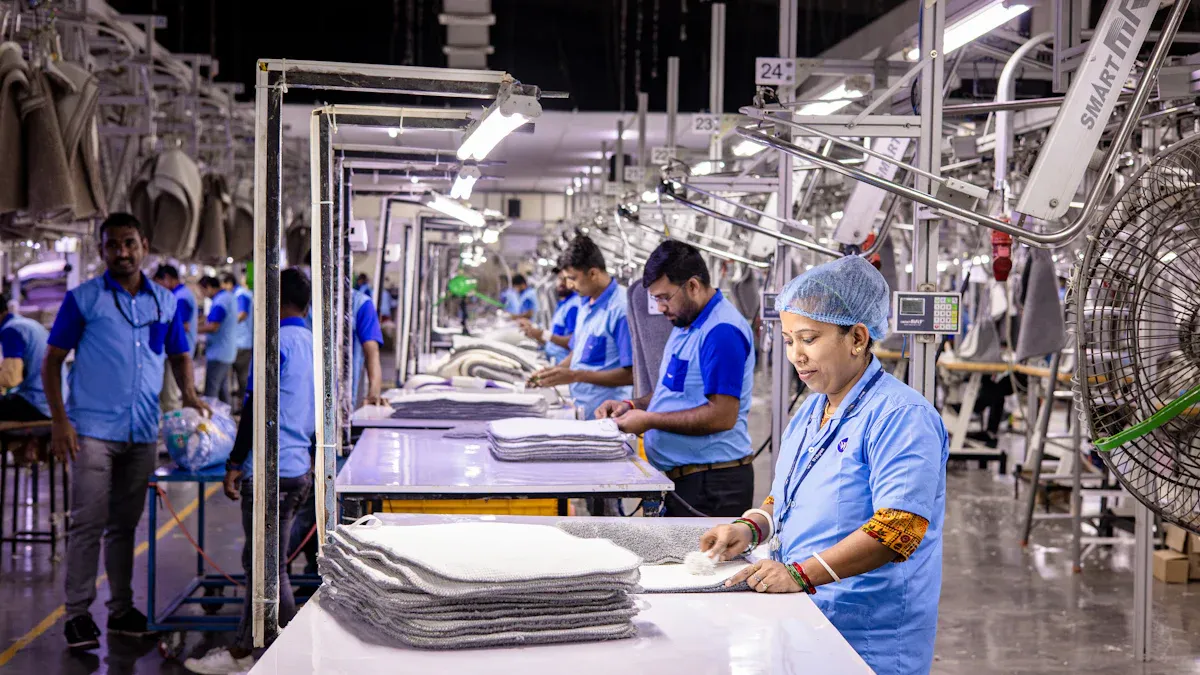
Your audit now moves from the office to the factory floor. This is where you see theory meet reality. A factory's documentation can look perfect, but its physical production capabilities tell the true story. You will now assess the tangible evidence of their technical skill and operational efficiency.
Inspecting Machinery and Maintenance
The quality of an acrylic fixture begins with the quality of the machinery. Well-maintained equipment is essential for precision, consistency, and finish. When you audit a factory, your first stop should be the key production equipment.
Look for modern, well-cared-for machines. For acrylic fabrication, this includes specific types of equipment:
- Laser Cutters and Engravers: These are vital for clean edges and detailed work. Look for CO2 laser systems like AP Lazer or specialized plexiglass cutters that reduce post-processing.
- CNC Routers and Milling Machines: These machines are necessary for cutting thick acrylic and creating complex 3D shapes. Proper tool selection, like single-flute end mills, is critical here.
- CNC Lathes: Used for turning acrylic parts, requiring precise control to form components.
The condition of this machinery directly impacts product quality. For example, improper machine settings can cause heat buildup, leading to melted edges and a poor surface finish. Vibration from poorly secured parts can compromise dimensional accuracy.
Auditor's Tip: Do not just look at the machines. Ask to see the maintenance logs. A detailed log is a sign of a proactive factory. It proves they are committed to preventing breakdowns, not just fixing them.
A comprehensive maintenance log should include:
| Information Category | Details to Look For |
|---|---|
| Equipment ID | Machine name, model, serial number, and location. |
| Maintenance Schedule | Records of planned service intervals (daily, weekly, monthly). |
| Task Details | Specific actions taken, like "lubricated bearings" or "replaced filter." |
| Parts and Materials | Notes on parts replaced and the type of lubricants used. |
| Technician Info | Name or initials of the person who performed the work. |
| Condition Notes | Data from visual inspections, sensor readings, or photos of wear. |
Assessing Workforce Training and Skill
Skilled operators are just as crucial as advanced machinery. A great machine in untrained hands will still produce poor-quality products. Your goal is to verify that the workforce is competent, confident, and well-trained.
Start by observing operators at their workstations. Do they seem confident and efficient? Do they follow Standard Operating Procedures (SOPs)? You can also engage them directly. Ask an operator to explain the quality checks they perform for their specific task. Their ability to answer clearly demonstrates their understanding.
Next, review their training program and records. An effective training program should achieve clear business goals. You can evaluate its success by checking for:
- Knowledge Retention: Does the factory use quizzes or assessments to confirm employees remember what they learned?
- On-the-Job Application: Can you see evidence that the training improved work quality or reduced error rates?
- Employee Feedback: Does the factory collect feedback to improve its training programs?
- Safety Improvement: Has safety training led to a measurable reduction in workplace incidents?
A factory that invests in its people is investing in quality. Look for personalized development plans and competency assessments that show a commitment to continuous skill improvement.
Analyzing Production Workflow and Capacity
A factory's layout and workflow reveal its efficiency. Walk the production path from raw material storage to the final packing station. A logical flow minimizes unnecessary movement and handling, which reduces the risk of damage and delays.
Look for signs of an inefficient workflow:
- Bottlenecks: Are there areas where work-in-progress (WIP) piles up? This indicates a constraint in the process.
- Disorganization: A cluttered or messy workspace can lead to mistakes, safety hazards, and lost time.
- Excessive Movement: Do materials and workers travel long distances between steps? This is wasted time and effort.
- High Rework Rates: A dedicated area for fixing defects is a red flag that their process has quality issues.
Finally, you must assess the factory's true production capacity. Do not just accept the number they give you. Ask how they calculate it. A supplier's stated "design capacity" is a theoretical maximum. You need to understand their "actual capacity."
Capacity Check: Actual capacity is the real-world output after accounting for planned downtime (maintenance, shift changes) and unplanned downtime (breakdowns, material shortages, quality issues). A reliable partner can clearly explain these factors and give you a realistic production estimate.
A factory with a clear, organized workflow and a realistic understanding of its capacity is one you can trust to deliver your orders on time and to your specifications.
Step 4: How to Plan and Audit a Factory for Compliance
A partnership goes beyond product quality. Your brand's reputation is tied to your supplier's business practices. When you audit a factory, you must verify its legal, safety, and ethical compliance. This step protects your business from hidden risks and ensures a sustainable partnership.
Checking Licenses and Certifications
First, confirm the factory operates legally with a valid business license. Beyond this, you need to check for material-specific certifications. These documents prove that the materials used in your products meet international standards for safety and environmental protection. For acrylic fixtures, two key regulations are critical:
- RoHS (Restriction of Hazardous Substances): This EU legislation restricts specific hazardous materials. Compliance is vital for protecting workers and the environment.
- REACH (Registration, Evaluation, Authorisation and Restriction of Chemicals): This regulation identifies Substances of Very High Concern (SVHCs). It ensures that harmful chemicals are not present in your products.
Evaluating Health and Safety (HSE)
A safe factory is an efficient and reliable factory. You must evaluate their Health, Safety, and Environment (HSE) policies to ensure they protect their workers. A strong HSE policy has three core parts:
- Statement of Intent: This outlines the company's commitment to safety and identifies key hazards.
- Responsibilities: This section clearly defines who is responsible for specific safety duties, from management to floor staff.
- Arrangements: This details the practical steps taken to ensure safety, including risk assessments, training, and emergency procedures.
Verify Social and Ethical Compliance
Ethical sourcing is no longer optional; it is essential for protecting your brand. A supplier with poor labor practices can cause severe damage to your reputation. You should check for social compliance certifications like the Workplace Conditions Assessment (WCA).
The WCA is an industry standard that evaluates a factory's labor practices, wages, health and safety, and management systems. It helps you identify ethical suppliers and avoid partners who use child labor or have dangerous working conditions.
Verifying these standards builds trust with your customers. It shows your commitment to social responsibility and secures a partnership that you can be proud of.
A thorough, well-prepared audit is your most effective tool to mitigate risk. Choosing a non-compliant partner can lead to severe brand damage and financial loss. You must look beyond the ISO 9001 certificate and verify a factory's systems, capabilities, and compliance in person.
"It takes 20 years to build a reputation and five minutes to ruin it." - Warren Buffett
A successful audit builds the foundation for a long-term, high-quality manufacturing partnership. This process protects your brand, improves business processes, and ultimately satisfies your customers.
FAQ
How long should a factory audit take?
A typical on-site audit takes one to two full days. The exact time depends on the factory's size and the complexity of your audit objectives. You should allocate enough time to review documents, inspect the production floor, and interview key personnel without rushing.
What is the biggest red flag during an audit?
🚩 The biggest red flag is a lack of transparency. If the factory restricts access to certain areas, cannot find key documents like CAPA records, or gives vague answers, it suggests they are hiding problems. A trustworthy partner will be open and cooperative.
Why audit if they have an ISO 9001 certificate?
An ISO 9001 certificate proves a quality system exists on paper. An audit verifies that the factory actually follows that system in its daily operations. You need to see the system in action to confirm real-world capability and protect your business from risk.
What if a factory fails the audit?
You have two options if a factory fails. You can disqualify the supplier and find another partner. Or, you can issue a Corrective Action Request (CAR) and give them a chance to fix the issues. Your decision depends on the severity of the problems found.