Perfect packaging protects displays safely

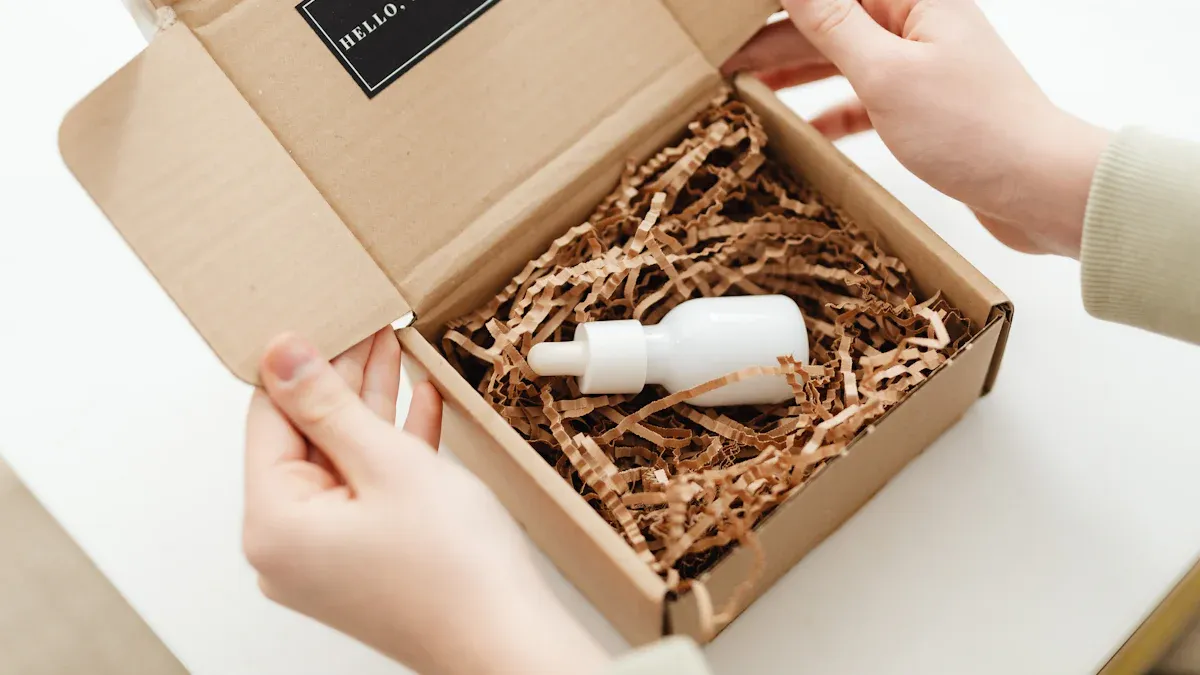
The most effective packaging solution uses a multi-layered system. This approach is the industry standard for preventing costly damage. Your packaging choice directly protects your brand's image. When packaging fails, customers receive damaged goods, leading to frustration and a loss of trust in your company.
The Core System: This superior packaging involves three key parts: a soft inner wrap, custom-fit shock-absorbing foam, and a durable double-walled box.
This specific packaging protects displays and shows your commitment to quality. Investing in the right packaging is an investment in your brand's reputation.
CORE PROTECTIVE MATERIALS
You choose acrylic for your displays because of its premium qualities. It offers amazing clarity and strength. In fact, acrylic can be up to 17 times more impact-resistant than glass. It is also lightweight, which simplifies handling and transport. These benefits make it a top choice. However, its beautiful surface is susceptible to scratches, and its edges can chip under impact. The right packaging materials are your first line of defense. This is why your material selection for the packaging is so important.
PROTECTING ACRYLIC SURFACES
You must protect the large, flat surfaces of your display from scuffs and scratches. Your protection strategy should start directly on the acrylic itself.
First, apply a low-tack protective film. This film uses a special PE-based acrylic adhesive. It sticks firmly to the surface during transit. You can peel it off easily upon arrival. This process leaves no sticky residue behind, ensuring a perfect, damage-free finish. This initial layer is a simple but vital part of the packaging.
Next, you will wrap the entire display in a soft, non-abrasive bag. Polyethylene (PE) foam bags are the ideal choice for this packaging step. Unlike bubble wrap, which can leave marks on sensitive surfaces, PE foam provides gentle cushioning.
Why Choose PE Foam Bags? 🧐
- They have a soft, smooth texture that prevents scratches.
- Their closed-cell structure absorbs shocks and impacts.
- They are lightweight, which helps keep shipping costs down.
- They resist moisture, protecting the display from environmental changes.
This layer of packaging adds another level of security for the display's surface.
GUARDING EDGES AND CORNERS
The edges and corners of an acrylic display are its most vulnerable points. A single drop can cause a chip or crack, ruining the entire piece. Your packaging must provide rigid support in these key areas.
You should use high-density foam edge protectors. Products like the Armour Foam Edge Protector offer great protection from impact damage. Their dense structure makes them highly reusable for future shipments. This type of packaging is specifically engineered to absorb force. For long, straight edges, you can use U-channel foam profiles. This specific packaging protects displays by creating a buffer zone around the perimeter.
| Product | Internal Dimensions (AxB) | Density (pounds) | Description |
|---|---|---|---|
| BR15115 | 0.75" x 0.125" | 1.6 - 1.8 | U Channel, White |
| BR15225 | 0.75" x 0.25" | 2.1 - 2.4 | U Channel, White |
| BR19245 | 1.25" x 1.5" | 2.2 - 2.4 | U Channel, Black |
| BR17222 | 1.5" x 2.5" | 2.2 - 2.4 | U Channel, Charcoal Grey |
Using these specialized materials in your packaging ensures every part of the display, from the center to the corners, is secure.
HOW PACKAGING PROTECTS DISPLAYS
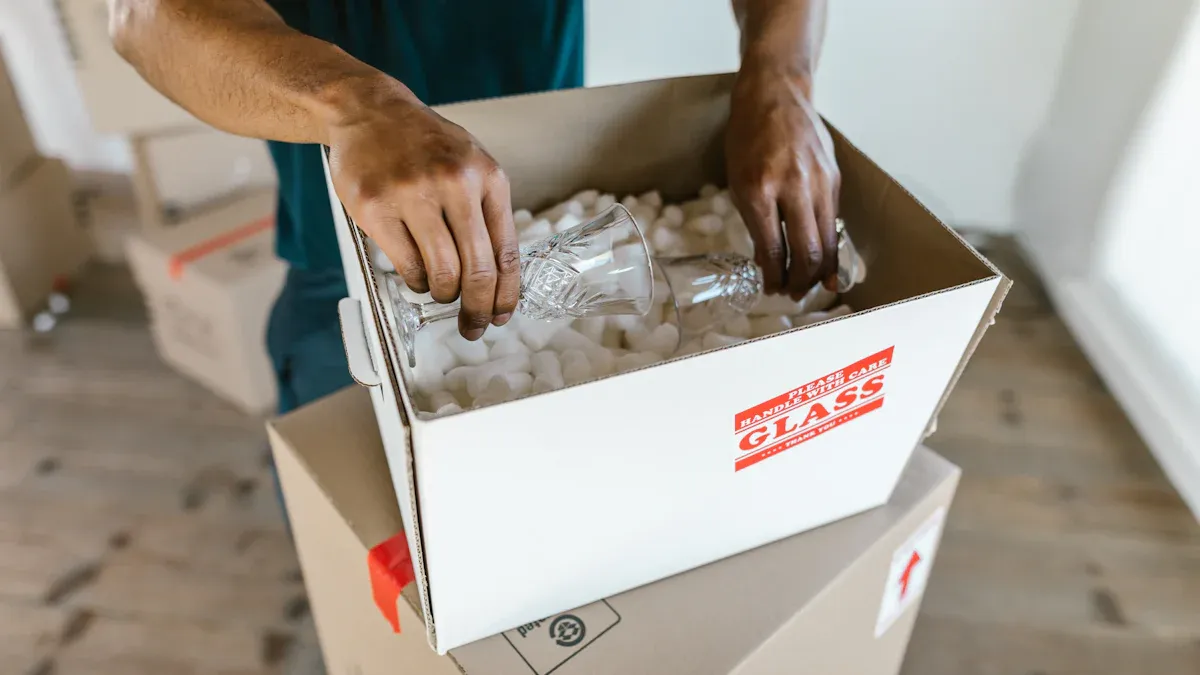
Your previous steps prepared the display's surfaces and edges. Now, you will focus on the science of protection. The right packaging materials do more than just cover an item. They create an engineered system to absorb shock and prevent movement. This is how your packaging protects displays from the intense forces of global shipping.
SHOCK ABSORPTION PRINCIPLES
You have two primary foam choices for this task: Polyethylene (PE) and Polyurethane (PU). Your selection depends on the display's weight and fragility. The right packaging foam is crucial.
| Feature | Polyethylene (PE) Foam | Polyurethane (PU) Foam |
|---|---|---|
| Primary Use | Heavy bracing and support | Lightweight, conforming cushioning |
| Feel | Rigid and firm | Soft and spongy |
| Load Capacity | Higher, supports heavy items | Lower, ideal for delicate items |
| Resilience | Good, returns to shape | Excellent, great for repeated impacts |
- Polyethylene (PE) Foam: You should use PE foam for heavy, durable displays. Its rigid, closed-cell structure provides excellent bracing. This type of packaging does not collapse under a heavy load. It acts as a firm support system inside the box.
- Polyurethane (PU) Foam: You should choose PU foam for lightweight, delicate, or irregularly shaped displays. Its soft, open-cell structure allows it to conform perfectly to the product's shape. This "egg crate" style foam provides superior cushioning for items that need a gentle touch, like those with sensitive electronic components. This packaging is excellent for absorbing smaller vibrations.
IMMOBILIZATION STRATEGIES
Your second goal is to completely stop the display from moving inside the box. Any movement can lead to scuffs, scratches, or impact damage. The best way to achieve this is with custom-fit foam inserts. This packaging strategy holds the display securely in place.
You can create these inserts using several modern fabrication methods:
- Die-Cutting: This method is great for high-volume orders with a consistent shape. It uses a custom steel die to stamp out foam shapes quickly and precisely.
- Waterjet Cutting: This technique uses a high-pressure stream of water to cut intricate shapes. It is perfect for complex designs and prototypes because it requires no custom tooling.
- CNC Routing: A computer-controlled router carves the foam. This method offers high precision for complex, multi-level cavities inside the packaging.
These methods allow you to create a foam cocoon that perfectly matches your display's contours. This custom packaging ensures a snug fit.
The Two-Inch Rule 📏 You must always maintain at least two inches of clearance between your display and the outer box walls on all sides. This space is filled with your shock-absorbing foam. It creates a critical buffer zone that absorbs impacts before they can reach the product. Following this rule is essential for successful packaging.
By combining the right shock-absorbing foam with a custom immobilization strategy, you create a complete protective system. This level of detailed packaging ensures your acrylic display remains stationary and safe.
THE OUTER SHIPPING CONTAINER
The foam inserts protect your display, but the outer box protects the entire system. This final layer of packaging is your primary defense against external forces. You must select a container that can withstand the harsh realities of shipping. Your choice of packaging here is critical.
BOX STRENGTH AND SIZING
You should always use a new, double-walled corrugated box for your packaging. The strength of these boxes is measured by the Edge Crush Test (ECT). A higher ECT rating means the box can handle more weight and pressure. For a heavy acrylic display, you need a box with a high ECT rating. A heavy-duty double-wall box is an excellent packaging choice.
| Box Type | ECT Rating | Maximum Load Per Carton |
|---|---|---|
| Heavy Duty - Double Wall | 48 ECT | 80 lbs. |
High humidity can severely weaken your packaging. Corrugated boxes absorb moisture from the air. At 50% relative humidity, a box loses about 20% of its stacking strength. In very humid conditions, your packaging can fail completely. You must account for these environmental risks. Industry standards help ensure your packaging is reliable.
| Standard | Focus Area |
|---|---|
| ASTM D642 | Measures how packaging withstands compressive forces. |
| ASTM D4169 | Tests packaging performance under various shipping conditions. |
| ISO 2234:2015 | A globally recognized packaging standard. |
SEALING AND REINFORCEMENT
A strong box is only effective if you seal it correctly. For heavy shipments, standard tape is not enough. You need a high-strength sealing solution. This packaging protects displays by keeping the container securely closed.
You should use a tape with high tensile strength. Filament tape, also known as strapping tape, is an ideal choice. It is reinforced with fiberglass filaments and can have a tensile strength of 100 lbs/in. This type of packaging tape resists splitting under pressure.
For extra security, you can add polypropylene strapping around the box. You must apply it correctly to avoid damaging the container.
- Use plastic or corrugated edge protectors under the straps. These protectors spread the tension and stop the straps from cutting into the box corners.
- Avoid over-tightening the straps. Your goal is to stabilize the load, not crush the packaging.
Proper sealing and reinforcement complete your protective packaging system.
PRE-SHIPMENT VALIDATION
You have designed a robust packaging system. Now, you must test it. Pre-shipment validation confirms your packaging can survive the journey. This step helps you find and fix weak points before they cause costly damage.
SIMULATED TRANSIT TESTS
You can prove your packaging works by simulating real-world shipping hazards. Professional labs perform these tests using specialized equipment. The International Safe Transit Association (ISTA) sets the standards for this process. The ISTA 3A test, for example, is a general simulation for packages under 150 lbs. It even includes an optional test for high-altitude pressure changes, which is vital for air freight.
Testers use machines like electrodynamic (ED) shakers and Multi-Axis Simulation Tables (MAST) to mimic vibrations and impacts. These tests help you understand how your packaging will perform.
Common Packaging Failures Uncovered by Testing ⚠️
- Compression: The box crushes under stacking pressure.
- Concentrated Impacts: Sharp blows damage the box and its contents.
- Abrasion: Surfaces get scuffed from rubbing inside the packaging.
- Material Selection: The chosen foam or box is wrong for the display's weight.
Identifying these issues allows you to improve your packaging design for maximum safety.
HANDLING AND UNBOXING LABELS
Clear communication with shipping handlers is your final protective step. You must use internationally recognized labels on your packaging. These labels overcome language barriers and ensure everyone handles your shipment correctly.
You should use labels with clear symbols and text. A label with a broken glass symbol instantly communicates "Fragile." Upward-pointing arrows clearly show which side must face up. You can find effective labels that combine these messages, such as a 4"x4" sticker with symbols for "Fragile," "Keep Dry," and "This Way Up." Using the right labels is a simple but critical part of your packaging strategy. This final touch on your packaging ensures careful handling from start to finish.
You can ensure your displays arrive safely. Follow this simple packaging checklist.
- Wrap all surfaces.
- Protect the edges.
- Use custom foam packaging.
- Select a strong double-walled box for your packaging.
- Seal and label the packaging correctly.
- Test your packaging design.
This systematic packaging protects displays from damage. Your packaging is a direct message to your customer.
Your investment in quality packaging builds consumer trust. Excellent packaging shows your commitment to quality. This responsible packaging approach can boost your brand's reputation and encourage repeat business. Good packaging is smart packaging.
Investing in the right packaging is an investment in your brand.
FAQ
Do these packaging rules apply to beauty and cosmetics?
Yes. The principles of good packaging design apply to all industries, including beauty and cosmetics. Your packaging for beauty and cosmetics must be protective. The beauty and cosmetics sectors value premium packaging. Good packaging for beauty and cosmetics protects the product and the brand image for beauty and cosmetics.
Beauty and Cosmetics Focus ✨ Your packaging for beauty and cosmetics is key. This packaging for beauty and cosmetics needs care. Your beauty and cosmetics packaging shows quality. This is true for all beauty and cosmetics. The beauty and cosmetics industry demands great packaging. Your beauty and cosmetics packaging is a promise. This packaging for beauty and cosmetics matters. Your beauty and cosmetics packaging must be perfect.
What is sustainable packaging for beauty and cosmetics?
Sustainable packaging uses materials that are better for the environment. For the beauty and cosmetics industry, this means choosing eco-friendly solutions. Good sustainable packaging solutions reduce waste. This type of packaging is important for beauty and cosmetics brands that care about the planet.
What is mono-material packaging for beauty and cosmetics?
Mono-material packaging uses only one type of material. This packaging design makes recycling much easier. For beauty and cosmetics, mono-material packaging is a smart choice. Mono-material packaging helps your customers recycle correctly. It is a key part of many sustainable packaging solutions for beauty and cosmetics.
Can I get custom packaging for beauty and cosmetics?
Yes, you can get custom packaging for your beauty and cosmetics products. Custom packaging solutions are made for your specific needs. This custom packaging can include unique shapes or features like refillable packaging. A good packaging design for your custom packaging helps your beauty and cosmetics brand stand out.