How lighting transforms displays for events

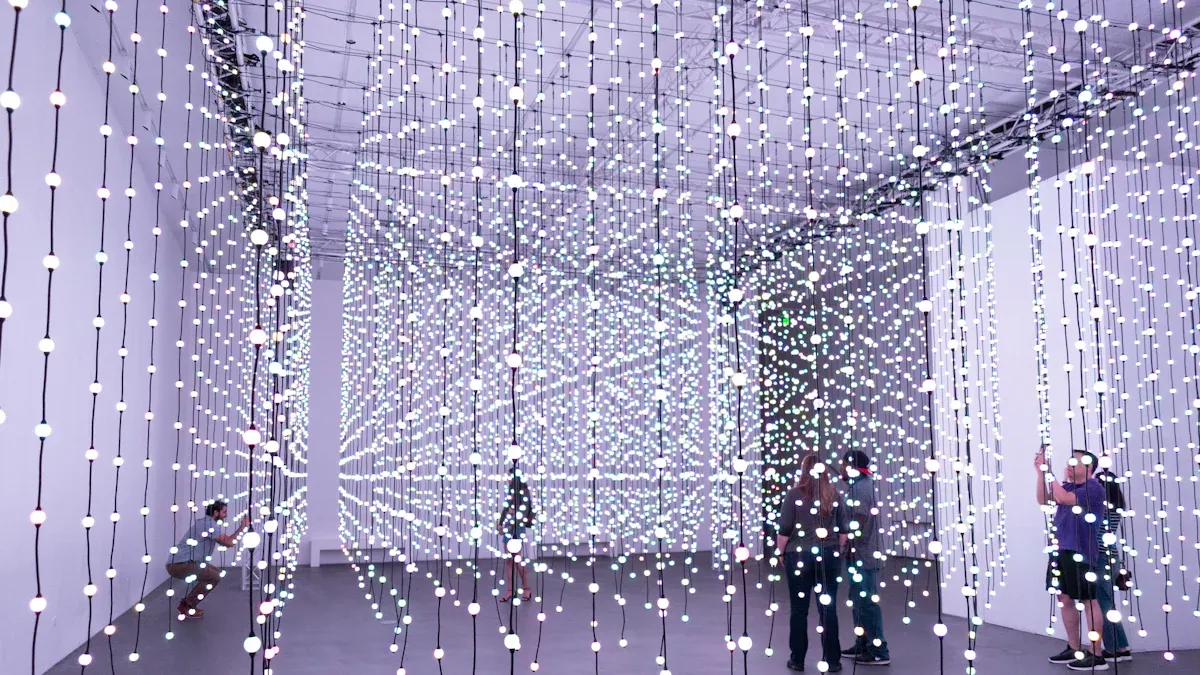
Proper lighting is the key element that elevates a standard acrylic display. Effective lighting transforms displays from simple signs into captivating centerpieces. You can manipulate lighting to enhance the natural properties of an acrylic display. This guides your audience's focus and amplifies your core message. A great acrylic display at your event helps create a positive impression.
Two-thirds of event attendees form a more positive brand view after a live experience. Multi-sensory environments, including visual lighting, boost focus and emotional connection with your display.
This guide provides practical techniques. You can use them to harness the power of lighting for your displays.
Core Techniques: How Lighting Transforms Displays
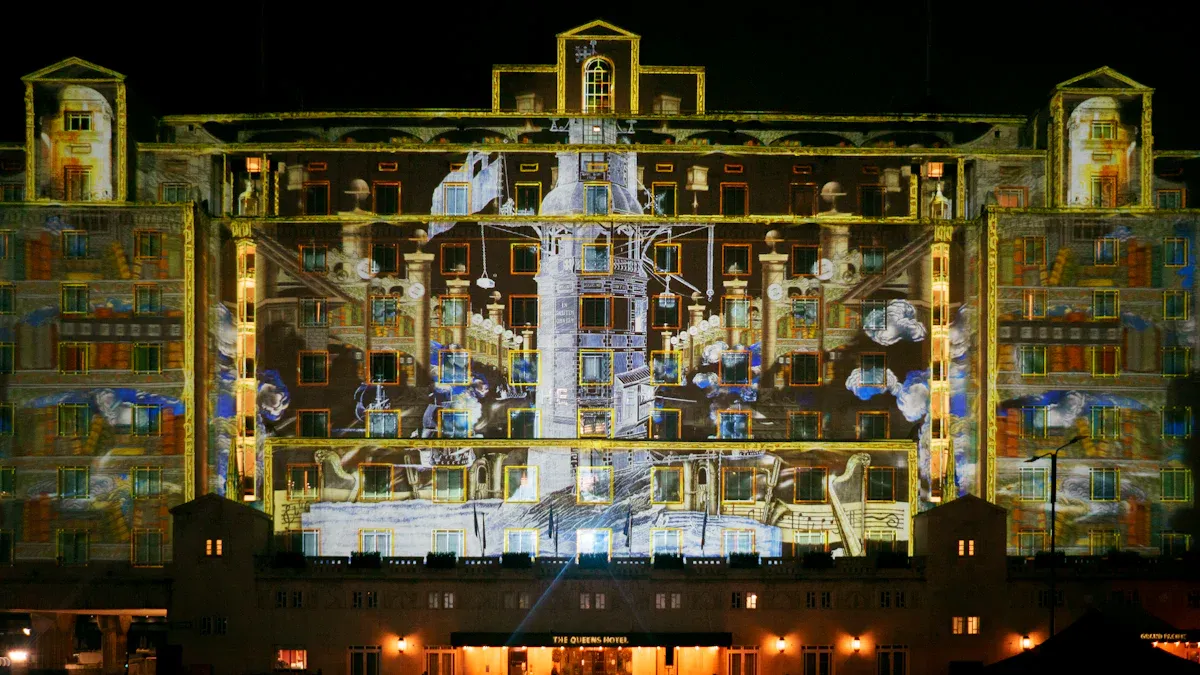
You can master a few foundational techniques to make your displays unforgettable. The way lighting transforms displays depends on your goals, whether you want to create a futuristic glow, a dramatic silhouette, or an intense focal point. Understanding how to manipulate both natural and artificial light is the first step toward creating a flawless display. Let's explore three core methods.
Edge Lighting with LED for a Floating Effect
Edge lighting is a powerful technique for making your graphics and logos appear to float in mid-air. You achieve this effect by embedding linear LED strips along the edges of an acrylic panel. The light travels through the acrylic, catching on any engraved or etched lines in your design. This causes the design to glow brightly, creating a stunning visual statement. This method gives your display a high-tech, luxurious feel that captivates audiences.
Specialized acrylic sheets contain light-diffusing particles. These particles scatter the light from the LED strips, making the entire surface glow uniformly. This advanced process ensures a smooth presentation without showing the individual LED light sources.
For the best results, you need the right kind of LED strips. Look for flexible circuits that are narrow enough for acrylic display cases.
- Width: A 0.25" wide flexible PCB fits perfectly into narrow channels.
- Installation: 3M self-adhesive backing makes installation simple and secure.
- Length: They often come in 16-foot reels, which you can cut to size.
- Color: You can choose between different white color temperatures, like 4000K (neutral white) or 5000K (cool white), to match your brand's aesthetic.
Here are some technical specifications for LED strips well-suited for edge lighting your acrylic display:
| Part No. | Operating Voltage (V) | Power Dissipation per Foot | Emitting Color | Peak Wavelength | CRI | Luminous Flux | LED Qty/Ft |
|---|---|---|---|---|---|---|---|
| ILT-FLX350-OS40 | 24 | 9.5 W | White | 4000K | 85 | 800-825 lm | 21 |
| ILT-FLX350-OS50 | 24 | 9.5 W | White | 5000K | 85 | 840-865 lm | 21 |
Tip: These powerful LED strips generate heat. You must attach them to a metal heat sink to ensure proper heat dissipation and longevity for your display.
Backlighting for Dramatic Depth and Silhouettes
Backlighting is another effective technique where you place a light source behind an acrylic panel. This method can produce two distinct effects. First, you can create an even, soft glow that illuminates translucent graphics from behind. This makes colors pop and is perfect for creating eye-catching displays that are easy to read from a distance.
Second, you can use backlighting to create dramatic silhouettes. By placing an object, like a new product, on acrylic pedestals in front of a brightly lit panel, you conceal its details while emphasizing its shape. This builds suspense and curiosity. This technique is highly effective for:
- Product Launches: Tech and automotive companies often use silhouettes to hide a new product's design until the final reveal.
- Brand Reveals: You can tease a new logo or brand identity, building excitement before the main announcement.
This use of lighting transforms displays from simple signs into storytelling tools. The high contrast between the dark object and the bright background creates a powerful visual impact. You can use colored LED lights to further enhance the mood and align the display with your brand identity.
Spotlighting to Create a Focal Point
When you need to draw all eyes to a single "hero" product, spotlighting is your best tool. This technique uses a tightly focused beam of light to create high contrast, making one item the undeniable center of attention. Luxury brands often use this method in their acrylic display cases. They turn their space into a theatrical stage where a single product gets its moment in the spotlight. This creates a sense of exclusivity and enhances the product's perceived value.
Proper positioning is key to effective spotlighting. You want to maximize contrast while minimizing glare on the acrylic surface.
To avoid harsh reflections, angle your lights at approximately 30 degrees from the vertical. For highly reflective surfaces, a slightly steeper angle of 25 degrees helps direct glare away from the viewer's line of sight.
Choosing the right spotlight is also crucial for highlighting products. Consider the beam angle and lumen output. A narrower beam creates a more dramatic, focused effect. The lumen output determines the brightness of the light.
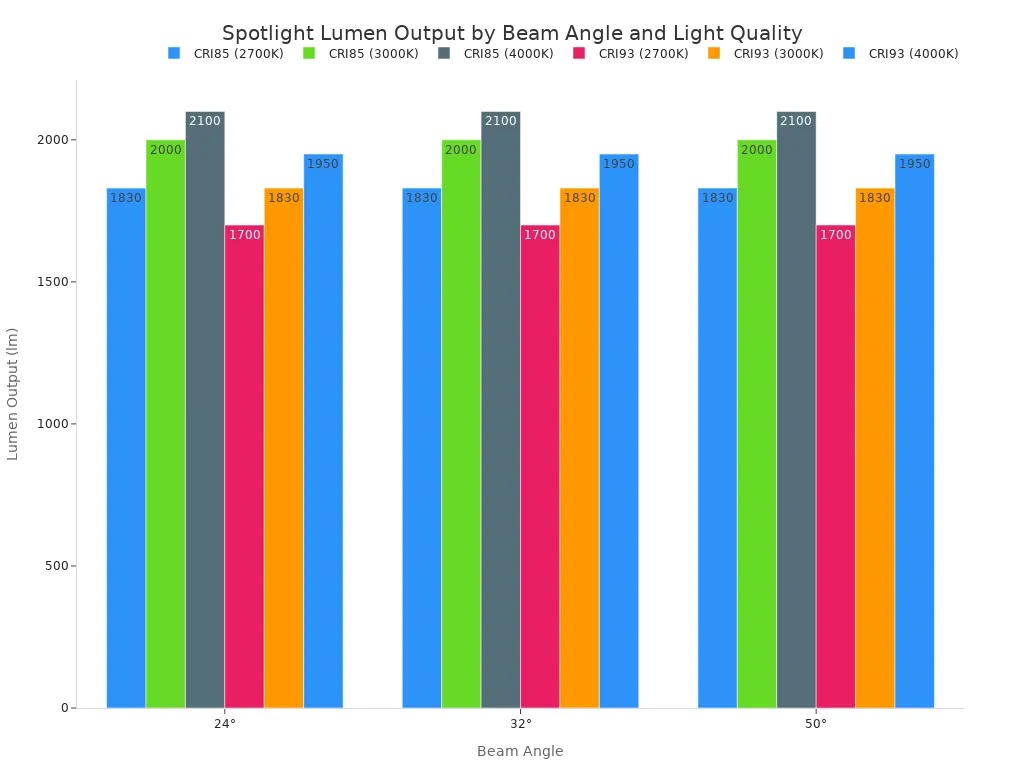
As the chart shows, lumen output remains consistent across different beam angles for a given LED light but changes with color temperature and CRI. Here is a quick reference for a common LED spotlight:
| Beam Angle | CRI85 (3000K) | CRI93 (3000K) |
|---|---|---|
| 24° | 2000 lm | 1830 lm |
| 32° | 2000 lm | 1830 lm |
| 50° | 2000 lm | 1830 lm |
Using a spotlight on acrylic pedestals elevates your product. The focused lighting on the acrylic makes the item seem more important and desirable. This simple yet powerful design choice directs attention exactly where you want it.
Strategic Color and Dynamic LED Display Lighting
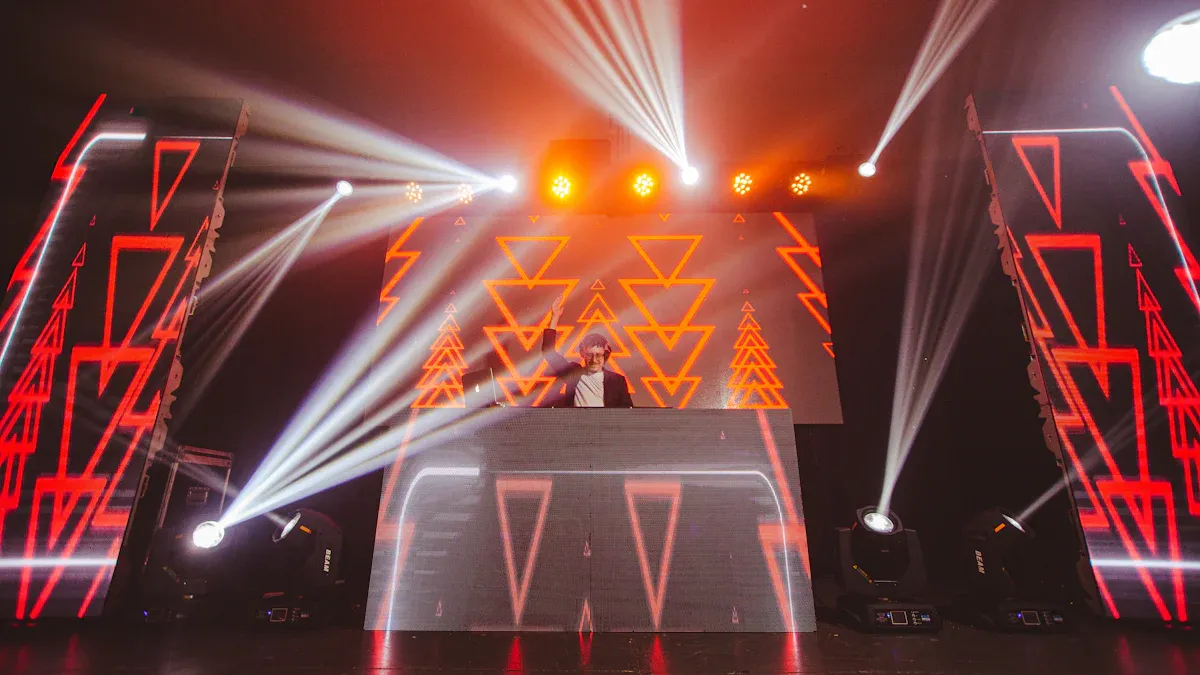
Beyond basic illumination, you can use color and movement to tell a story. Strategic led display lighting choices turn a passive viewing experience into an active, memorable one. Your acrylic display becomes a dynamic canvas for your brand's message.
Reinforcing Brand Identity with Color
Color is a powerful tool that directly influences emotion and perception. You can use colored lighting to reinforce your brand identity instantly. For example, a tech company might use a crisp blue or white light to communicate innovation, while a wellness brand might choose a calming green. The right color choice makes your acrylic display feel like a natural extension of your brand.
Sharp, dramatic lighting can create excitement. Bold colors like red and purple add energy and drama, making them great for product launches or celebrations. Using color-changing LED lights allows for easy transitions between moods.
You can program your LED lights to shift from a professional, neutral tone during a keynote to warmer hues for a networking session. This simple change in lighting transforms the atmosphere and makes your event space more inviting. This is a key part of a successful display design.
Building Excitement with Dynamic Changes
Static lighting is good, but dynamic lighting is unforgettable. You can build excitement and guide your audience's emotions with carefully timed changes. Imagine an acrylic display where the engraved logo pulses with a soft LED glow or where light chases along the edges of the acrylic panel. These effects capture attention and create a sense of anticipation.
You can achieve these effects using DMX programming. Different software and hardware tools offer various features to control your LED system.
| Feature | Software Platform | Hardware Console | Complexity Level |
|---|---|---|---|
| Chase Sequences | Yes | Yes | Beginner |
| Effects Engines | Yes | Yes | Beginner |
| Macros | Yes | Yes | Beginner |
| Pixel Mapping | Yes | Limited | Intermediate |
| Shape Generators | Yes | Limited | Intermediate |
To create a truly immersive experience, you should synchronize your dynamic LED lighting with audio and video. This creates a cohesive show that captivates your audience.
- Understand the Theme and Story: Align your lighting and sound with the emotional tone of your message.
- Synchronize Lighting and Sound: Ensure perfect timing between LED light changes and sound cues to amplify key moments.
- Use Dynamic Contrast: Vary the intensity of your LED lighting and sound to create emotional peaks and prevent monotony.
- Create Spatial Effects: Use moving LED lights and surround sound to make the audience feel immersed in your display.
This level of control over your LED system makes your entire booth a powerful storytelling tool.
The Impact of Strategic LED Exhibit Lighting
Effective led exhibit lighting does more than just improve visibility. It directly influences attendee behavior and perception. The right lighting transforms displays into powerful tools for engagement. You can use strategic lighting to attract more visitors, enhance product value, and create a comfortable atmosphere. This leads to a better return on your event investment.
Increasing Visitor Attraction and Dwell Time
Your booth's design and lighting create about 80% of a brand's first impression at an event. Good trade show lighting makes your display stand out. You can use LED technology to test different lighting setups during an exhibition. This helps you see which configuration generates the most visitor engagement.
You can make small, daily adjustments to your LED lighting. A/B testing these changes helps you measure their impact precisely. This methodical approach lets you optimize your display with minimal effort to attract more visitors.
A well-lit acrylic display captures attention from across the hall. This initial attraction is the first step to increasing how long visitors stay at your booth. An engaging presentation holds their interest longer.
Enhancing Product Perception and Value
The quality of your lighting directly affects how people perceive your products. High-quality LED lighting is crucial for an effective display. The Color Rendering Index (CRI) measures how accurately a light source shows colors. For high-value products, you need a high CRI.
- High CRI (90-100): This makes colors on your acrylic displays look vibrant and true. Luxury brands use this to enhance the appeal of jewelry and premium goods.
- Medium CRI (80-89): This provides good color rendering for standard retail products.
Think of how Apple uses bright, natural LED lights to make its products look clean and modern. Jewelry stores use bright white LED lighting to make diamonds sparkle. This curated presentation makes items seem more desirable and valuable.
Improving Ambiance and Booth Comfort
Your lighting choices shape the entire feel of your booth. Creating ambiance is key to making visitors feel welcome. A comfortable atmosphere encourages people to stay, interact, and listen to your message. For a cozy and inviting feel, you should use warm white LED lights.
Warm color temperatures between 2700K and 3500K are ideal for creating a welcoming ambiance in event spaces. Softer, warmer LEDs make a space feel more comfortable than harsh, cool white lights.
Poor lighting can cause eye strain and fatigue for attendees. Intense or strobing LED effects can be uncomfortable. Using adjustable lighting with a lower color temperature, around 4000K, helps reduce glare. This simple change improves comfort and makes your exhibition booth a more pleasant place to be.
You now know how foundational techniques and strategic color create powerful displays. This knowledge of how lighting transforms displays is key. Effective led display lighting attracts visitors and improves your event. Mastering your display lighting is no longer a luxury; it is essential for a great presentation.
View lighting as your strategic tool. The future of LED technology, with smart automation and immersive experiences, offers endless ways to make your display unforgettable.
FAQ
What is the best type of acrylic for edge lighting?
You should use specialized light-diffusing acrylic sheets. These sheets contain particles that scatter light evenly across the surface. This process creates a smooth, uniform glow for your engraved designs and prevents visible hot spots from the individual LED lights.
How do I choose the right LED color temperature?
You can choose a color temperature to match your brand's mood. Warm white (2700K-3500K) creates a welcoming feel. Neutral white (4000K) is professional and clean. Cool white (5000K+) offers a modern, high-tech look. Your choice helps set the right atmosphere.
Why is a high CRI important for my display?
A high Color Rendering Index (CRI) makes your product colors look accurate and vibrant. You need a CRI of 90 or higher for luxury items. This enhances the product's perceived quality and value, making it more appealing to your event attendees.
How can I prevent glare on my acrylic display?
You can reduce glare by adjusting your light source. Position your spotlights at a 30-degree angle to the display. This angle directs reflections away from the viewer's eyes. Using diffused lighting or anti-glare acrylic also helps create a clear, professional presentation.