Guide to Anti-Theft Features for Fixtures

You face a core retail challenge. Your clients need robust security for their countertop displays. An effective display must also feel open and inviting. The best protection comes from a layered strategy. This approach blends physical deterrents, smart features, and thoughtful custom design.
Note: The goal is to make security an integral part of the custom retail display. A great custom design makes these security features feel invisible. This builds a premium retail experience for any countertop. Your display can offer both security and appeal with the right anti-theft features.
Essential Physical Security
You build the foundational layer of security with physical hardware. These components are the first line of defense. They deter casual theft and create significant obstacles for determined thieves. Your goal is to integrate these features seamlessly into the custom display design. This protects assets without creating a fortress-like feel for the retail customer.
Tethers, Recoilers, and Anti-Sweep Hooks
Tethers and recoilers are essential for securing handheld electronics, tools, and other interactive products. They allow customers to pick up and examine an item. The cable prevents them from walking away with it. You must first consider the display surface. This choice determines the best mounting option for your custom fixture.
Mounting Type | Attachment Method | Best For |
|---|---|---|
Screw-Mounted | Attaches directly to the fixture with screws. | Permanent or high-traffic displays where maximum hold is critical. |
Adhesive-Mounted | Uses strong 3M mounting tape for attachment. | Glass, metal, or other surfaces where drilling is not possible or desired. |
Choosing the right cable involves balancing product weight with customer experience. A cable that is too strong can feel restrictive. A cable that is too weak offers little security.
Cable Strength: Retracting forces range from 0.1LB to over 3LB. Match the force to the weight of the merchandise.
Cable Diameter: Options typically range from a discreet 0.45mm to a robust 2.0mm aircraft cable.
Cable Length: Pull lengths can be specified from 5cm to 400cm. Ensure the length allows customers to comfortably interact with the product on the display.
For pegged merchandise, you can use anti-sweep hooks. These fixtures prevent "smash and grab" or "sweep" thefts where a thief clears an entire row of products. Staff can easily unlock these hooks with a special magnetic detacher. This design maintains security without slowing down legitimate sales.
Brackets and High-Security Locks
Brackets offer a higher level of security for valuable items like tablets, cameras, or POS systems. These enclosures are custom-fit to the device. They bolt directly onto the countertop or fixture. The device is then secured within the bracket using high-security locks. Your choice of locking systems requires a strategic balance between staff accessibility and the level of security.
Feature | Magnetic Locking Systems | Traditional Key/Combination Locks |
|---|---|---|
Staff Accessibility | Very high. Unlocks instantly with a fob or card. Easy to grant or revoke access. | Moderate. Requires physical keys, which can be lost, stolen, or copied. |
Security Level | High. Cannot be picked or pried. Offers strong holding force. | Varies. Can be vulnerable to picking, prying, or brute force attacks. |
Durability | Excellent. No moving parts to wear out or jam. | Good. Moving parts can wear down or jam over time. |
Power Dependency | Requires power to stay locked (fail-safe). | Does not require power (fail-secure). |
Note: Magnetic locking systems offer a modern solution that is both secure and user-friendly. They cannot be forced like traditional locks and provide an extra-strong holding force, making them ideal for retail environments where security is a top concern.
Lockable and Jewelry Display Cases
For the highest value merchandise, nothing replaces a fully enclosed, lockable display case. These are standard for jewelry, luxury watches, and rare collectibles. Modern custom retail display cases use advanced materials that offer incredible protection while maintaining perfect visual clarity.
Polycarbonate is a superior alternative to standard glass for jewelry display cases. It is a shatterproof material that looks nearly identical to glass but is virtually unbreakable. It can withstand repeated, forceful blows from a hammer or crowbar. This feature makes it an exceptional deterrent against smash-and-grab attempts. Your custom retail display cases can provide maximum security while allowing customers to view products clearly.
For ultimate protection, you can use advanced glazing. This technology uses specific formulations of polycarbonate and other plastics. It creates a barrier rated to withstand extreme force, protecting the most valuable luxury items.
The design of the case itself adds another layer of security. You can design different types of jewelry display cases for various retail needs.
Full-view cases use glass or polycarbonate on all sides for maximum visibility.
Half-view cases combine a secure storage base with a glass or polycarbonate top display area.
The door and lock mechanisms are critical features. Hinged doors offer full access for restocking, while sliding doors conserve aisle space. Both can be secured with robust locking systems. You can choose between high-security manual locks or versatile electronic locks. An electronic system allows a single fob to operate multiple jewelry display cases, with access easily disabled if an employee leaves. These anti-theft features make your custom retail display cases a complete security solution. An organized store layout and well-trained staff are key to balancing the security of jewelry display cases with a positive customer experience.
Advanced Anti-Theft Features
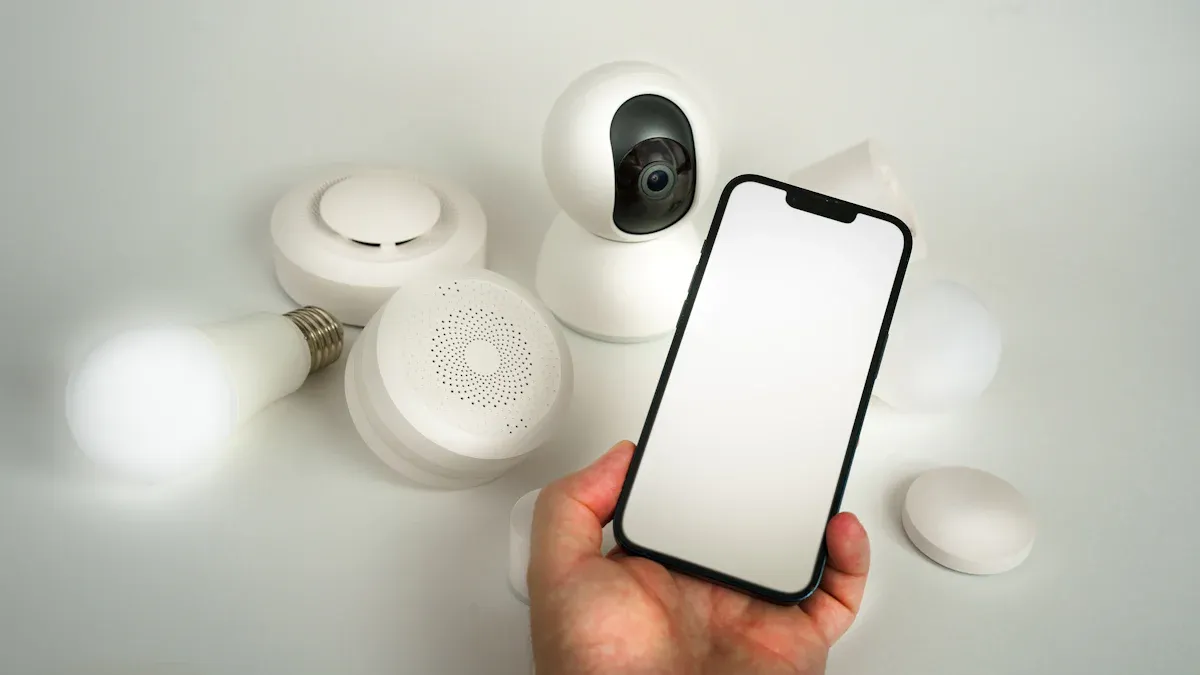
You can elevate your fixture’s security by moving beyond physical barriers. Advanced anti-theft features add an active, intelligent layer of protection. These smart systems use technology to monitor merchandise in real-time. They alert staff to potential theft as it happens. This allows you to create a secure yet open custom retail display.
Alarming Tethers and Sensors
Alarming tethers and sensors turn a passive deterrent into an active alarm system. These devices are perfect for interactive electronics on a custom display. Modern systems often integrate power and alarm functions into a single cable. This design keeps a device charged for customer use while securing it. If someone cuts the cable or removes the sensor, a loud alarm sounds immediately.
For high-risk merchandise, you can use a looping sensor. This provides both physical and alarming security. Its steel-reinforced cable resists cutting, and an alarm triggers if the loop is tampered with. You can also add a plunger sensor to secure removable parts, like a camera lens on a display. A connector screw locks the entire setup to the fixture, preventing unauthorized removal.
Choosing the right sensor technology is key for your custom display. Each type offers unique advantages for different retail situations.
Sensor Type | Advantages | Effectiveness for Alarms |
|---|---|---|
Looping Sensors | Provides physical and alarming security for high-risk items. | Triggers an instant alarm if the cable is cut or the loop is removed. |
Plunger Sensors | Secures removable parts of merchandise. | Triggers an alarm if a secured part is removed or tampered with. |
Pressure Sensors | Discreet and can be placed under items on a display. | Triggers an alarm when an item is lifted from the pad. |
Contact Sensors | Simple and effective for display case doors or drawers. | Triggers an alarm when a secured door or drawer is opened. |
RFID and NFC Integration
Radio Frequency Identification (RFID) and Near Field Communication (NFC) bring powerful data capabilities to your security strategy. These technologies give each product a unique digital footprint. This allows you to track items throughout the retail environment.
RFID is ideal for managing high-value inventory and preventing theft. It works by attaching a small tag to each item. Readers placed at exits or on a custom display can monitor these tags. The system can trigger an alert for many suspicious events.
An item passes an exit without being deactivated at checkout.
A large quantity of items moves at once, suggesting organized retail crime.
An item moves after business hours, which could indicate internal theft.
You should conduct a cost-benefit analysis before implementing RFID. The investment is often worthwhile for high-value merchandise. One retail chain saw a 10% sales increase from better inventory accuracy and a 20% reduction in shrinkage after adopting RFID. While NFC uses similar technology, its application in a retail display is different. You can use this table to understand their distinct features.
Feature | RFID (Radio Frequency Identification) | NFC (Near Field Communication) |
|---|---|---|
Scanning Range | Up to 650 feet. | Within four inches. |
Scanning Type | Scans multiple tags at once without a direct line of sight. | Scans one tag at a time with close proximity. |
Broad inventory tracking and asset management. | Contactless payments and customer interaction at the display. |
AI-Powered Surveillance and Weight Sensors
The most advanced security features use artificial intelligence (AI) to proactively identify threats. AI-powered surveillance systems do more than just record video. They analyze behavior in real-time to spot suspicious activity near a custom display.
Traditional security requires a human to watch camera feeds. An operator can only monitor a few screens effectively before fatigue sets in. AI, however, can watch hundreds of cameras 24/7 without losing focus. It learns normal patterns and flags unusual behavior, like someone lingering too long at a high-value display. This technology essentially gives your custom display a smart guard that never takes a break.
When you implement AI surveillance, you must consider privacy. It is essential to establish a clear regulatory framework.
Data Governance: Create policies for how you collect, use, and store data.
Privacy Impact Assessments (PIAs): Evaluate how the system affects customer privacy before you install it.
Data Minimization: Collect only the data necessary for security and delete it automatically after a set period.
Another smart tool for your custom display is a weight-sensitive pad. You place an item on the pad, and the system calibrates to its weight. If a customer lifts the item, the system can play a video or provide product information. If the item is not returned to the pad within a set time, an alarm can alert staff. You must calibrate these pads carefully. This ensures that legitimate customer interactions with the display do not trigger false alarms. These advanced anti-theft features help you build a smarter, more secure retail experience.
Integrating Security Features by Design
The most effective anti-theft features are not add-ons. They are part of the initial retail display design. A thoughtful design creates a secure environment that feels open and welcoming. You can build security into the very fabric of your custom fixture program. This approach protects merchandise while enhancing the retail experience.
Optimizing Display Placement and Sightlines
You can use store layout as a powerful security tool. This concept is called natural surveillance. It uses design to maximize visibility for your staff.
Create Clear Sightlines: You should design the retail space with unobstructed views. Vary the height of each display. Place taller units against walls and shorter ones in the center. This creates a stadium-like effect.
Use Strategic Lighting: Bright, uniform lighting is essential. It eliminates shadows where thieves can hide. Good lighting makes it easier for staff and cameras to see suspicious activity around any custom display.
Place High-Value Items Wisely: Position your most valuable merchandise on a display within clear view of staff. This simple placement decision is a major deterrent.
A smart design for your custom fixture program makes it harder for criminals to act without being seen.
Balancing Security with Customer Interaction
Your goal is to protect products without locking them away from interested buyers. You must balance security with customer engagement. Well-trained staff are your first line of defense. They can spot suspicious behavior while creating a welcoming retail atmosphere. You can also use smart features in your custom solutions. For example, a display can play a video when a customer picks up a product. This enhances customer engagement and adds a layer of active security. These custom solutions ensure the shopping experience on your countertop displays remains positive.
Making Security an Invisible, Premium Element
The best security is invisible. It should feel like a natural part of a premium display. You can achieve this with custom-built solutions that embed security hardware directly into the fixture. For example, Samsung used discreet security in its pop-up stores and had zero theft. You can integrate mounts, sensors, and locks into the design of custom retail display cases. This makes the product the hero, not the security device.
Your custom retail display cases can use materials and finishes that conceal wiring and locking mechanisms. This approach turns your custom retail display cases into secure yet elegant showcases. These custom-built solutions make your custom retail display cases a seamless part of the premium retail environment.
You can create superior protection for any retail display. Your strategy should combine physical hardware, smart technology, and intelligent design. The best security is part of the initial custom design. It is not a later addition. This approach makes your custom retail display cases feel premium and open. You can prove the value of your custom design to retail clients. Show them how your custom retail display cases improve key metrics.
Track how often the system makes correct security decisions.
Show the display system's ability to spot complex threats.
This thoughtful design for each custom display protects merchandise. It also builds retailer confidence in your custom solutions. A secure display is a valuable service for every retail partner.
FAQ
How do I choose the right security for a product display?
You should assess the product's value and the retail environment. A layered approach is best for any display. Combine physical hardware with smart technology. A custom design integrates these features seamlessly into your retail display. This makes the display secure and appealing for any retail setting. The display design matters.
Can security features be added to an existing retail display?
Yes, you can retrofit many security options. Adhesive-mounted tethers and standalone sensors work well for an existing display. However, a custom design offers the best result. An integrated design hides security within the retail display itself. This custom approach creates a more premium retail display experience.
What is the most secure option for a high-value countertop display?
A custom, lockable case is the most secure choice for a countertop display. You can use polycarbonate for shatterproof protection. A custom design can also include alarming sensors. This combination provides maximum security for your most valuable retail merchandise on any countertop display. The retail display remains elegant.
How do I prevent false alarms with a smart custom display?
You must calibrate sensors correctly. Weight-sensitive pads on a retail display need careful setup. This ensures the display distinguishes between theft and customer interaction. A good custom design for the display also helps. Proper training for retail staff is also key for managing any display system.