Your 2025 Global Rollout Playbook


Your 2025 global expansion targets a massive opportunity, with the supermarket market projected to hit $4.08 trillion. However, a single customs delay or budget overrun can jeopardize your entire project. A successful launch hinges on a master global rollout playbook built on three critical pillars.
You must flawlessly manage strategic logistics, accurate customs classification, and perfect documentation. This guide provides the step-by-step process for your supermarket, convenience, and tobacco fixture rollouts, ensuring an on-time, on-budget execution.
Building Your Global Rollout Playbook: Logistics
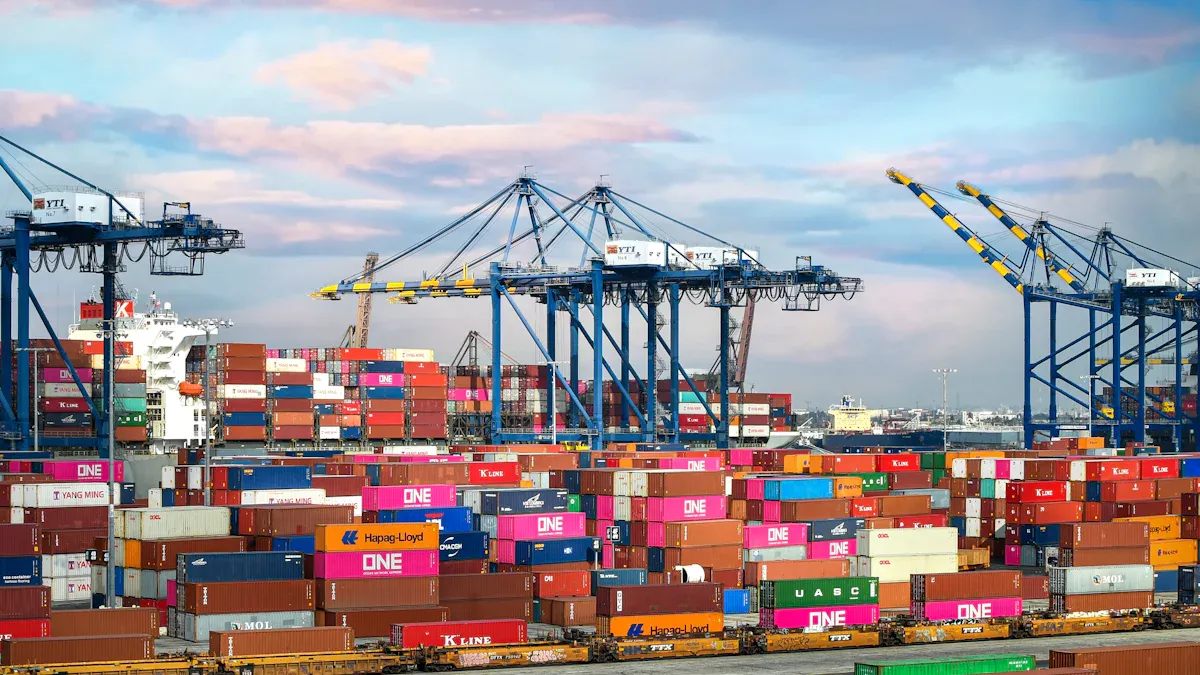
Logistics forms the backbone of your international expansion. A strong plan ensures your high-value fixtures arrive safely, on time, and within budget. Continuous monitoring and control are essential. You must track progress against your original plan to keep the project on schedule. This section of your global rollout playbook covers the critical steps for logistical success.
Selecting Partners and Incoterms
Your choice of partners and shipping terms defines who handles risk and cost. Making the right decisions here prevents costly surprises down the road.
Vetting Freight Forwarders
You need a freight forwarder with proven expertise in high-value retail fixtures. Look for partners with a strong On-Time In-Full (OTIF) delivery record and real-time tracking systems. They should offer both Full-Truckload (FTL) and Less-Than-Truckload (LTL) options to fit your shipment sizes. For convenience and fuel retail insights, you can reference industry bodies like NACS to find specialized supply chain partners.
Choosing Key Incoterms
Incoterms are international trade rules that assign responsibility between you and your supplier. Two common terms illustrate the trade-offs:
- EXW (Ex Works): You take on maximum responsibility. You must handle all shipping steps from the seller's door.
- DDP (Delivered Duty Paid): The seller handles maximum responsibility. They deliver the goods to your final destination, covering all costs and risks.
Note: For high-value fixtures, DDP can simplify your process. However, it often comes at a higher price. Carefully weigh the cost against the reduced risk and administrative burden.
Defining Cost and Risk
Your goals must be S.M.A.R.T. (Specific, Measurable, Achievable, Relevant, Time-bound). Define success with clear metrics. For example, aim for a "98% on-time installation rate" or a "full rollout completed by Q4." This clarity helps you and your partners manage expectations and measure performance effectively.
Packaging for Protection and Compliance
Proper packaging protects your assets from damage and prevents customs rejections. Your fixtures must arrive in perfect condition.
Best Practices for Crating Fixtures
You should use custom crating solutions for your fixtures. The crate design must account for the item’s dimensions, value, and shipping method. Use foam padding and moisture-resistant materials to protect against impacts, humidity, and temperature changes during transit.
Adhering to ISPM 15 Wood Standards
International shipments using wood packaging material (WPM) must follow ISPM 15 standards. This rule requires all wood to be heat-treated or fumigated to prevent the spread of pests. Compliant crates will have an official ISPM 15 stamp.
Avoiding Packaging-Related Rejections
Non-compliance with ISPM 15 has severe consequences. Customs authorities in the U.S. and EU will not allow non-compliant shipments to enter. You could face an Emergency Action Notification (EAN), forcing the immediate re-exportation of your cargo at your own expense. Fines can be as high as three times the cargo's value.
Freight and Insurance Strategy
Your freight and insurance choices directly impact your project's timeline and financial security.
Air vs. Sea Freight: Time and Cost
Your decision between air and sea freight depends on your priorities.
| Feature | Air Freight ✈️ | Sea Freight 🚢 |
|---|---|---|
| Speed | Fastest (1-5 days) | Slower (20-45 days) |
| Cost | Significantly higher | More cost-effective |
| Risk | Lower risk of damage | Higher risk of damage |
Air freight is ideal for urgent, time-sensitive rollouts. Sea freight is better for large-volume, less urgent shipments where cost is a primary concern.
Securing Comprehensive Cargo Insurance
Standard carrier liability is often insufficient for high-value fixtures. You must secure comprehensive cargo insurance. This policy provides financial compensation for loss or damage, protecting your investment.
Protecting High-Value Assets
Work with carriers that offer advanced security measures. These include trailers with electronic locking systems, precision GPS tracking, and 24/7 surveillance at secure facilities. This protects your assets from theft and ensures they arrive safely.
Mastering HS Codes for Retail Fixtures
Incorrect customs classification can stop your global rollout cold. A mistake on a single code can lead to costly delays, fines, and seized shipments. Mastering Harmonized System (HS) codes is a non-negotiable element of your global rollout playbook. This system is the universal language of international trade.
Why HS Codes Are Critical
You must understand the function of HS codes to manage your import process effectively. These codes are more than just numbers; they are the key to customs clearance.
The Role of the Harmonized System
The Harmonized System provides a standardized product code for every item. This uniformity allows countries to collect accurate trade statistics and monitor global commerce. When you use the correct code, you contribute to a transparent system that helps governments and economists analyze trade patterns.
Impact on Duties and Taxes
Your product's HS code directly determines the duties and taxes you will pay. An incorrect code can lead to significant financial penalties. For example, authorities in Bangladesh recently doubled the maximum fine for incorrect HS code declarations, showing how seriously governments treat this issue.
Link to Import Regulations
HS codes also connect your fixtures to specific import regulations. A code can trigger requirements for special permits, licenses, or inspections. Getting the code right from the start ensures you are aware of all compliance obligations before you ship.
Classifying Common Retail Fixtures
Classifying fixtures requires precision. Even small differences in material or design can change the code.
Disclaimer: The following codes are examples only. You must verify all classifications with a customs professional before shipping.
Classifying Shelving and Counters
Your retail fixtures have specific classifications. Metal shelving often falls under heading 9403.20 (metal furniture), while wooden counters may be classified under 9403.60 (wood furniture). For instance, a wooden point-of-sale counter is typically coded as 9403.60.30.
Classifying Lighted Signage
Illuminated signs and displays have their own category. You will likely classify these items under heading 9405.60.
Handling Kits and Multi-Component Units
Shipping fixtures as kits creates complexity. You must determine if the components form a single functional unit or if each part needs its own HS code. This decision heavily influences your duty calculation and requires expert review.
Tools for Accurate Classification
You have several resources available to ensure you select the correct HS code. Using a combination of these tools provides the best results.
Using Government Tariff Databases
Every country publishes its official tariff schedule online. These government databases are the ultimate source of truth for HS codes and their corresponding duty rates.
Consulting Customs Brokers
Customs brokers are licensed experts in classification. They provide professional advice and can help you obtain a binding ruling, which gives you legal certainty on your chosen code.
Using Modern HS Code Finder Tools
You can accelerate your process with modern technology. AI-powered tools use natural language processing and image recognition to analyze product descriptions or photos and suggest accurate HS codes. These systems dramatically reduce classification time and improve accuracy, helping you manage large-volume rollouts with confidence.
The Essential Documentation Packet

Your logistics are planned and your HS codes are verified. The final pillar of your global rollout playbook is flawless documentation. Even a small error on a single form can halt your entire shipment at the border, leading to costly delays and derailing your project timeline. You must prepare a perfect documentation packet for every shipment.
Core Shipping Documents
These three documents form the foundation of every international shipment. You must ensure they are accurate and consistent with one another.
The Commercial Invoice
The commercial invoice is the most critical document for customs. It declares the value of your fixtures, which determines duties and taxes. Simple mistakes here are a common source of delays.
Critical Error Alert: Customs authorities frequently reject shipments due to invoice errors. You must avoid:
- Vague product descriptions like "parts" instead of "metal retail shelving unit."
- Incorrect values, quantities, or currency codes.
- Missing signatures or company letterhead.
The Packing List
The packing list tells customs officials exactly what is inside each crate. It details the contents, dimensions, and weight of each package. Your receiving team also uses this document to verify that the shipment is complete upon arrival.
Bill of Lading and Air Waybill
These documents are your contract with the carrier. You use a Bill of Lading (B/L) for sea freight and an Air Waybill (AWB) for air freight. The B/L is especially important; it serves as a legal document of title to the goods. In a dispute, the Bill of Lading provides irrefutable evidence of ownership and carrier responsibility.
Special and Country-Specific Documents
Beyond the core documents, your destination country may require additional paperwork. You must research these requirements for every market.
Certificate of Origin (COO)
A Certificate of Origin proves where your fixtures were manufactured. This document can help you qualify for lower tariff rates under international trade agreements.
Import Licenses and Permits
Some countries require special import licenses for certain products. Your HS code will often indicate if a permit is necessary. You must secure these licenses before your fixtures ship.
Material and Safety Declarations
These documents certify that your fixtures comply with the destination country's health and safety standards. This may include declarations about the chemicals used in paints or the fire rating of electronic components.
Special Compliance for Tobacco Fixtures
Shipping fixtures for tobacco and vaping products involves a much higher level of regulatory scrutiny. You must prepare for this complexity.
Navigating FDA Regulations
In the United States, the Food and Drug Administration (FDA) heavily regulates anything related to tobacco and Electronic Nicotine Delivery Systems (ENDS). This oversight extends to the fixtures and displays used to sell them.
ENDS Product Display Requirements
You must pay close attention to granular, country-specific rules. For example, when shipping ENDS displays to the U.S., you must include specific product code information in the PG02 section of your customs entry. This is a non-negotiable FDA requirement. Other countries, like the UK and Canada, have their own strict rules on nicotine content limits and packaging that impact fixture design and documentation.
Assembling a Compliant Packet
For tobacco-related fixtures, you must work with a customs expert. They will help you assemble a compliant packet that addresses all national and local regulations, ensuring your fixtures clear customs without issue.
You can achieve a successful 2025 global rollout. Your proactive Global rollout playbook helps you avoid major regulatory and legal challenges. You will master the three core pillars:
- Strategic logistics planning
- Precise HS code management
- Meticulous, compliant documentation
This framework gives you the confidence to execute your expansion, mitigate risks, and ensure project success.
Download our 'Global Rollout Documentation Checklist' to ensure your next international fixture shipment is ready for seamless customs clearance.
FAQ
What is the biggest risk with Incoterms?
You must understand your chosen Incoterm completely. Selecting the wrong one, like EXW, can transfer unexpected costs and risks to you. This mistake can quickly drain your project budget. Always clarify responsibilities with your supplier before you agree to a term.
How do I choose between air and sea freight?
Your choice depends on your project's needs. ✈️ Air freight offers speed for urgent deadlines but costs more. 🚢 Sea freight is more budget-friendly for large volumes but takes much longer. You must balance your timeline against your budget to make the right decision.
Can I reuse an HS code from a past shipment?
You should not reuse codes without verification. HS codes can change, and customs authorities update their rules. Always confirm the correct code for each new shipment. Using an outdated code can lead to fines and delays at the border.
What happens if my commercial invoice has an error?
An incorrect commercial invoice is a major problem. Customs officials will likely stop your shipment.
You could face significant delays, inspections, and financial penalties. Double-check every detail on your invoice, especially the value and product descriptions, to ensure a smooth clearance process.
Why is ISPM 15 so important for my crates?
ISPM 15 prevents the international spread of pests in wood packaging. Non-compliant crates will be rejected by customs. Your shipment could be sent back at your expense. You must use crates with the official ISPM 15 stamp for all international shipments.
Do I need a customs broker for every shipment?
While not always mandatory, you should use a customs broker for complex rollouts. They are experts in classification and documentation. Their expertise is especially critical when shipping regulated items like tobacco fixtures, helping you avoid costly compliance errors.