The Stress-Free Global Rollout Playbook for Exhibits


You face a booming global exhibition market, projected to surpass $66 billion by 2033. This growth makes managing complex international rollouts a daunting task. Your success hinges on a clear, three-part strategy. This Global rollout playbook provides a definitive guide to mastering each stage. It breaks down the process into three core pillars:
- Meticulous pre-shipment planning
- Precise documentation and classification
- Strategic logistics management
Following this system transforms a complex process into a repeatable success.
Your Global Rollout Playbook: Planning Foundations
This planning stage is the most critical foundation for a smooth rollout. Success here prevents costly delays and customs headaches later. Your Global rollout playbook begins with building a detailed and accurate information base.
Create a Master Item Inventory
You must first create a comprehensive inventory of every single item you plan to ship. This document is more than a simple checklist; it is a detailed manifest for customs officials. Each entry should include specific data points. Customs forms require these mandatory details for clearance.
- A detailed description of contents, including quantity and value.
- The net weight of each item.
- The Harmonized System (HS) code for each item.
- The country of origin for all goods.
Pro Tip: Assign a unique Stock Keeping Unit (SKU) to every component, from large graphic panels to the smallest screws. This granular detail simplifies tracking and ensures nothing is overlooked during customs inspection.
Research Country-Specific Import Regulations
Every country has unique import rules. You need to research these regulations early to build an accurate budget and timeline. This step in your Global rollout playbook helps you avoid unexpected duties, taxes, and clearance failures. For example, when shipping to the European Union, you can use the official Access2Markets portal to find tariffs and import rules. The EU may even offer duty relief for goods used in trade promotion.
Different materials also face special scrutiny. Japan, for instance, has strict rules for wood packing materials.
- All wood must be debarked.
- It requires treatment according to ISPM-15 standards.
- The wood must bear the official ISPM-15 stamp.
Failing to meet such specific requirements can result in your entire shipment being rejected. Diligent research is your best defense against these preventable issues.
Documentation and Customs Clearance

Think of your shipping documents as the passport for your goods. Accurate and complete paperwork is your ticket to a smooth journey through customs. Inaccurate documentation is one of the most common causes of global shipping disasters. Even a single error can disrupt your entire supply chain, leading to costly setbacks.
Mistakes in classification or valuation can cause significant delays, generate steep fines, and damage your relationship with international clients. For example, a Canadian furniture manufacturer incurred over $10,000 in storage fees and harmed a key client relationship due to a three-week delay caused by a missing commercial invoice. Proper documentation is the best way to avoid these issues and ensure compliance.
Demystifying HS Codes
The Harmonized System (HS) code is a global language for classifying products. Developed by the World Customs Organization (WCO), this system assigns a unique code to every item, allowing customs authorities worldwide to understand what you are shipping. You must assign the correct HS code to every item in your inventory. This code directly determines the duties and taxes you will pay.
The universal HS code is a six-digit number with a clear hierarchy:
- Chapters (first two digits): Broad product categories.
- Headings (first four digits): More specific product groupings.
- Subheadings (full six digits): Detailed product descriptions.
While these first six digits are standardized globally, many countries add extra digits for further classification. Getting this code wrong carries severe consequences. A U.S. electronics distributor, for instance, faced retroactive fines after misclassifying headphones and underpaying duties by $500,000. In the U.S., penalties for such errors can reach 40% of the merchandise's value, and repeated mistakes will lead to increased audits and scrutiny from Customs and Border Protection (CBP).
How to Find the Right Code: You can use online HS code lookup tools to find the most relevant code for your products. However, for complex exhibit materials, it is always best to seek advice from a professional customs broker. They can help you navigate the nuances of classification and ensure you remain compliant.
Assemble Essential Shipping Documents
Your "passport" requires several key documents. Each one serves a specific legal and logistical function. You must prepare them with absolute precision to prevent customs holds.
-
Commercial Invoice This is the primary document used for customs valuation. It tells officials the value of your goods, which they use to assess duties and taxes. It must be in English and include:
- Full details of the shipper and consignee.
- A detailed description of each item, including its material and purpose.
- The quantity, weight, and total value of the shipment.
- The HS code for each item.
- The Country of Origin.
-
Packing List A packing list is a detailed manifest that itemizes the contents of each shipping container or crate. It should align perfectly with the commercial invoice. Customs officials use this document to physically verify the shipment's contents without having to unpack everything, speeding up inspections.
-
Bill of Lading (B/L) or Air Waybill (AWB) This document is your contract with the carrier. Its function depends on the mode of transport.
| Feature | Bill of Lading (Sea Freight) | Air Waybill (Air Freight) |
|---|---|---|
| Legal Function | Contract, receipt, and document of title. | Contract and receipt only. |
| Negotiability | Can be negotiable, allowing ownership transfer. | Always non-negotiable. |
| Governing Law | Hague Rules, U.S. COGSA | Warsaw & Montreal Conventions |
Essentially, the Bill of Lading acts like a deed to your goods during sea transit. The Air Waybill does not.
- Certificate of Origin (C/O) This document certifies the country where your goods were manufactured. It is essential for leveraging free trade agreements (FTAs), such as the USMCA (United States-Mexico-Canada Agreement). With a valid C/O, your goods may qualify for reduced or zero tariffs, providing a significant competitive advantage. It also helps governments enforce import controls and ensure fair market competition.
Use an ATA Carnet for Temporary Imports
If your exhibit materials will return home after the show, the ATA Carnet is your most valuable tool. It acts as a "passport for goods," allowing you to temporarily import items into foreign countries without paying duties or taxes. This single document simplifies customs procedures for a huge range of goods, including:
- Professional equipment (cameras, A/V gear)
- Commercial samples and prototypes
- Trade show booths, banners, and displays
The ATA Carnet system is recognized in over 90 countries and territories, including recent additions like the Philippines, Saudi Arabia, and Peru. Using a carnet for your Global rollout playbook offers two massive benefits:
- Cost Savings: You avoid paying import duties and taxes upfront. It also eliminates the need to post a temporary import bond, which can tie up significant capital.
- Time Savings: A single, pre-approved document streamlines clearance at multiple borders. This reduces paperwork and minimizes the risk of your exhibit getting stuck in customs, ensuring you make your event on time.
By using an ATA Carnet, you transform a complex, multi-country customs process into a predictable and efficient operation.
Logistics, Shipping, and Execution
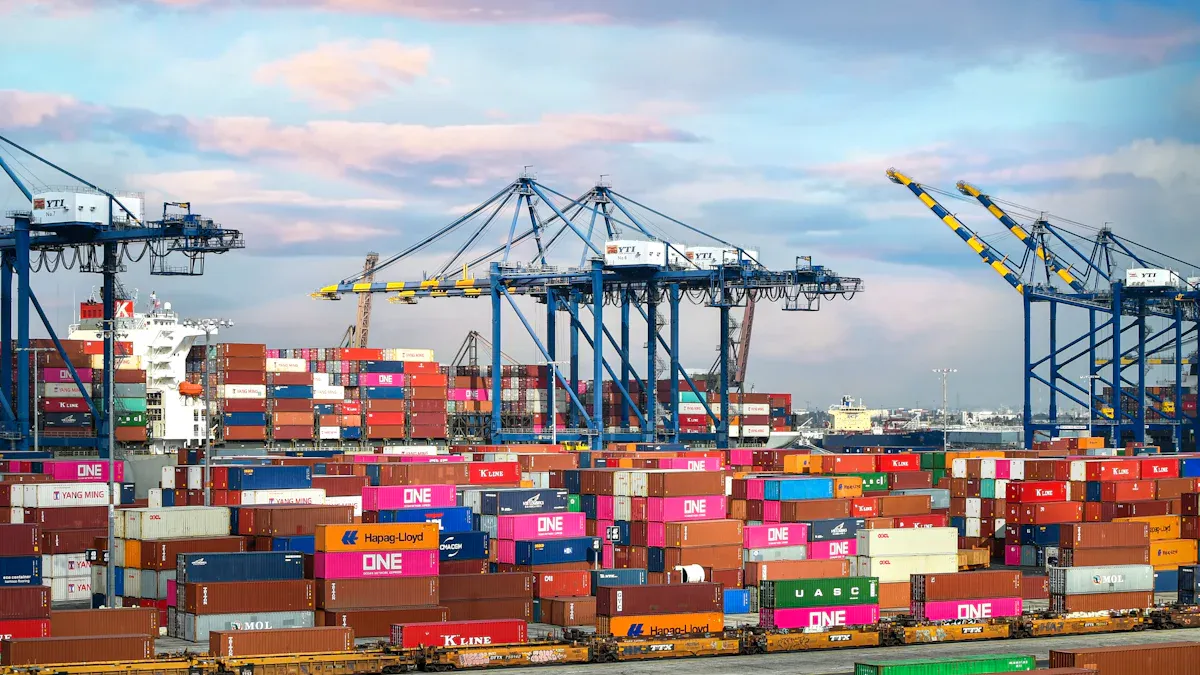
With your planning and documentation complete, you can now focus on the physical movement of your exhibit. This execution phase of your Global rollout playbook depends on strong partnerships and precise handling.
Choose the Right Logistics Partner
Selecting the right logistics partner is a strategic decision. Your partner does more than move boxes; they are an extension of your team. You should evaluate potential partners on a range of criteria to find the best fit. Experience and reputation are the most important factors, followed by the partner's service portfolio.

Look for a partner with a proven international service network and expertise in customs clearance. They should offer transparent pricing and excellent customer service to guide you through every step.
Master International Packaging and Crating
Proper packaging protects your investment. Custom crating absorbs shock and vibration, shielding your goods from damage during transit. For any wood packaging materials like crates or pallets, you must comply with ISPM 15 standards. This international rule prevents the spread of pests.
ISPM 15 Quick Facts:
- Treatment: Wood must be treated, usually with heat (HT), to kill pests.
- Marking: Treated wood must have an official stamp showing the country code, a registration number, and the treatment method (e.g.,
DE-XXXXX-HT).- Exemptions: Processed wood like plywood and particleboard is exempt.
For fragile electronics, use anti-static bags and bubble wrap. Pack items securely in double-walled boxes with at least two inches of padding, and clearly label them "Fragile" and "This Side Up."
Track Shipments and Manage Clearance
You need visibility from departure to arrival. Modern logistics platforms offer real-time tracking using live GPS and automated alerts. This technology lets you monitor your shipment's location and receive notifications about potential delays.
Once your shipment arrives, it enters customs clearance. This process involves:
- Inspection of the goods.
- Examination of all documents.
- Payment of duties and taxes.
- Final release of the goods.
You can manage this process proactively. Ensure all your documents are accurate before shipping. Work closely with your logistics partner or customs broker, as they can help you navigate regulations and resolve issues quickly.
You now have the playbook to master global rollouts. Your success rests on three pillars: meticulous planning, precise documentation, and strategic logistics partnerships. Following this system transforms a complex challenge into a manageable and repeatable success. You can turn strategy into flawless execution.
Ready to put this into action? 🚀 Download our Global Rollout Checklist to ensure no step is missed on your next project. It helps you define objectives, identify roadblocks, and set clear timelines.
FAQ
What is the most common mistake in a global rollout?
The most common mistake is inaccurate documentation. You must ensure your commercial invoice and HS codes are perfect. Errors cause major delays and fines. These issues can disrupt your entire event schedule and budget.
How far in advance should I start planning?
You should begin planning at least three to six months before your event. This timeline provides enough room for research, partner selection, and production. More complex rollouts may require even more time to execute properly.
Can I handle customs clearance myself?
While possible, you should avoid handling customs alone. A professional customs broker understands complex regulations and prevents costly errors. Their expertise ensures your shipment clears customs smoothly, protecting your project's success and timeline.
What happens if my wood crate lacks an ISPM 15 stamp?
Customs officials will likely reject your shipment. They may require you to treat, repack, or destroy the crate at your expense. This action causes significant delays and adds unexpected costs to your budget.
See Also
Mastering Worldwide Collectible Launches: Your Essential Global Strategy Guide
Expert Acrylic Display Insights: Top 5 Manufacturer Tips for 2025
Optimizing Collectible Manufacturing: Enhancing Your Production Process for Efficiency
The Definitive 2025 Handbook: Everything About Custom Acrylic Displays
Illuminating Art: The Impact of Lighting on Gallery Display Transformation