Materials & Safety Compliance Checklist


For your beauty and cosmetics brands, fixture compliance is critical. Your overall compliance hinges on three key areas. This process ensures you meet all safety and legal requirements. Following the correct regulation protects your customers and brand.
The Three Pillars of Fixture Compliance
- Selecting safe materials for all cosmetics displays.
- Meeting structural and electrical safety standards.
- Rigorously verifying supplier documentation and compliance.
This compliance checklist helps you navigate complex regulations. Achieving regulatory compliance with every regulation is non-negotiable. Meeting these requirements is the best way to avoid legal liabilities tied to cosmetic regulations.
MATERIAL COMPLIANCE CHECKLIST

The materials you choose for your display fixtures speak volumes about your brand. For cosmetics, this is especially true. Customers interact closely with your displays, so the materials must be safe, high-quality, and compliant with all regulations. This material compliance checklist guides you through the essential verification steps for common fixture materials. Following these requirements is key to protecting your customers and upholding your brand's integrity.
WOOD, MDF & SUBSTRATES
Wood and Medium-Density Fiberboard (MDF) are popular choices for their versatility. However, you must address the health risks associated with them. Non-compliant composite woods can release formaldehyde, a gas linked to eye and skin irritation, asthma, and other respiratory illnesses. Long-term exposure in a retail space can impact the health of both customers and employees.
Your primary task is to verify that all wood-based materials meet strict formaldehyde emission standards. The two key regulations you need to know are:
- CARB P2 (California Air Resources Board)
- TSCA Title VI (Toxic Substances Control Act)
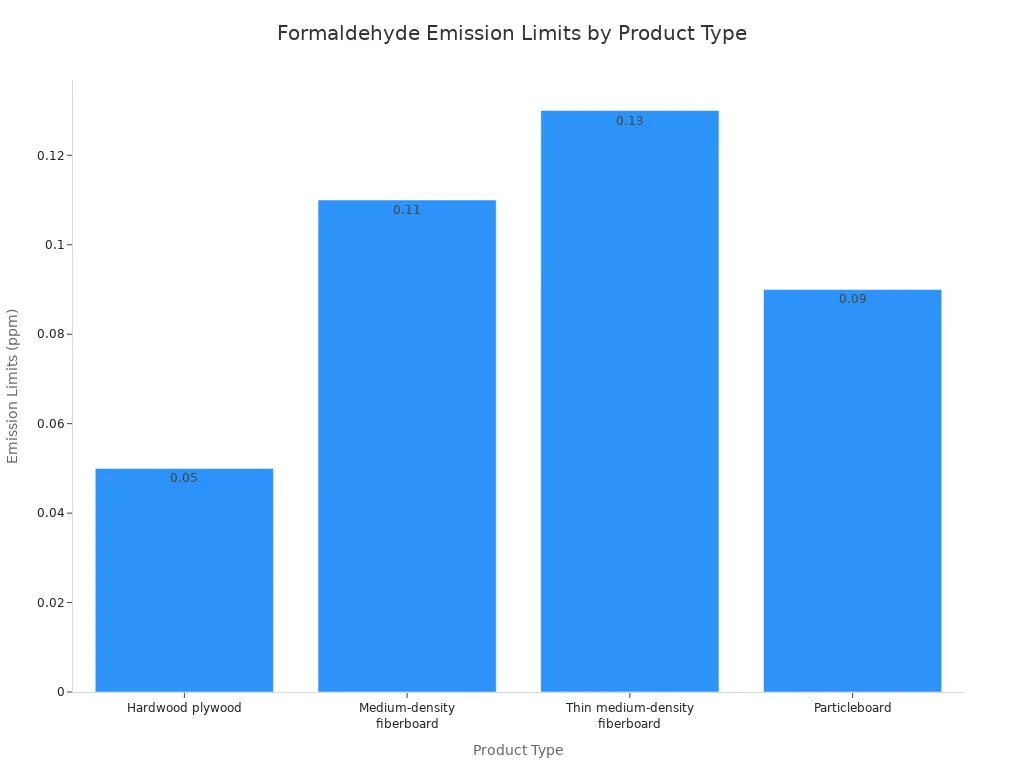
The EPA aligned the national TSCA Title VI rule with California's standards, creating a unified requirement. You must obtain documentation from your supplier confirming compliance with these regulations. The emission limits are measured in parts per million (ppm) and vary by product type.
Formaldehyde Emission Limits (TSCA Title VI / CARB P2)
| Product Type | Maximum Emission Limit |
|---|---|
| Hardwood Plywood | 0.05 ppm |
| Medium-Density Fiberboard (MDF) | 0.11 ppm |
| Thin MDF | 0.13 ppm |
| Particleboard | 0.09 ppm |
Beyond chemical safety, you can enhance your brand's value by choosing sustainably sourced wood. Certifications from the Forest Stewardship Council (FSC) or Sustainable Forestry Initiative (SFI) show a commitment to responsible forestry. This ingredient compliance demonstrates that your materials come from forests managed to:
- Conserve soil, air, and water quality.
- Protect biodiversity and endangered species.
- Use reforestation practices.
- Comply with all federal and state forest laws.
PLASTICS & ACRYLICS FOR COSMETICS
Plastics and acrylics offer a clean, modern look for cosmetics displays. Your responsibility is to ensure these materials are free from harmful chemicals. Certain additives, like phthalates and heavy metals, can pose health risks and are restricted by federal regulation. The FDA also monitors materials that come into contact with cosmetics.
Supplier Verification is Non-Negotiable Always demand test reports from your suppliers for all plastic components. Never assume a material is safe. This documentation is your proof of due diligence and regulatory compliance.
First, you must confirm that plastics are free from banned phthalates. The Consumer Product Safety Improvement Act (CPSIA) prohibits children's products containing more than 0.1% of eight specific phthalates. While your fixtures are not toys, this is the established safety benchmark you should follow. These restricted ingredients include:
- DEHP, DBP, BBP
- DINP, DIBP, DPENP
- DHEXP, DCHP
Second, you must verify that plastics do not contain hazardous heavy metals like lead or cadmium. The accepted testing method comes from ASTM F963, the Standard Consumer Safety Specification for Toy Safety. This standard outlines the testing process to ensure harmful ingredients do not exceed strict limits. Adhering to this standard is a best practice for all consumer-facing products, including your cosmetics displays.
PAINTS, FINISHES & ADHESIVES
The paints, finishes, and glues used on your fixtures contribute to the final look and indoor air quality. You must select products that meet safety requirements for air purity and toxic substances.
Volatile Organic Compounds (VOCs) Paints and adhesives can release VOCs, which are chemicals that pollute indoor air. You should specify low-VOC or zero-VOC formulas for all your fixtures. According to the South Coast Air Quality Management District (SCAQMD), a leader in air quality regulation:
- Zero-VOC paint contains 0 grams per liter (g/L) of VOCs.
- Low-VOC paint contains very low levels, with "super-compliant" paints having less than 10 g/L.
Lead Content Lead is a highly toxic metal. Federal law bans its use in consumer products. Under the CPSIA (16 CFR part 1303), paints and surface coatings cannot contain more than 0.009% lead by weight. You must require your fixture supplier to provide test reports confirming compliance with this critical safety regulation. This is a crucial part of your cosmetic regulations compliance strategy, as it ensures the environment where your cosmetics are sold is safe.
METALS & CORROSION RESISTANCE
Metal components provide strength and a premium feel to fixtures. However, they must be properly treated to resist corrosion. Rust and degradation not only look bad but can also create sharp edges or flake onto products and customers.
For aluminum, anodizing is an excellent choice. This process creates a durable, corrosion-resistant oxide layer that is integrated with the metal itself, not just coated on the surface. For steel and aluminum, powder coating is another common method that provides a protective and decorative finish.
To ensure the finish will last, you should ask your supplier about corrosion resistance testing. The industry benchmark is the ASTM B117 salt spray test. This test simulates a corrosive environment to evaluate how well a finish holds up over time. Other standards like ASTM G85 also exist for more specific applications. Verifying these tests ensures your fixtures maintain their appearance and safety for years to come. The FDA expects a safe environment for all cosmetics, and durable, non-corroding fixtures are part of that expectation.
FIXTURE SAFETY & TECHNICAL REGULATIONS

Beyond the raw materials, the engineering and construction of your fixtures are critical for public safety and legal compliance. A poorly constructed display can pose electrical, fire, or physical hazards to customers and staff. You must ensure every fixture meets strict technical regulations. This protects people from harm and your brand from liability. The FDA expects a safe environment for the sale of all cosmetics, and these technical requirements are a major part of that expectation.
ELECTRICAL SAFETY
Lighted displays bring your cosmetics to life, but they also introduce electrical risks. You must manage these risks carefully to prevent fires and electrical shocks. The key is understanding and requiring proper certification for all electrical components and systems. This is a non-negotiable part of your fixture compliance.
A common point of confusion is the difference between "Listed" and "Recognized" components. Using certified parts is not the same as having a certified fixture.
UL/ETL Listed vs. Recognized: What's the Difference? A fully certified fixture provides the highest level of safety assurance. Local building codes almost always require a full listing for electrical products to ensure they will not malfunction and cause a fire. This certification is your proof of safety and compliance.
| Characteristic | UL/ETL Listed | UL/ETL Recognized |
|---|---|---|
| Application | A complete, standalone product (e.g., an entire lighted display). | An individual component used inside another product (e.g., a power supply, an LED strip). |
| Scope | The entire product is tested for safety and performance. | The component is tested for use within a larger, specific system. |
| Mark | Carries the standard UL or ETL Listed mark. | Carries the UL Recognized mark (often a backward 'UR'). |
To prevent electrical failures, you must also address common environmental and installation issues. These problems can cause components to overheat, short-circuit, or fail prematurely.
Common Causes of Electrical Failure:
- Power Issues: Unstable power, known as 'dirty power,' can overstress power supplies. Voltage spikes or overloaded circuits can fry internal parts.
- Installation Mistakes: Loose electrical connections, using the wrong driver for an LED system, or improper wiring can create immediate safety hazards.
- Environmental Factors: Dust accumulation can trap heat and cook components. High ambient temperatures or moisture can also cause parts to degrade and fail.
Your supplier must build fixtures that account for these risks. Proper engineering ensures long-term safety and performance. The FDA holds brands accountable for the safety of the entire retail experience, including the fixtures that display cosmetics.
FIRE SAFETY STANDARDS
Electrical failures are a leading cause of fires in retail environments. Therefore, your fire safety standards must align with your electrical requirements. The materials you use must resist ignition and limit the spread of flames. This is a critical area of compliance with safety regulations.
For plastic components, you should specify materials that meet UL 94 flammability standards. This standard classifies plastics based on how they burn. A rating of V-0, for example, means the plastic stops burning within 10 seconds on a vertical specimen.
For larger surfaces like back panels and substrates, you must verify compliance with ASTM E84 (also known as UL 723). This is the standard test for the surface burning characteristics of building materials. The test measures two key things in a controlled tunnel:
- Flame Spread Index (FSI): How far and how fast a flame spreads across the material's surface.
- Smoke-Developed Index (SDI): How much smoke the material produces as it burns.
Building codes use these ratings to set requirements for materials in occupied spaces. You must obtain test reports from your supplier confirming that your fixture materials meet the FSI and SDI limits for your retail environment. For lighted displays, you also need to ensure proper heat dissipation. Good design prevents heat from building up, which reduces fire risk and extends the life of electrical components. Meeting these regulations is essential for overall safety.
STRUCTURAL INTEGRITY & STABILITY
A beautiful display is useless if it is not structurally sound. A fixture collapse can cause serious injury and significant damage to your products and brand reputation. You must verify the structural integrity of every display you deploy. This involves a focus on design, material choice, and quality workmanship.
You should look out for common structural failure points. These issues often result from poor design or cutting corners during production.
Key Structural Risks to Avoid:
- Sagging Shelves: Caused by using materials that are too weak or shelves that are too long for the load they must carry.
- Wobbly Displays: Often the result of insecure joints, poor assembly, or an unstable base design.
- Component Failure: Low-quality raw materials, like weak steel or brittle plastic, can break under normal use.
To prevent these problems, you must set clear requirements for your fixture supplier. Insist on precise engineering that accounts for the full weight of your cosmetics products. Your supplier should conduct load-bearing tests to prove that shelves will not sag or break. High-quality materials and skilled craftsmanship, such as clean welds and secure joints, are essential for long-term stability and safety. This level of diligence demonstrates strong compliance with your duty of care.
PHYSICAL HAZARD PREVENTION
Customer safety extends to the small details of a fixture's construction. Sharp edges, protruding points, and pinch points can cause cuts, scrapes, and other injuries, especially in a busy retail environment where customers and children interact closely with displays. Your compliance checklist must include a thorough inspection for these physical hazards.
The U.S. Consumer Product Safety Commission (CPSC) has a specific regulation for sharp edges and points on children's products (16 CFR § 1500.49). While your fixtures are not toys, you should adopt the principles of this safety regulation as a best practice. This ensures your displays are safe for all customers.
Use this simple checklist to guide your physical hazard inspection:
- ✅ Check for Sharp Edges: Run your hand carefully along all metal and hard plastic edges. They should be smooth and rounded. Any sharp or unfinished edge is a defect.
- ✅ Demand Deburring: All cut metal parts must be deburred. This process removes the sharp, rough fringe left behind by cutting tools.
- ✅ Eliminate Pinch Points: Inspect all moving parts, like doors, drawers, or rotating elements. Ensure there are no gaps where a finger could get caught or pinched.
- ✅ Verify Glass Safety: Any glass used should be tempered or have a shatter-resistant film. This prevents it from breaking into large, dangerous shards upon impact.
Addressing these safety requirements is a simple but vital step. It shows a commitment to customer well-being and completes your regulatory compliance picture for the physical fixture. The FDA expects that the environment where cosmetics are sold is free from such obvious hazards.
SUPPLIER VERIFICATION & DOCUMENTATION
You cannot achieve compliance without proper paperwork. Your supplier's documentation is the official record of your fixture's safety and material integrity. You must collect, verify, and manage these documents to protect your brand. This process is a core part of your overall compliance with cosmetic regulations. The FDA expects you to maintain these records as proof of due diligence for the environment where you sell cosmetics.
THE BILL OF MATERIALS (BOM)
Your first request should be a detailed Bill of Materials (BOM). This document lists every single component used in your fixture. A detailed BOM is vital for quality control and regulatory compliance. It helps you maintain product quality by meticulously tracking every part. In case of a failure, the BOM allows you to trace the problem back to a specific component or supplier, which is essential for resolving issues quickly and ensuring the safety of your cosmetics displays.
KEY COMPLIANCE DOCUMENTS
Beyond the BOM, you need specific certificates to prove compliance with key regulations. Two of the most important documents are the Certificate of Conformity (CoC) and the Safety Data Sheet (SDS).
A valid CoC must include:
- Product identification (model, batch number)
- The standards the product meets (e.g., ASTM, UL)
- A formal declaration of conformity
- An authorized signature and date
Additionally, OSHA regulations require your supplier to provide an SDS for any hazardous chemicals, including paints, plastics, and adhesives. These documents detail safe handling procedures and are a critical part of your safety records.
CERTIFICATION MANAGEMENT
Certifications have expiration dates. You must have a system to manage them. Modern software can help you track certifications with automated reminders and create audit-ready reports. This ensures you avoid lapses in compliance. You should also regularly re-evaluate supplier performance through audits to ensure they continue to meet your requirements and all safety standards. This ongoing monitoring is a key part of your compliance checklist.
ALIGNING WITH COSMETIC REGULATIONS
Fixture safety directly supports your broader cosmetic regulations compliance. The FDA expects a safe retail environment for all cosmetics. While fixtures do not have ingredients, their material safety is part of your brand's overall safety story. Your commitment to good manufacturing practices for your cosmetics should extend to your fixture production.
Strong fixture documentation supports your safety substantiation and safety assessments. It shows regulators you control the entire customer experience. For international cosmetics compliance, including the EU cosmetics regulation, this diligence is crucial. Proper labeling on fixtures, much like the labeling requirements for your cosmetics, reflects a commitment to clarity and safety. This holistic approach to compliance, from ingredients to in-store displays, strengthens your brand's integrity.
Your fixture compliance for cosmetics rests on three pillars. You must verify material safety, follow technical regulations, and manage supplier documents. Make this compliance checklist your standard procedure for all new cosmetics displays. This proactive approach ensures your compliance with every regulation and all safety requirements. Meeting these strict regulations and requirements protects your cosmetics brand. This level of compliance shows your commitment to the regulations for cosmetics and all compliance regulations.
FAQ
Why does the FDA care about my store fixtures?
The FDA regulates the total cosmetic environment. The FDA expects a safe space for customers. Your fixtures are a key part of this space. The FDA holds your brand accountable for overall safety. The FDA ensures every part of the customer experience is safe.
Do I need a full UL/ETL listing for every display?
Yes, you need a full listing for any lighted display. This certification proves the entire product is safe from electrical hazards. Many local building codes require it for installation. It protects your brand from fire risks and legal issues.
What is the most important document from a supplier?
The Certificate of Conformity (CoC) is essential. It is your proof that the fixture meets required safety standards. You should also always demand a detailed Bill of Materials (BOM) from your supplier to track every component.
How do fixture rules connect to FDA cosmetic rules?
The FDA expects complete brand safety. Safe fixtures reinforce your cosmetic safety narrative. The FDA views the retail setting as part of the product experience. The FDA wants you to manage all safety elements. The FDA considers this part of your total compliance.