Is Your ISO9001/WCA Certified Acrylic OEM a Good Fit?


You found an ISO9001/WCA certified acrylic OEM. This is a solid first step. However, these certificates alone do not guarantee the high precision needed for 3C retail fixtures. You must look beyond the paperwork to assess real-world performance.
This guide provides a practical framework. It helps you verify if a potential supplier is the right partner to protect your brand's quality standards. You can ensure their capabilities truly align with your needs for precision and reliability.
Step 1: Verify Documentation and Certifications
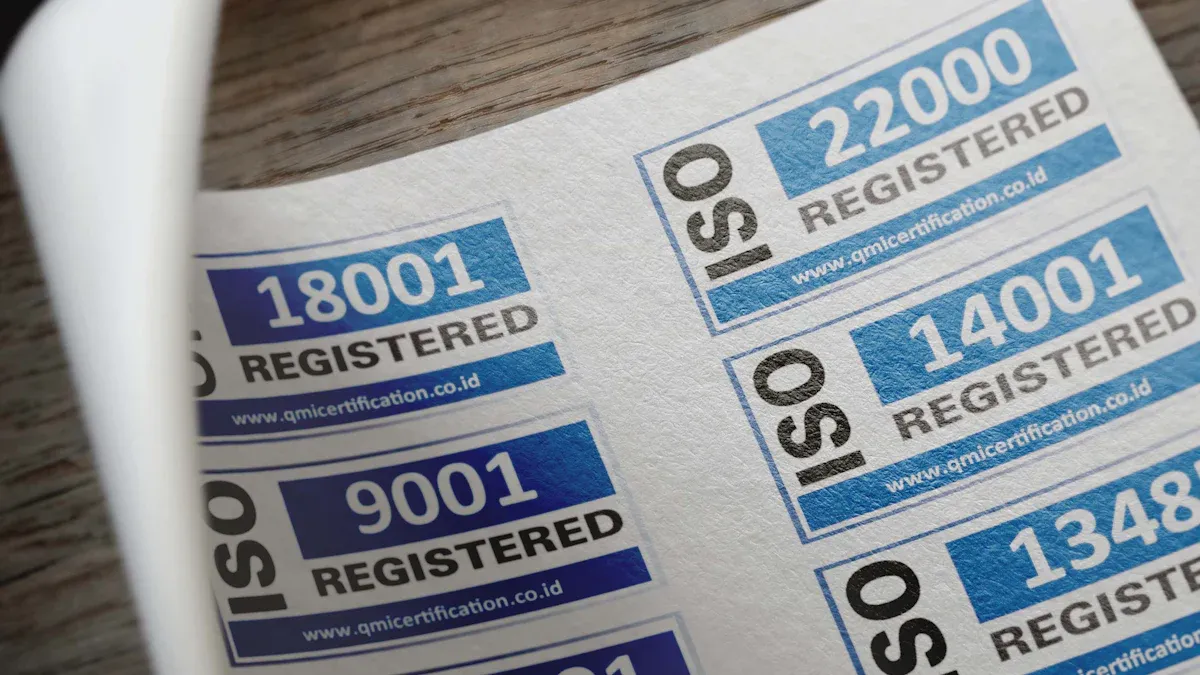
Your first audit action is to look past the certificate's logo and into its details. A paper certificate is a claim. Your job is to verify that claim against the specific needs of your project. This step ensures the foundation of your potential partnership with an ISO9001/WCA certified acrylic OEM is solid.
Confirm ISO 9001 Scope and Validity
An ISO 9001 certificate is not a one-size-fits-all document. You must check the "Scope of Certification" listed on it. Does it explicitly state "design and manufacturing of acrylic display products"? A generic scope like "general manufacturing" is a red flag. It may indicate the quality system is not tailored to the precision your fixtures require.
Next, you need to confirm the certificate's authenticity. The International Organization for Standardization (ISO) develops standards but does not issue certificates itself. Certification is performed by external bodies. You can verify a certificate's validity through the global database, IAF CertSearch. This tool is managed by a committee that includes accreditation bodies like ANAB (ANSI National Accreditation Board), ensuring the certification is globally recognized and current.
Tip: Always request a digital copy of the certificate. Use the certificate number and company name to check its status on the issuing body's website or the IAF database.
Analyze the Full WCA Report
A Workplace Conditions Assessment (WCA) certificate shows a commitment to ethical practices. However, you need to see the full story. Request the complete WCA report, not just the summary or achievement award. The detailed report provides scores across different categories, offering a transparent look into the factory's operations.
Pay close attention to two key sections:
Labor Practices: This evaluates fair wages, working hours, and non-discriminatory hiring.
Health & Safety: This assesses workplace safety protocols and measures for employee well-being.
High scores in these areas suggest a stable workforce and a responsible management team. A supplier with poor scores in labor or safety could face unexpected shutdowns or high employee turnover. These issues create significant risks for your production timeline and brand reputation.
Step 2: Assess Production Capability
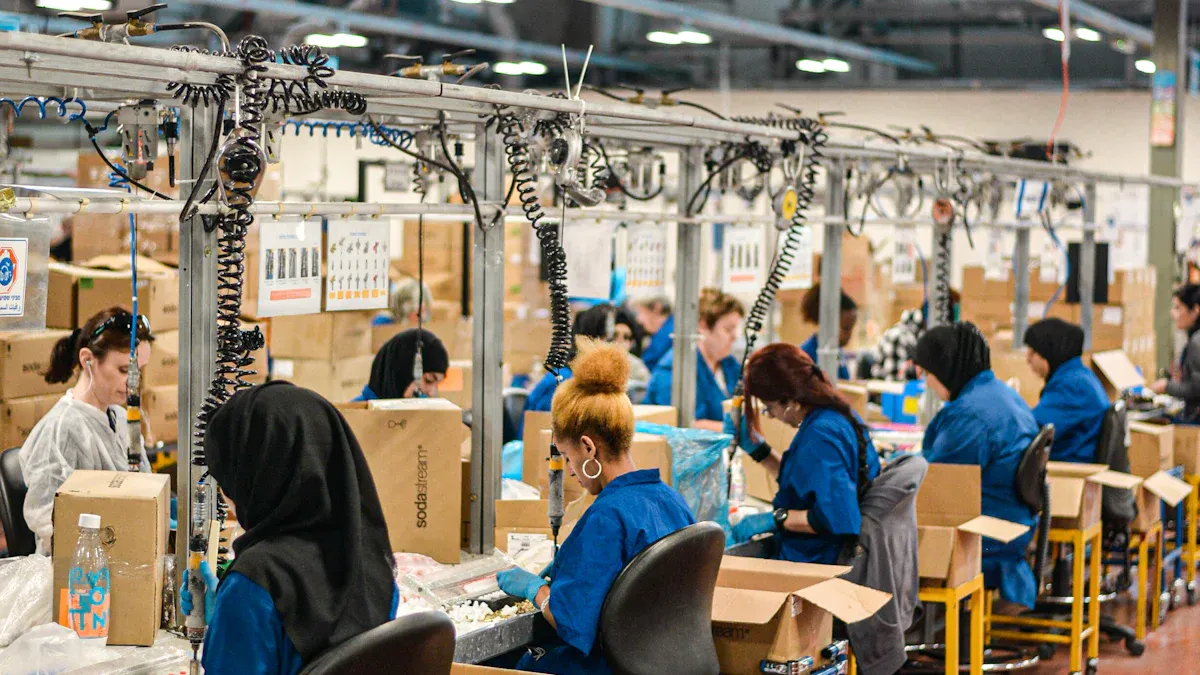
With verified certificates, you can now assess the factory's physical ability to produce your fixtures. A factory tour, whether virtual or in-person, is essential. You need to see if their equipment and processes can deliver the precision that 3C products demand.
Evaluate Raw Material Control
The quality of your final display begins with the raw materials. For high-end fixtures, you should expect your supplier to use top-tier materials.
Material Type: Cast acrylic is often preferred for its superior optical clarity and finish. Ask potential suppliers why they choose cast versus extruded acrylic for your specific project.
Quality Verification: A professional OEM controls quality at the source. They should be able to provide a Certificate of Analysis (CoA) for their acrylic sheets. This document verifies material purity and proves they have a system for tracking raw material quality.
A supplier who cannot provide this data may lack fundamental quality control.
Inspect Machinery and Technology
Outdated or poorly maintained equipment cannot produce the flawless finish your brand requires. During your audit, inspect the condition of their key machinery. Look for modern, high-precision equipment like:
CNC Routers
Diamond Polishing Machines
High-Accuracy Laser Cutters
Auditor's Tip: 🕵️ Ask about their equipment maintenance schedule. A reliable partner performs daily checks on laser optics and alignment. They should be able to show you maintenance logs, proving they are committed to consistent, high-quality output.
Verify Specialized Processes
Manufacturing premium acrylic displays involves more than just cutting sheets. You must verify the supplier's skill in specialized techniques. Pay attention to their methods for:
Heat Bending: Creating precise curves requires localized heating with strict temperature control. This prevents optical distortion, bubbling, or stress marks in the material.
UV Bonding: Achieving invisible, bubble-free joints is a sign of high craftsmanship. This process uses special UV-cured adhesives to create strong, seamless bonds that look like a single piece of acrylic.
High-Resolution Printing: Check their capabilities for screen or digital printing. Sharp logos and crisp text are non-negotiable for branding in a retail environment.
Step 3: Audit the Quality Management System in Action
An ISO 9001 certificate proves a quality management system (QMS) exists. Your audit must confirm this system is actively used on the factory floor. A documented procedure is meaningless if workers do not follow it. You need to see quality control in action at every stage.
Review Incoming Quality Control (IQC)
A strong QMS begins the moment raw materials arrive. Your supplier must have strict procedures for inspecting incoming acrylic sheets. Ask to see their IQC station and review their checklists.
A key metric is thickness tolerance. Variations can cause visual distortion and weak joints. Professional suppliers adhere to standards like ISO 7823-1 for thickness consistency. Beyond calipers, you can ask if they perform other simple tests to verify material integrity:
Visual Inspection: They should check for uniform color and gloss.
Light Transmission: Passing a white light through the sheet should not produce a yellow or blue tint.
Burn Test: A small sample of good acrylic should have a fragrant smell when burned, not a pungent odor.
Observe In-Process Quality Control (IPQC)
Quality checks must continue throughout production. This is In-Process Quality Control (IPQC). Quality inspectors should be present at key stages like cutting, bending, and printing. They must check dimensions, angles, and print clarity against the approved design drawings.
Auditor's Tip: 🕵️ Ask to see a "production traveler" or quality checklist. This document should follow a part from start to finish. It gets signed off at each quality gate, creating a clear record of accountability.
Examine Final Quality Control (FQC) and Packaging
Before your fixtures ship, they undergo a Final Quality Control (FQC) check. Here, inspectors verify the finished product against a master sample or "golden sample." They perform a 100% visual inspection for any scratches, glue residue, or other cosmetic defects.
Equally important is the packaging process. A perfect display is worthless if it arrives damaged. A reliable OEM will follow a strict protocol to protect your investment:
Wrap each item in multiple layers of bubble wrap, adding corner protectors to vulnerable edges.
Place the item in a sturdy, double-walled cardboard box with 2-3 inches of space on all sides.
Fill all empty space with foam inserts or packing peanuts to prevent any movement.
Seal the box securely with strong packing tape and clearly label it "Fragile" and "Handle with Care."
Step 4: Evaluate Project Management and Communication
A factory with great machines is only half the equation. You need a partner with strong project management to guide your display from concept to reality. Effective communication and a clear process are essential for a successful partnership. This step helps you evaluate the team behind the technology.
Assess Engineering and Design Support
Your supplier's engineering team should be a valuable resource, not just an order-taker. A proactive team will perform a Design for Manufacturability (DFM) analysis on your drawings. This review is crucial for optimizing your project before production begins. A good DFM analysis helps:
Reduce Costs: It identifies ways to simplify the design and select cost-effective materials.
Improve Quality: It optimizes parts for smooth assembly, which minimizes manufacturing defects and improves reliability.
Increase Efficiency: It streamlines the entire production process by using standard components and processes where possible.
Applying DFM early avoids costly redesigns and production delays down the line.
Gauge Communication and Responsiveness
Clear and timely communication prevents expensive mistakes. When you audit the supplier, you should identify your primary point of contact. Is it a dedicated project manager or a sales representative? This person will be your lifeline throughout the project.
Auditor's Tip: 🕵️ Test their responsiveness early. Send an email with a specific technical question about your design. A reliable partner will provide a clear, knowledgeable answer within one business day. A slow or vague response is a major red flag.
Review the Prototyping Process
The prototype is your first chance to see their quality firsthand. After you confirm the final design, a professional OEM can typically produce a high-fidelity sample within 3-7 working days. This physical sample allows you to test the fit, finish, and function of your display.
Your feedback on this prototype is critical. Ask the supplier how they manage revisions. A disorganized process leads to errors. A strong partner will have a formal system, such as:
An Engineering Change Order (ECO) to document significant modifications.
A revision history table on the drawing to track every change.
This structured approach ensures your feedback is correctly implemented, guaranteeing the final production run matches your exact specifications.
Step 5: Make the Final Decision
You have now completed your audit. The final step is to organize your findings into a clear decision. This process helps you objectively compare potential suppliers and choose a true partner who will protect your brand.
Score Your ISO9001/WCA Certified Acrylic OEM
A scoring system turns your observations into actionable data. It removes emotion from the decision and provides a clear, fact-based comparison. You can create a simple evaluation form based on your audit. Use a rating scale to score each supplier.
0 – Major Issue: Systemic failure requiring immediate action.
1 – Minor Issue: Isolated error that needs correction.
2 – Acceptable: Process works but could be better.
3 – Good: Strong process is in place and followed.
Apply this scale to the key areas you audited. This gives you a total score for each potential ISO9001/WCA certified acrylic OEM. Key evaluation areas include:
Quality Management: Do they have on-site quality staff and a culture of continuous improvement?
Maintenance: Are there clear records for proactive equipment maintenance?
Certifications: Are all documents valid and relevant to your project?
Training: Do employees have the right skills for their jobs?
Identify Red Flags vs. Improvement Areas
Your scoring will reveal both major problems and minor issues. You must know how to tell them apart.
Red Flags (Major Issues) are systemic problems that put your project at risk. These are deal-breakers. They often involve a complete failure to follow a required process. Examples include:
A total lack of management review for quality.
Repeated minor issues that are never fixed.
Inability to produce valid certifications.
Failures that cause major delivery delays or require rework.
Improvement Areas (Minor Issues) are typically isolated incidents. They do not affect the customer or product quality in a significant way. Examples include a single missing training record or a one-time error on an invoice. While these issues need correction, they do not indicate a broken system.
A reliable partner will welcome feedback on improvement areas. However, a pattern of unaddressed minor issues can quickly become a major red flag, signaling a deeper problem in their quality culture.
A truly good fit goes beyond certifications. You need an ISO9001/WCA certified acrylic OEM whose audited capabilities match your high standards for retail fixtures. You verified this by auditing their documentation, production technology, active quality system, and project management.
Actionable Takeaway: 🚀 Use this 5-step framework as your go-to tool. It helps you confidently select a reliable partner who will protect your brand image and ensure a successful retail rollout.
FAQ
Can I skip the on-site audit if the supplier has good certificates?
No, you should not skip the audit. Certificates show a system exists on paper. An audit confirms the system works in practice.
💡 A detailed virtual tour is a good alternative if you cannot visit in person. You can still inspect machinery and observe processes live.
What is a "golden sample" and why is it important?
A "golden sample" is the final, approved prototype of your display. It becomes the quality standard for the entire production run. Your supplier's quality team uses it to verify that every finished unit matches your exact specifications. This ensures consistency and protects your brand's quality.
What should I do if a supplier fails my audit?
You must evaluate the reasons for the failure.
Major Red Flags: If you find systemic issues like invalid certificates or a lack of quality control, you should look for another supplier.
Minor Issues: For isolated problems, you can ask the supplier for a corrective action plan.
What is a typical lead time for acrylic display production?
Lead times can vary. A professional OEM usually delivers a prototype within 3-7 working days. After you approve the sample, mass production typically takes 3-5 weeks. You should always confirm this timeline with your specific supplier before placing an order.