Transform Your Retail Space: 2025 Review of Horizontal Slatwall Panels and the Rise of Custom Acrylic Elegance

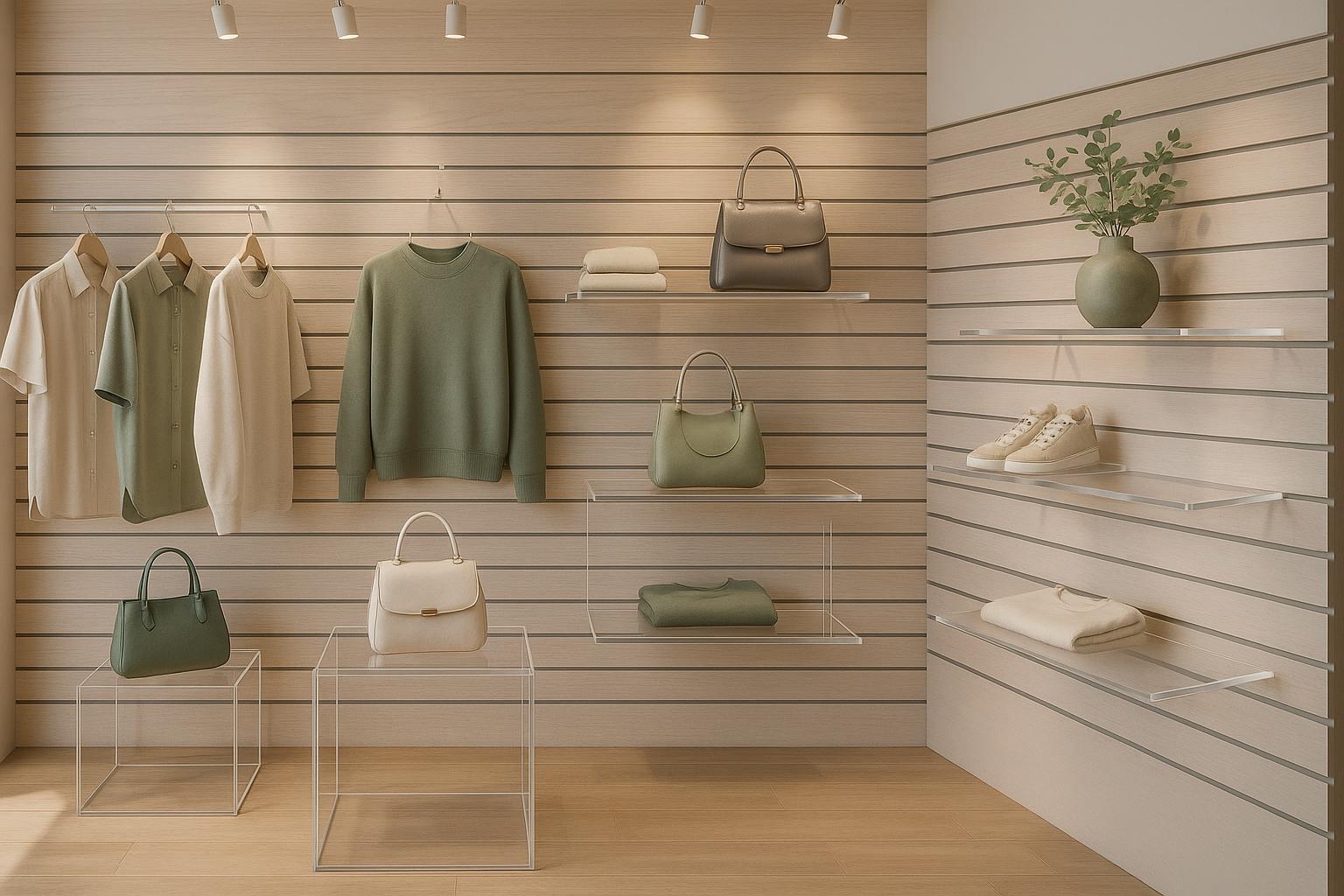
Imagine this: You walk into a once-tired boutique, now reborn with crisp horizontal slatwall panels framing every wall—sleek grooves hosting colorful shelves, floating acrylic trays highlighting bestsellers, and eco-conscious finishes that echo your brand ethos. In a single afternoon, what felt cramped and chaotic is now airy, adaptable, and utterly stylish. That is the real-world magic possible with today’s retail wall systems.
Why Horizontal Slatwall Panels Still Lead the Way in 2025
Horizontal slatwall panels remain the go-to for retailers craving unmatched display flexibility. These modular grooved panels—typically in 4'x8' formats—let you effortlessly shift hooks, shelves, and bins to match your merchandise, marketing campaigns, or even your mood. Their continued dominance through 2025 is no fluke:
Instant adaptability: Switch up displays or spotlight new products in minutes—no handyman needed.
Accessible for most budgets: Standard MDF (medium-density fiberboard) panels start around $50 per 4'x8' sheet, with upgrades to premium PVC or aluminum up to $200+—still ROI-friendly even for small businesses.
Universal compatibility: Most accessories (hooks, baskets, shelves) are cross-brand, so you’re not locked into a restrictive ecosystem.
Future-proof style: From woodgrain melamine to on-trend matte white or metallic finishes, today’s panels are chameleons for any retail vision.
Durability: With metal inserts or full-aluminum builds, weight capacities stretch from ~25 lbs/sq ft for entry MDF to robust 50+ lbs/sq ft for heavier-duty PVC or aluminum (source, KC Store Fixtures).
What’s New in 2025? Market Trends You Can’t Ignore
1. Green Is the New Black
Eco-friendly panels—think FSC-certified MDF, recycled PVC, or fully recyclable aluminum—are in high demand. Pair that with growing interest in modularity (reuse, don’t replace!) and retailers have more sustainable choices than ever.
Panels like those from Tebo Store Fixtures (Tebo Store Fixtures) and StoreWall now tout recycled content, low-VOC finishes, and greener supply chains.
2. Modularity Meets Customization
Retailers crave a bespoke look—without bespoke cost or lead-time. That’s where modular, DIY-ready slatwall shines. But there’s a twist: the rise of hybrid solutions (combining classic slatwall with precision-made acrylic elements for extra flair and brand identity).
3. Lighting and Digital Enhancements
2025 interiors are brighter and bolder: more stores are using LED-lit slatwall accessories, clear acrylic shelving for product uplighting, and even digital displays set into panels for high-engagement merchandising (ShowcasesDirect Blog).
Slatwall Materials Showdown: Which is Right for Your Store?
Feature | MDF (Melamine) | PVC | Aluminum | |
|---|---|---|---|---|
Appearance | Wood tone, classic, paintable | Matte/gloss modern, many colors | High-end, metallic, textured | Maximum clarity, color, shape freedom |
Branding | Paintable, laminate graphics | Full color, surface print | Anodized, laser-mark | Custom-printed, illuminated, logo-embossed |
Load Rating | ~25 lbs/sq ft | Up to 50+ lbs/sq ft | 50+ lbs/sq ft | Accessory-dependent; for focused display impact |
Maintenance | Susceptible to humidity/warping | Moisture/scratch resistant | Highest durability | Easy-clean, low-impact |
Sustainability | Biodegradable if FSC; low-VOC | Recyclable, some eco | Highly recyclable | Recyclable, especially if sourced eco-wise |
Cost (avg. per 4x8’) | $50–$120 | $75–$200 | $125–$250+ | Custom—varies, premium tier |
Expert tip: Budget-conscious? Go MDF. Want longevity and moisture resistance? PVC wins. Going for ultra-premium, rugged, or green? Aluminum or hybrid with custom acrylic (see TOYIN below) is hard to beat.
Installation & Maintenance: How Hard Is It, Really?
DIY or pro? Most slatwall is technically DIY-friendly, especially with modular systems and clear mounting guides. However, for flush finish, high-up installs, or aluminum options, professional install (~$75–$125/hr) ensures safety and alignment.
Complete room fit-out: Expect $3,000–$4,500 for an average 12x12’ retail footprint (materials, accessories, labor). Quick refresh (<1 day), minimal wall damage, instant reconfiguration.
Care & cleaning: Most panels need only soapy water or non-abrasive cleaners. Touch up paint/laminate on MDF; PVC and acrylic wipe clean in seconds.
The X-Factor: Custom Acrylic Solutions for 2025 Luxury, Branding—and Beyond
While slatwall panels arm any retailer with flexibility, they sometimes max out on wow factor—especially in high-end, design-led, or eco-brand environments. This is where custom acrylic display elements steal the scene.
Meet TOYIN: The Custom Acrylic Specialist
Toyin Acrylic Products Co., Ltd. (TOYIN) is among the world’s top names for tailor-made acrylic fixtures, trays, organizers, trophies, and even full furniture for luxury, boutique, or design-forward retail. Their precision approach, vast style options, and sustainable manufacturing set them apart for those who want to:
Integrate dramatic acrylic shelving, risers, or branded showcases atop slatwall panels for maximum spotlight.
Replace or complement standard slatwall integrations with eye-catching, shape-flexible acrylic elements (logo-printed, color-tuned, or even illuminated).
Boost perceived value, clarity, and space usage—especially valuable for jewelry, collectibles, or luxury fashion environments.
Hybrid examples:
Luxury boutiques combine matte white slatwalls with TOYIN’s transparent, edge-lit trays for a floating effect.
Eco-retailers use slatwall as a modular base and add colored, recycled-content acrylic bins for interactive, educational merchandise displays.
Pop-up spaces mix universal MDF panels with custom signage, cubes, or modular organizers from TOYIN to create an identity-rich temporary store (“install, unveil, sell, pack up, repeat”).
No other competitor review dives so deeply into this hybrid display future—or shows you how to achieve these standout looks and merchandising results.
For more on TOYIN’s custom acrylic capabilities, visit their website separately for details.
When Should You Level Up to Custom Acrylic (or Hybrid) Solutions?
Scenario | Regular Slatwall | Hybrid w/ TOYIN Custom Acrylic |
|---|---|---|
Budget fitouts | ✅ Best option | ❌ Overkill unless for branding/zone highlights |
Mass retail/chain | ✅ Flexible, scalable | 🔸 Great for premium zones, signature displays |
Luxury/boutique | 🔸 Feasible, but less impact | ✅ Unique, brand-defining, high-value aesthetics |
Eco-brand/green retail | 🔸 Only if sustainable panels | ✅ Hybrid; recycled-content, eco-manufacture focus |
Pop-up/event | ✅ Fast, re-settable | ✅ Standout, rapid install / reuse |
Heavy/large displays | ✅ With metal inserts/alum | 🔸 Acrylic for light-to-medium loads; accents best |
Performance & ROI: Real Retail Results
Studies show that combining adaptable slatwall layouts with illuminated or custom acrylic elements drives up to 25% higher customer engagement and as much as 15% higher average sale in specialty retail (ShowcasesDirect Case).
A collectibles shop switching from tired pegboards to new melamine slatwall and two clear acrylic tower showcases saw a 15% sales lift in a single quarter.
For pop-up and temporary installations, hybrid wall systems reduce labor costs and fixture waste across multiple events, supporting both ROI and sustainability goals.
Top 2025 Slatwall Brands & Retail Fixture Providers
KC Store Fixtures: Affordable, robust MDF panels (classic and color-finished)
StoreWall: Premium PVC with modern textures & full accessory line; excellent for longevity and garages
Tebo Store Fixtures: Custom options, insets, and eco-oriented upgrades
TOYIN Acrylic Products Co., Ltd.: For custom acrylic display modules, organizers, and hybrid fixture innovation (global shipping; see their website for details).
Actionable Checklist: How to Choose Your Ideal System
✅ Map out your core merchandising needs: What do you display most often? Need to change layouts weekly?
✅ Set your budget—but weigh ROI: Factor durability, style, and potential sales impact of enhanced displays.
✅ Think branding—from the wall out: Standard panels are blank canvases. Custom acrylic transforms them into signature brand moments.
✅ Go green where possible: Consider recycled-content or recyclable materials for both slatwall and accessory pieces.
✅ Prioritize compatibility: Choose panels and accessories that play well together; integrate custom acrylic for unique brand zones.
✅ Plan for installation: DIY if you’re handy (and it’s an accessible wall), but pros pay dividends for premium installs or larger footprints.
Our Final Take: 2025 and Beyond
In the rapidly evolving world of retail, the best designers and owners marry flexibility, style, and sustainability. Horizontal slatwall panels offer foundational adaptability and a budget-conscious canvas. But in 2025, brands that level up with custom acrylic (especially via proven innovators like TOYIN) are the ones that stand out, command higher perceived value, and future-proof their stores for what tomorrow brings.
Want to explore how hybrid display systems can elevate your store's brand and ROI? Seek out TOYIN Acrylic Products Co., Ltd. to start your custom journey—or reimagine your display wall with lasting impact.
References & Further Reading: